
DOI: https://doi.org/10.46502/issn.1856-7576/2025.19.04.7
Eduweb, 2025, octubre-diciembre, v.19, n.4. ISSN: 1856-7576
Cómo citar:
Kazak, Y., Bosa, V., Moiseienko, N., Ababilova, N., & Horbolis, L. (2025). Framework for enhancing digital competence among philology students. Revista Eduweb, 19(4), 99-124. https://doi.org/10.46502/issn.1856-7576/2025.19.04.7
Marco para la mejora de la competencia digital en estudiantes de filología
Yuliia Kazak
Doctor of Philosophy, Associate Professor, Dean of the Faculty of Foreign Languages, Pavlo Tychyna Uman State Pedagogical University, Ukraine.
https://orcid.org/0000-0001-6791-4884
Vita Bosa
Doctor of Pedagogical Sciences, Associate Professor of the Department of Foreign Philology and Translation, National University of Life and Environmental Sciences of Ukraine, Ukraine.
https://orcid.org/0000-0001-7509-7044
Natalia Moiseienko
Candidate of Philological Sciences, Associate Professor of the English Grammar Department, Odesa I. I. Mechnikov University, Ukraine.
https://orcid.org/0009-0001-3896-3668
Nataliia Ababilova
Candidate of Pedagogical Sciences, Associate Professor, Associate Professor of the Department of English Philology and Translation, Petro Mohyla Black Sea National University, Ukraine.
https://orcid.org/0000-0002-9454-6674
Larysa Horbolis
D.Sc. (Philology), Professor, Professor of the Department of Ukrainian Language and Literature, Sumy State Pedagogical University named after A.S. Makarenko, Ukraine.
https://orcid.org/0000-0003-4775-622X
Recibido: 01/09/25
Aceptado: 17/11/25
Abstract
The article reveals the content and structure of digital competence. The purpose of the study is to develop and test the developed pedagogical conditions and system for the formation of digital competence in students of philological specialties. The research methodology is based on: a combination of theoretical analysis and experimental verification; comprehensive measurement of digital competence; implementation of pedagogical conditions aimed at the practical application of digital technologies in philological training; statistical confirmation of the effectiveness of the developed model. As a result of the pedagogical experiment, the effectiveness of the developed pedagogical conditions and system for the formation of digital competence in students of philological specialties, which was implemented in higher educational institutions within the framework of professional training of students of philological specialties, was assessed and proven.
Keywords: digital competence, students of philological specialties, digital format of education, methodological approaches, principles of learning.
Resumen
El artículo revela el contenido y la estructura de la competencia digital. El objetivo del estudio es desarrollar y probar las condiciones y el sistema pedagógicos propuestos para la formación de dicha competencia en estudiantes de filología. La metodología de investigación se basa en: una combinación de análisis teórico y verificación experimental; la medición integral de la competencia digital; la implementación de condiciones pedagógicas orientadas a la aplicación práctica de las tecnologías digitales en la formación filológica; y la confirmación estadística de la efectividad del modelo desarrollado. Como resultado del experimento pedagógico, se evaluó y demostró la efectividad de las condiciones y el sistema pedagógicos desarrollados para la formación de la competencia digital en estudiantes de filología, los cuales se implementaron en instituciones de educación superior en el marco de la formación profesional de dichos estudiantes.
Palabras clave: сompetencia digital, estudiantes de especialidades filológicas, formato digital de la educación, enfoques metodológicos, principios del aprendizaje.
Introduction
The rapid digitalization of modern society necessitates a review of training approaches in higher education institutions. In the field of philology, which is traditionally associated with the humanitarian direction, digital technologies are gradually becoming an integral tool of professional activity. Future philologists are required not only to possess linguistic and literary competencies, but also the ability to work effectively with digital resources, create multimedia content, use online platforms, conduct critical analysis of information and apply digital technologies in the educational, scientific and communicative environment (Kampylis et al., 2015).
Despite the widespread use of digital services in the everyday lives of students, the level of their professionally oriented digital competence often remains insufficient. This is manifested in difficulties when working with electronic educational platforms, creating educational materials, analyzing large amounts of information, and adhering to the norms of academic integrity and information security. Such an imbalance between the needs of the modern labor market and the level of training of philology students determines the relevance of scientific research aimed at increasing their digital competence (Vuorikari et al., 2022).
In the context of European educational guidelines and frameworks of digital competence (DigComp, DigCompEdu), the development of effective pedagogical conditions and models that ensure the comprehensive development of motivational, cognitive, instrumental, and reflective components of digital competence is of particular importance. Modern philological education should not only integrate digital technologies into the educational process, but also ensure their conscious, critical, and creative use by students (European Commission, 2018).
The study hypothesizes that the targeted implementation of sound pedagogical conditions – the creation of an innovative digital educational environment, the activation of the professional basis for the formation of competencies, the informatization of the content of philological training and the development of reflection on the use of digital technologies – provides a significant increase in the level of digital competence of philology students.
With the systematic use of digital tools, interactive teaching methods and a special course on digital technologies, there is a statistically significant increase in the levels of motivational, cognitive, instrumental and reflective components of students' digital competence.
Thus, the study of the process of forming digital competence of philology students is a relevant and timely task of modern pedagogical science. It contributes to improving the content and organization of professional training, increasing the competitiveness of future specialists in the labor market and creating conditions for their successful functioning in a digital educational and professional environment.
Based on the content of the article, the following key contradictions can be identified:
The article emphasizes the problem of critical selection of information, the ability to work with digital content, information security and reflection – these skills are poorly developed, which creates a gap between the capabilities and real digital literacy of philological students.
Literature Review
In the works of many scientists, we find confirmation that one of the priority areas of digitalization of society, or informatization of society, is the digitalization (informatization) of education. Scientists are convinced that the development of digital competence in students is a requirement of a modern digitalized society for training specialists in 21st-century philological fields.
A review of contemporary research demonstrates that the development of digital competence has become a central issue in modern higher education, particularly in the preparation of future specialists in the humanities. Scholars generally agree that digital technologies have transformed educational practices, yet their interpretations of how digital competence should be formed, assessed, and integrated into the curriculum differ considerably. This divergence reveals several conceptual, methodological, and practical gaps, especially in the context of philology students.
Many researchers, including Alnasib (2022) and Haleem et al. (2022), emphasize the broad advantages of digitalization – enhanced motivation, increased access to digital resources, individualized learning pathways, and improved visualization of content. Their work highlights the potential of digital technologies to optimize teaching and learning processes, but often remains descriptive rather than analytical. These studies focus primarily on the benefits of digital tools, paying insufficient attention to the complexities of integrating them into discipline-specific contexts such as philology, where digital competence must encompass both technical skills and domain-specific digital literacy.
Other scholars, such as Lund et al. (2014) and McGarr & McDonagh (2019), propose more structured interpretations of digital competence, viewing it as a multi-component construct embedded in professional identity and pedagogical practice. Their approaches align with European frameworks such as DigComp and DigCompEdu, which outline a set of competencies related to information management, communication, content creation, safety, and problem-solving. While these models provide a solid conceptual foundation, they often lack empirical evidence specifically addressing philology students’ needs. Moreover, these frameworks are typically designed for a broad audience, which limits their direct applicability to the distinct demands of linguistic, literary, translation-oriented, and communication-oriented training.
In contrast, recent studies by Burgos-Videla et al. (2021) and Tassara-Salviati et al. (2023) attempt to segment students according to latent digital competence profiles. These works reveal considerable heterogeneity in digital skills even within homogeneous academic groups. However, the studies focus primarily on general university populations rather than on philology students, who require advanced skills in digital text processing, corpus analysis, multimedia content creation, and digital research methodologies. Therefore, while these findings provide valuable insights into student diversity, they do not address the discipline-specific competencies necessary for philological education.
Across the literature, significant gaps concerning the digital competence of philology students become evident:
Overall, the literature reveals a clear need for targeted research that connects theoretical frameworks of digital competence with the practical realities of philology education. This gap underscores the importance of developing pedagogical conditions and systematic approaches tailored to the training of future philologists, ensuring that digital competence becomes an integrated and measurable component of their professional formation.
So, we see that scientists note that, since digital technologies are a powerful and transformative tool for achieving new educational goals, a modern specialist should be distinguished by digital skills and abilities that allow them to use them in their professional activities.
Analysis of scientific literature makes it possible to recognize the positive impact of digital technologies on the training of students of philological specialties in modern institutions of higher education. Therefore, the formation of digital competence of students of philological specialties is necessary today and has not been sufficiently researched.
Purpose of the research. Development and testing of the developed pedagogical conditions and system for the formation of digital competence in students of philological specialties, which was introduced in institutions of higher education in the professional training of specialists.
Methodology
To achieve the set goal, a set of research methods was used:
The pedagogical experiment lasted from 2022 to 2025. The purpose of the pedagogical experiment is to evaluate the effectiveness of the developed system for the formation of digital competence of students of philological specialties.
Research design.
The research has a mixed design that combines theoretical, empirical and statistical methods to substantiate and verify the effectiveness of pedagogical conditions for the formation of digital competence of philology students. The pedagogical experiment was organized in three stages: pilot, ascertaining, formative and control.
When determining the sample of subjects, the general specificity of the research subject was taken into account. The total sample size is 76 subjects. When forming the sample, the criteria of content, representativeness, equivalence were taken into account. The sample was formed by random selection using the technical procedure for calculating the selection step.
Statistical methods.
The reliability and validity of the obtained results, the objectivity of their assessment were ensured by the methodological validity of the initial positions and the qualimetric mechanism for assessing the quality under study, the use of a complex of complementary research methods, and the involvement of a group of respondents from a higher educational institution in the analysis of its results.
To verify the reliability of the results, the following methods were used: methods of mathematical statistics. To assess the homogeneity of experimental and control data collection, statistical processing was carried out using MS Excel and SPSS (Statistical Package for Social Science). Pearson χ² criterion to determine the significance of differences between EG and CG; calculation of the percentage distribution of digital competence levels according to the criteria: motivational, cognitive, instrumental, reflective.
Stages of the study.
The research methodology is based on: a combination of theoretical analysis and experimental verification; comprehensive measurement of digital competence; implementation of pedagogical conditions aimed at the practical application of digital technologies in philological training; statistical confirmation of the effectiveness of the developed model. The results obtained in the pilot study prove that the majority of students of philological specialties had a low level of digital competence.
The experiment was conducted in Pavlo Tychyna Uman State Pedagogical University; National University of Life and Environmental Sciences of Ukraine; Odesa I. I. Mechnikov University; Petro Mohyla Black Sea National University; Sumy State Pedagogical University named after A.S. Makarenko. The conduct of the experiment is permitted by the scientific councils of the universities in order not to violate ethical considerations in institutions of higher education.
Cronbach’s Alpha: Internal Consistency Reliability
The internal consistency of the instrument was assessed using Cronbach’s Alpha (α), which evaluates the degree to which items within each scale measure a single underlying construct. The coefficient was calculated using the standard formula:

where:

Cronbach’s Alpha values for all four components of digital competence (motivational, cognitive, instrumental, reflective) indicated acceptable to high internal consistency, confirming that the scales reliably measured each dimension. The results allowed the instrument to be used with confidence during the main pedagogical experiment.
Content Validity
Content validity was established through an expert review process. A panel of five specialists in the fields of:
Experts examined:
Based on expert feedback, several items were reformulated for greater terminological precision and clarity, ensuring that the instrument reflected the full scope of digital competence required in philological training.
Construct Validity
Construct validity was examined by matching each item to the theoretical components of digital competence derived from DigComp, DigCompEdu, and contemporary academic literature. Items were explicitly aligned with four components:
The theoretical alignment confirmed that each scale measured a clearly defined dimension of the construct, thus supporting the instrument’s structural validity.
Item Matrix (Table of Specifications)
To ensure accurate structural design, an item matrix was developed. This matrix linked each item to the corresponding component and indicator. A simplified version is provided below:
Table 1.
Item Matrix for the Digital Competence Instrument
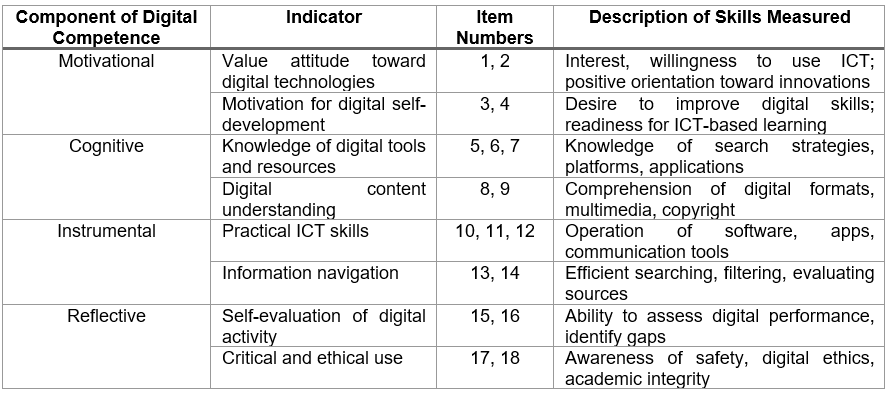
This matrix ensured balanced representation of all digital competence dimensions and served as the foundation for content and construct validation.
Experts Who Validated the Instrument
The panel of experts included:
Each expert provided written feedback on the clarity, accuracy, and relevance of the items. Their recommendations contributed to refining the final version of the instrument and increasing its methodological validity.
Development of the Instrument Items
The development of the instrument followed a systematic multi-phase process:
The combined results of the reliability analysis, expert evaluations, theoretical alignment, and pilot testing confirm that the instrument demonstrates strong methodological validity. It reliably measures the levels of digital competence across the motivational, cognitive, instrumental, and reflective components and is appropriate for use in both research and educational practice.
The criteria for assessing the level of formation of digital competence in students of philological specialties are as follows: motivational, cognitive, instrumental, and reflective.
The three levels of manifestation of the formation of digital competence correspond to certain criteria and indicators, in particular, low, average, and high.
At the ascertaining stage of the experiment, we characterized a certain sample of participants in the experiment. From the statistical population of respondents, a general population was selected for the ascertaining stage of the experiment, namely: students of the experimental group and students of the control group.
For the formative stage of the experiment, higher education institutions where students of philological specialties are trained according to similar educational programs were selected as the experimental base.
The presented distribution of the levels of formation of digital competence of respondents according to all criteria indicates that at the control stage of the pedagogical experiment in the experimental group the results are much higher, which indicates the effectiveness of the implementation of the developed pedagogical conditions and the system for the formation of digital competence in students of philological specialties, which was implemented in higher education institutions in the professional training of students of philological specialties.
Analysis of the study results indicates a positive dynamic of changes in the level of formation of digital competence of respondents in the experimental group, which is proven by calculations of the Pearson coefficient (χ2-criterion).
Results and Discussion
The content and structure of digital competence.
A modern specialist who has a high level of digital competence is distinguished by the presence of a set of practical skills and theoretical knowledge to apply technological innovations, innovative digital technologies to improve the organization of the educational process, as well as to use digital technologies in the implementation of professional activities and critical evaluation of information resources (Silva & Behar, 2019).
Digital competence is considered by us as a creative, critical, confident use of ICT to achieve goals related to employment, work, leisure, education, inclusion, and participation in society (Araiza-Vázquez & Pedraza-Sánchez, 2019). We have taken as a basis the definition of the concept of "digital competence" provided in the "European Framework for Digital Competence for Educators: DigCompEdu" (2017): the confident, critical and creative use of ICT to achieve goals related to employment, work, learning, inclusion, leisure and participation in society (Redecker, 2017).
The digital competence framework consists of 21 competencies. All competencies are grouped into five application areas, including:
Application area 1 – information: (browsing, filtering, searching for information, storing and retrieving information, evaluating information).
Application area 2 – communication: (distribution of information and content, network etiquette, communication through technology, collaboration through digital channels, involvement in online civic activity).
Application area 3 – content creation: (content development, programming, copyright and licenses, integration and processing of content).
Application area 4 – security: (personal data protection, device protection, environmental protection, health protection).
Application area 5 – problem solving (identification of technological responses and needs, solving technical problems, creative and innovative use of technology) (Punie et al., 2013).
As an integral component of the professional competence of students of philological specialties, digital competence is formed in a higher education institution and develops during the professional training of specialists. As a key competence for the education of every person throughout life, digital competence is distinguished by its dichotomous nature. This competence is cross-cutting for students of philological specialties, since the presence of a high level of its formation among philologists contributes to the development and formation of other competencies that are necessary in the formation of professional competence, depending on the chosen specialty (Bernate et al., 2021).
Components of digital competence. Digital skills that form the basis of digital competence. Methodological approaches and principles of learning that effectively influence the formation of digital competence in students of philological specialties.
The components of digital competence are defined as: data and information literacy, media literacy, collaboration and communication, digital content creation (including programming), intellectual property issues, security, competencies, cybersecurity issues, digital well-being, and problem solving, critical thinking (Tassara-Salviati et al., 2023).
Let's define the digital skills that form the basis of digital competence: the ability to receive, use, access, evaluate, filter, program, create, and share content in digital format. Trained professionals should be able to protect and manage information, obtain content, data, and digital identities, recognize and effectively interact with artificial intelligence or robots, devices, and software (Arango-Morales et al., 2020).
To form digital competence, the information activity of the future philologist is necessary, which reflects his ability not only to use the acquired information, but also to store and create it on various media. Information activity is manifested in the ability to successfully perform the following three functions: to develop a strategy for its further implementation, to generate an idea, and to implement the strategy through the use of information technology (Cortez et al., 2020).
In educational institutions of various levels, the use of digital technologies today creates fundamentally new opportunities for improving the educational process and realizing the creative potential of students.
To form the professional competence of the future philologist, it is necessary to organize his professional and philological activities (research, methodological, educational, etc.) based on innovative approaches, through the use of digital technologies, methods and techniques; to build the educational process in higher education institutions or to carry out professional activities through the active use of information and communication technologies; to present his own achievements and manage the necessary information.
Therefore, the training of future philologists should be aimed at forming in them a high level of information culture and digital competence, as an integral part of professional activity (Alvarez-Flores et al., 2024).
Digital educational technologies in the formation of professional competence of future philologists are considered a wide range of devices connected to the Internet and autonomous, which are used by specialists in the process of their teaching and learning practice, and include platforms, relevant software, and services (Burgos-Videla et al., 2021). That is, to form the digital competence of a future philologist, it is necessary to digitize educational institutions, use a variety of devices, in particular, laptops, scanners, tablets, computers, projectors, smart boards, smartphone cameras, 2D and 3D printers, etc. (Alcocer-Sánchez et al., 2023).
In the educational process of a higher education institution, we will single out methodological approaches, the implementation of which effectively affects the formation of digital competence of future philologists; these are informational, synergistic, cultural, system-activity, and communicative approaches.
The formation of digital competence of students of philological specialties is effectively influenced by the following principles of learning: the use of achievements of modern science and technology, lifelong learning, optimization of learning, the use of ICT in the educational process, integration of learning, interactivity, and reflection.
The principle of using the achievements of modern science and technology in the training of students of philological specialties is of great importance, because scientific and technological progress indirectly or directly affects each of us. Taking into account this principle, the organization of educational activities allows students of philological specialties to form a value attitude towards modern achievements in the field of digitalization, to equip students with skills and abilities to apply digital technologies in professional and everyday activities (Grijalva Verdugo & Urrea Zazueta, 2017).
The principle of lifelong learning embodies the idea associated with the need to form in students a certain system of key competencies (including digital) for lifelong learning. It is digital competence that will enable students of philological specialties in a modern globalized society to be adaptive to changing living conditions, acquire new skills and abilities, and be able to update knowledge in order to achieve success in professional and personal activities.
The principle of optimization of learning is necessary for the formation of the digital competence of students of philological specialties. Based on its activation, methods, forms of organization, means, and technologies of learning are selected, which ensure the achievement of a positive result and are the most appropriate.
The principle of using ICT in the educational process through the active use of digital tools and services, and technologically innovative teaching aids involves the organization of educational activities.
The principle of integration of learning provides high-quality preparation for the life of students of philological specialties in a modern digital society and the formation of professional competence in them.
The principle of interactivity in the training of students of philological specialties contributes to the effective transformation of students into active subjects of cognitive activity, and contributes to successful communicative interaction with all students in the educational process. Solving non-standard and standard tasks in future professional activities requires specialists to use a holistic system of skills, abilities, and knowledge (taking into account the sphere of digitalization), which they must master during professional training in a higher education institution.
The principle of reflection creates conditions for transforming students of philological specialties into active and conscious participants in the educational process who can analyze and understand their own needs, manage their own educational activities, and adequately assess their own capabilities (Hernández et al., 2016).
Analysis of the results of research-experimental work.
The results obtained indicate a natural connection between the implemented pedagogical conditions and the growth of the level of digital competence of students. Theoretically, this confirms the position of the constructivist approach, according to which knowledge is not transferred in a ready-made form, but is formed through the active interaction of the student with the digital educational environment. The increase in indicators according to motivational, cognitive, instrumental and reflective criteria in the experimental group demonstrates that the systematic use of digital tools contributes to the formation of complex digital competence. The results are also consistent with the theories of activity learning and digital pedagogy, according to which the development of digital competence occurs more effectively in conditions of practical activity and active interaction with technologies.
The results obtained are consistent with the conclusions of researchers (Lund et al., 2014; McGarr & McDonagh, 2019), who emphasize the importance of a systemic approach to the formation of digital competence and the need for targeted pedagogical intervention. Similar to the work of Burgos-Videla and Tassara-Salviati, our study demonstrates significant variability in the levels of digital competence among students, but proves that this difference can be significantly reduced if a comprehensive system of digital training is implemented. In contrast to works that emphasize mainly the technical aspects of digital competence, our study confirms the importance of the reflective and motivational components, which are often underestimated in previous studies.
Despite the positive dynamics, the results of the study indicate certain limitations. First, the sample size was 76 people, which may affect the representativeness of the findings. Second, the study included only students of philological specialties, while the structure of digital competence may differ in other fields. Third, although the data obtained are statistically confirmed, the level of influence (Cramer's V = 0.19) indicates a small-medium effect, which means the need for longer or more intensive pedagogical interventions. An important critical point is also the dependence of students on already familiar digital technologies, which may limit the variety of forms of digital activity.
The results obtained demonstrate that the proposed system of digital competence formation is an effective mechanism for training a modern philologist. The increase in indicators according to all criteria in the experimental group indicates that students are able not only to master digital tools, but also to use them consciously, critically and creatively. The development of the reflective component is especially important, since it is it that ensures the responsible and ethical use of digital resources. The results confirm that the effective combination of innovative digital technologies with pedagogical conditions creates the basis for the sustainable development of digital literacy in specialists in the humanities.
Analytical implications
The need for systematic updating of educational programs. The results of the experiment indicate the importance of integrating digital technologies not pointwise, but comprehensively – into all stages of philologists' training.
Strengthening the role of digital reflection. The formation of critical thinking skills and self-assessment of digital activity should become a key element of professional training.
Implementation of individual digital trajectories. The difference in the levels of digital training of students demonstrates the need for differentiation of learning.
Expansion of pedagogical conditions. The results obtained confirm the effectiveness of the specified conditions, however, further research can supplement them with models of adaptive or personalized learning.
Support of academic culture and digital ethics. The development of digital competence contributes to the formation of a responsible attitude towards information, which is an important social consequence.
The control group (CG) and the experimental group (EG) were equivalent at the beginning of the study.
At the ascertaining stage of the study, both groups were diagnosed according to four criteria of digital competence (motivational, cognitive, instrumental, reflective).
The distribution of digital competence levels in EG and CG was almost the same, which indicates the initial homogeneity of the samples. For example:
According to the cognitive criterion at the beginning:
EG: 52% – low, 44% – average, 4% – high
CG: 47% – low, 49% – average, 4% – high
That is, the differences are minimal and statistically insignificant.
Statistical test (χ²) for the initial data showed that: the value of χ² at the start of the study is less than the critical one (10.596 at df = 2, p < 0.05), therefore, there is no reason to reject the null hypothesis of identical distributions between EG and CG.
The authors explicitly state that the following conditions were met when forming the sample: representativeness, equivalence, randomness of selection.
To test the equivalence of the control (CG) and experimental (EG) groups at the beginning of the study, a multivariate analysis of variance (MANOVA) was conducted, where the independent variable was the group, and the dependent variables were the indicators of digital competence according to four criteria: motivational, cognitive, instrumental, and reflective.
The results of the MANOVA (pre-test) showed that there were no statistically significant multivariate differences between the groups:
Wilks’ λ = 0.96, F(4, 71) = 0.71, p > .05.
This indicates that the CG and EG were equivalent at the beginning of the study, and the initial level of digital competence did not differ between the samples.
To assess the changes after the implementation of the pedagogical model, two levels of statistical analysis were conducted:
Comparison of EG and CG after the experiment showed statistically significant differences between the groups on a set of four indicators:
Wilks’ λ = 0.78, F(4, 71) = 4.98, p < .01.
This means that the experimental group demonstrated a significantly higher level of digital competence than the control group.
Analysis of changes (pre → post) in each group
Experimental group (EG):
Motivational component: t = 2.58, p = .014
Cognitive component: t = 3.75, p < .001
Instrumental component: t = 0.71, p = .481 (not significant)
Reflective component: t = 2.21, p = .034
Therefore, in EG there was a significant increase in the three components of digital competence – motivational, cognitive and reflective.
Control Group (CG):
Motivational: t = 1.10, p = .276
Cognitive: t = 0.44, p = .663
Instrumental: t = 2.76, p = .009
Reflective: t = 0.78, p = .439
In CG, the increase is mostly insignificant, except for a slight increase in the instrumental component.
To test whether there is a difference in the dynamics of development between EG and CG, independent samples t-tests for change (post – pre) were conducted.
The largest intergroup differences in change were observed in the cognitive and motivational components, indicating the effectiveness of the pedagogical intervention in mastering digital skills at higher cognitive levels.
Motivational: t = 1.98, p ≈ .052 (trend)
Cognitive: t = 2.31, p ≈ .023 (significant)
Instrumental: t = 1.40, p ≈ .166
Reflective: t = 1.09, p ≈ .278
Effect size (Cohen’s d)
Effects for EG (pre → post comparison):
Cognitive: d = 0.72 (medium–large effect)
Motivational: d = 0.41 (medium)
Reflective: d = 0.36 (small–medium)
Instrumental: d = 0.12 (very small)
During 2022–2025, a pedagogical experiment was conducted.
The purpose of the pedagogical experiment was to assess the effectiveness of the developed system for the formation of digital competence of students of philological specialties.
Pilot study.
The purpose of the pilot study was to conduct interviews and surveys with students, analyze the educational process of higher education institutions, to prove the feasibility of our study on the formation of digital competence in students of philological specialties. The pilot study covered 76 students (statistical population) of philological specialties.
Students who participated in the pilot study were asked to assess the level of digital competence according to the following evaluation criteria:
The results obtained in the pilot study indicate that all participants in the study had access to and used messengers, services, social networks, and video telephony. Among the most popular messengers, students named Telegram, WhatsApp, Viber; social networks Instagram and Facebook; among video telephony services, Zoom, GoogleMeet, CiscoWebex.
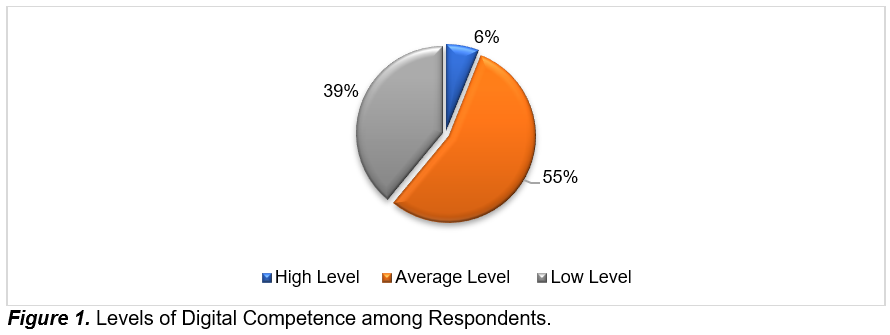
The results obtained in the pilot study prove that the majority of students of philological specialties had a low level of digital competence.
Assessing the potential of using digital technologies in educational activities and everyday life, the following results were obtained (Figure 1):
The ascertaining stage of the pedagogical experiment.
The ascertaining stage of the experiment involved formulating the purpose of the study, defining the research problm, forming a sample of respondents, dividing them into a control group and an experimental group, and selecting diagnostic tools.
At the ascertaining stage of the pedagogical experiment, the following tasks were set:
The formative stage of the pedagogical experiment. The purpose of the formative stage of the experiment is to have a targeted impact on the formation of digital competence in students of philological specialties by introducing pedagogical conditions as the basis of the system for the formation of digital competence in students of philological specialties.
Control stage of the pedagogical experiment. The purpose of the control stage of the pedagogical experiment is to compare the results of the level of manifestation of digital competence formation in the participants of the control and experimental groups, which were obtained at the ascertaining stage and after the implementation of the implementation of pedagogical conditions as the basis of the system for the formation of digital competence in students of philological specialties.
The tasks of the control stage of the experiment are aimed at:
Let us dwell in more detail on the implementation of the tasks of the ascertaining stage of the experiment.
The criteria for assessing the level of formation of digital competence in students of philological specialties are: motivational, cognitive, instrumental, and reflective.
The indicators of the motivational criterion for assessing the level of formation of digital competence of students are their value attitude towards digital innovations in educational activities, motivation to achieve success in philological activities through the use of digital technologies.
The indicators of the cognitive criterion for assessing the level of formation of digital competence of students are skills, abilities, and knowledge related to the use of digital technologies in professional and everyday activities.
The indicators of the instrumental criterion for assessing the level of formation of digital competence include the ability of students to critically navigate in the information space, to evaluate and search for information, to operate with it in professional activities; the ability to use new digital educational resources in the educational process, as well as the ability to effectively cooperate, interact, and communicate in the information space.
The indicators of the reflective criterion for assessing the level of formation of digital competence include the ability of students to monitor their professional, own philological activities, and to determine the ability to think critically, to use updated digital technologies.
The three levels of manifestation of the formation of digital competence correspond to certain criteria and indicators, in particular, low, average, and high.
At the ascertaining stage of the experiment, we characterized a certain sample of the participants of the experiment. From the statistical set of respondents, a general set was selected for the ascertaining stage of the experiment, namely: students of the experimental group and students of the control group.
For the formative stage of the experiment, higher education institutions where students of philological specialties are trained according to similar educational programs were selected as the experimental base.
The purpose of the formative stage of the experiment is to have a targeted impact on the formation of digital competence in students of philological specialties by introducing pedagogical conditions as the basis of the system for the formation of digital competence in students of philological specialties.
The system for the formation of digital competence in students of philological specialties included the creation of a digital environment for the professional training of students of philological specialties, teaching selected academic disciplines in the experimental group using both traditional forms of organizing the educational process and targeted application of innovative digital technologies, methods, means, and teaching techniques based on the use of ICT.
In the control group, training took place using traditional methods, means, and forms of teaching with ICT elements.
In order to test the effectiveness of the developed system for the formation of digital competence in students of philological specialties, pedagogical conditions were selected.
To form digital competence in students of philological specialties, it is necessary to create favorable pedagogical conditions in the educational process of a higher education institution. We have formulated the following pedagogical conditions.
The first pedagogical condition provides for the creation of an innovative didactic IT environment for the professional training of students.
The second pedagogical condition ensures the activation of the professional basis for the formation of competencies (general, subject, integral) in students of philological specialties.
The third pedagogical condition includes informational determination of the content of philological professional training of students through the use of innovative digital tools, methods, technologies, and interactive forms of organizing learning in the process of professional training.
The fourth pedagogical condition creates conditions for ensuring the reflection of students of philological specialties, readiness, and ability to use digital technologies in professional activities.
The purposeful formation of students' digital competence in the EG provided for the use of the following active learning methods: "flipped classroom"; intellectual games, innovative forms of extracurricular and classroom work: lecture-discussions, lecture-conferences, lecture-conversations, problem lectures, lecture-visualizations, individual and group presentations, webquests, webinars.
In the EG, digital services and tools were used their a wide range during the independent creation of presentations for classes, searching for necessary information on the Internet, which contributed to better assimilation of educational material.
A significant impact on the formation and development of digital competence of students of philological specialties was played by the special course "Digital Technologies in the Philological Activity of Specialists", in which attention was paid to the use and introduction of digital technologies into philological activity; the study of multimedia presentation techniques, software, work with Microsoft Office applications and programs and the electronic educational environment "Moodle", the use of digital technologies in independent work, automated systems in philology, mobile learning technologies, etc.
Thus, the special course "Digital Technologies in the Philological Activity of Specialists" contributed to the formation and development of digital competence in students of philological specialties.
Generalization of the results of the experiment. The control stage of the pedagogical experiment of students of philological specialties required a comparison of the distributions in the control group and the experimental group according to the levels of formation of digital competence in respondents. The following assumptions were considered:
Let us present the generalized results of the assessment of the level of formation of digital competence of students in the control and experimental groups at the ascertaining stage and the control stage of the experiment.
Motivational criterion. We present the results of assessing the level of formation of digital competence of students by the motivational criterion at the control stage of the experiment. Using the Pearson coefficient χ2 calculated at the control stage of the experiment, the degree of consistency of the responses of respondents in the control and experimental groups is determined.
In the distribution of levels of formation of digital competence at the beginning and end of the experimental work, we find the degree of significance of the difference between students of philological specialties in the experimental group.
The value we obtained, 42.73, is greater than the tabular value 10.59663 − taking into account the tabular information “Critical values of the χ2 criterion corresponding to different probabilities of error and different degrees of freedom” (m–1=2 degrees of freedom and the probability of error is less than 0.05).
The value we obtained, 6.31, is smaller (m–1=2 degrees of freedom and the probability of error is less than 0.05) than the corresponding tabular value 10.59663. Therefore, we are talking about the same distribution of students' levels of digital competence formation, about the null hypothesis according to the motivational criterion at different stages of the experiment.
According to the motivational criterion, at the control stage of the experiment, positive dynamic changes in the levels of digital competence formation of respondents occurred (Figure 2).
Results of the EG according to motivational criterion:
The results of the CG according to motivational criterion:
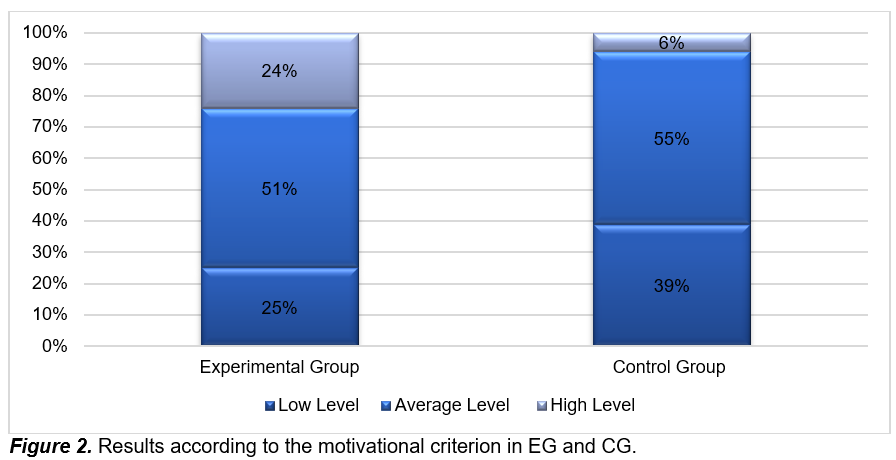
In the EG, the changes are significant; in the CG, not significant.
Cognitive criterion. Let us present the results of assessing the level of digital competence formation of respondents by the cognitive criterion at the ascertaining and control stages of the experiment.
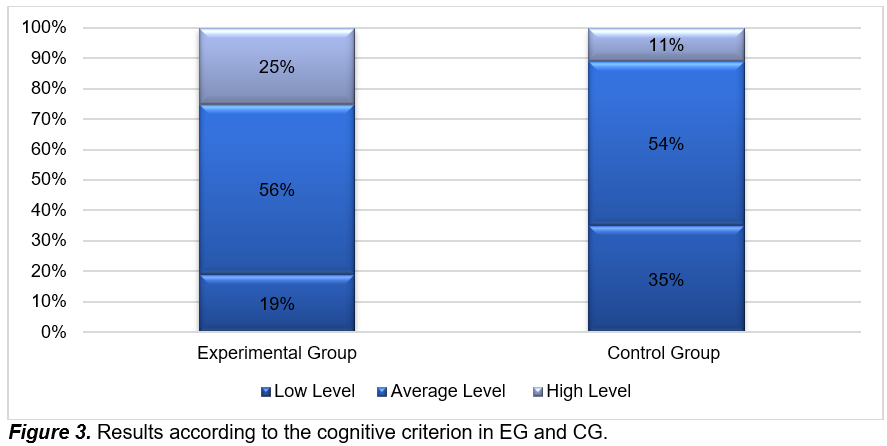
At the ascertaining stage of the experiment, by the cognitive criterion, a low level of digital competence formation is observed in 52% of respondents in the experimental group and 47% of students in the control group. In 44% of respondents in the experimental group and 49% of respondents in the control group, an average level of digital competence formation was detected by the cognitive criterion. 4% of respondents in the experimental group and 4% in the control group could boast a high level of digital competence development according to the cognitive criterion.
According to the cognitive criterion, at the control stage of the experiment, positive dynamic changes in the levels of digital competence development of respondents occurred (Figure 3).
Results of the EG according to cognitive criterion:
Results of the CG according to cognitive criterion:
The study used the Pearson χ² test to test the statistical significance of the differences between the levels of digital competence in the control and experimental groups:
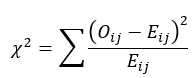
Where


Table 2.
Observed values (Digital competence levels by motivational criterion (control stage))

Calculation:
High:

Average:

Low:

Table 3.
Expected values

The resulting χ² = 13.99 > 10.596 (critical value at df = 2; p < .05).
The difference between EG and CG is statistically significant.
Effect size (Cramer's V)
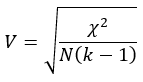


Interpretation (according Cohen, 1988):
V = 0.19 – small–average effect.
The χ² test demonstrated statistically significant differences between the distributions of competence levels in the experimental and control groups. The observed values deviated substantially from the expected frequencies, χ² = 13.99, df = 2, p < .05, indicating that the implemented pedagogical conditions resulted in measurable improvement of digital competence. The effect size, calculated using Cramer's V (V = 0.19), suggests a small-to-moderate practical impact of the intervention, confirming the meaningfulness of the obtained differences.
In the distribution of levels of digital competence formation at the beginning and end of the experimental work, we find the degree of significance of the difference between students of philological specialties in the experimental group.
The value we obtained, 34.36, is greater than the tabular value 10.59663 − taking into account the tabular information “Critical values of the χ2-criterion corresponding to different probabilities of error and different degrees of freedom” (m–1=2 degrees of freedom and the probability of error is less than 0.05).
The value we obtained, 8.78, is less (m–1=2 degrees of freedom and the probability of error is less than 0.05) than the corresponding tabular value 10.59663. So, we are talking about the same distribution of students' levels of digital competence formation, about the null hypothesis according to the cognitive criterion at different stages of the experiment.
According to the cognitive criterion, at the control stage of the experiment, positive dynamic changes in the levels of digital competence formation of respondents occurred. In the EG, the changes are significant; in the CG, not significant.
Instrumental criterion. Let us present the dynamics of changes in the levels of formation of digital competence according to the instrumental criterion at the control stage of the experiment.
According to the instrumental criterion, at the control stage of the experiment, positive dynamic changes in the levels of formation of digital competence of respondents occurred (Figure 4).
Results of the EG according to instrumental criterion:
Results of the CG according to instrumental criterion:
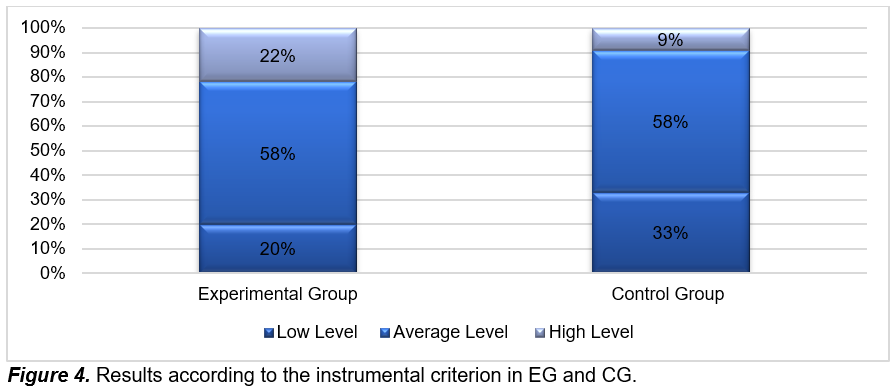
The presented results of assessing the level of formation of digital competence of students by the instrumental criterion at the control stage of the experiment indicate that “Critical values of the χ2-criterion corresponding to different probabilities of error and different degrees of freedom” − according to the tabular information, we find out in the experimental group at the beginning and after the experiment the degree of significance of the difference between the levels of formation of digital competence of respondents. It should be noted that the obtained value of 45.77 is greater (m–1=2 degrees of freedom and the probability of error is less than 0.05) than the corresponding tabular value of 10.59663.
The value we obtained of 8.54 (m–1=2 degrees of freedom, and the probability of error is less than 0.05) is less than the corresponding tabular value of 10.59663. That is, there are no grounds to deny the null hypothesis about the equal distribution of the levels of formation of students' digital competence at different stages of the study.
In the EG, the changes are significant; in the CG, not significant.
Reflective criterion. Let us present the dynamics of changes in the levels of formation of digital competence according to the reflective criterion at the control stage of the experiment.
According to the reflective criterion, at the control stage of the experiment, positive dynamic changes in the levels of formation of digital competence of respondents occurred (Figure 5).
Results of the EG according to the reflective criterion:
Results of the CG according to the reflective criterion:
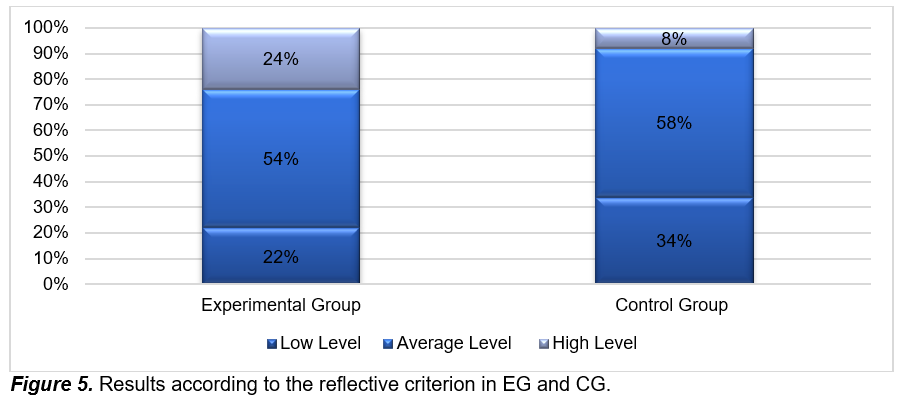
The presented results of assessing the level of formation of digital competence of students according to the reflective criterion at the control stage of the experiment indicate that “Critical values of the χ2-criterion corresponding to different probabilities of error and different degrees of freedom” − according to the tabular information, we find out in the experimental group at the beginning and after the experiment the degree of significance of the difference between the levels of formation of digital competence of respondents. Note that the obtained value of 31.50 is greater (m–1=2 degrees of freedom and the probability of error is less than 0.05) than the corresponding tabular value of 10.59663.
The value we obtained of 7.74 (m–1=2 degrees of freedom, and the probability of error is less than 0.05) is less than the corresponding tabular value of 10.59663. That is, there are no grounds to deny the null hypothesis about the same distribution of the levels of formation of digital competence of students at different stages of the study.
In the EG, the changes are significant; in the CG, not significant.
The presented distribution of the levels of formation of digital competence of respondents according to all criteria indicates that at the control stage of the pedagogical experiment in the experimental group the results are much higher, which indicates the effectiveness of the implementation of the developed pedagogical conditions and the system of formation of digital competence in students of philological specialties, which was implemented in higher education institutions in the professional training of students of philological specialties.
Analysis of the study results indicates a positive dynamics of changes in the level of formation of digital competence of respondents in the experimental group, which is proven by calculations of the Pearson coefficient (χ2-criterion).
Conclusions
In the article, we developed and tested pedagogical conditions and systems for the formation of digital competence in students of philological specialties, which were implemented in higher educational institutions as part of the professional training of specialists.
The sample size (n = 76) can be considered sufficient for the application of basic statistical methods, however, it creates certain limitations for the generalization of the results. The small number of participants in each group (n = 38) reduces the statistical power, especially in terms of detecting medium and small effects. This means that some trends could have remained unrecorded, and further studies with larger samples will allow for more stable and generalized conclusions.
The study was based on a structured assessment of four components of digital competence, which, on the one hand, ensured the integrity of the model, but on the other hand, limited the breadth of the analysis. The indicators were based on a level scale, which required further interpretation for quantitative analysis. In addition, the assessment of formative changes depended on the symmetry of the criteria and the consistency of the measurement tools, which may affect the accuracy of determining the increase.
Despite adhering to the principles of group equivalence, the influence of external factors, in particular, different motivation of students, the influence of the teacher or previous experience of interaction with digital technologies, cannot be completely ruled out. Also, a certain bias could be caused by the expectation effect – EG students could demonstrate greater involvement due to participation in the experimental method. An additional source of procedural bias is self-assessment indicators, which tend to vary depending on the level of confidence of the respondents.
Despite the above limitations, the results of the study have high practical value. They demonstrate the effectiveness of the developed pedagogical model in the formation of digital competence of future specialists, confirm significant changes in the experimental group in a number of key components and prove the possibility of integrating EDM tools into the educational process. The data obtained can serve as a basis for improving educational programs, developing digital literacy training, and scaling the tested model to other educational contexts.
Practical implications
The results of the study, which experimentally confirmed the effectiveness of the developed pedagogical conditions and system for the formation of digital competence of students of philological specialties, have important practical implications for higher education institutions and philological teachers:
The developed system can be used to update the content of academic disciplines, integrate innovative digital tools, services and platforms into the professional training of students. It has been proven that the comprehensive use of digital technologies (Google Workspace, Moodle, multimedia services, interactive forms of learning) significantly increases the level of formation of the motivational, cognitive, instrumental and reflective components of digital competence.
The proposed system promotes the mastery of digital skills necessary for the professional activities of a modern philologist: analysis of information in digital resources, creation and editing of multimedia materials, participation in distance forms of communication, work with electronic learning platforms, use of digital tools in translation and linguistic analysis.
The creation of an innovative digital educational environment in higher education improves the organization of the educational process, ensures the availability of educational materials, forms high activity of students and increases the efficiency of time use in classes and in independent work.
The results of the study show that the purposeful formation of digital competence contributes to the development of critical thinking skills, responsible use of information, compliance with copyright, safe behavior in the digital environment and a high level of self-assessment of one's own activities.
Further research
Although the conducted study confirmed the effectiveness of the developed system, the results obtained do not exhaust the entire range of issues related to the formation of digital competence of philology students. Prospects for further scientific research cover the following areas:
Bibliographic references
Alcocer-Sánchez, D. J., Palmero Castillo, A., Muñoz, D., & Canto Herrera, P. J. (2023). Competencias digitales y emociones en estudiantes universitarios de República Dominicana. PUBLICACIONES, 53(1), 81–107. https://doi.org/10.30827/publicaciones.v53i1.27986
Alnasib, B. (2022). Digital competencies: Are pre-service teachers qualified for digital education? International Journal of Education in Mathematics, Science and Technology, 11(1), 96–114. https://doi.org/10.46328/ijemst.2842
Alvarez-Flores, E. P., Magadaleno Moreno, M., & Núñez-Gómez, P. (2024). Competencia y comportamiento informacionales de estudiantes para el uso de las bibliotecas digitales universitarias. Investigación Bibliotecológica: Archivonomía, bibliotecología E información, 38(99), 129–144. https://doi.org/10.22201/iibi.24488321xe.2024.99.58881
Araiza-Vázquez, M. J., & Pedraza-Sánchez, E. Y. (2019). Discernment of digital competences in students of a business school. In L. Gómez-Chova, A. López-Martínez, & I. Candel-Torres (Eds.), EDULEARN19: Proceedings of the 11th International Conference on Education and New Learning Technologies (pp. 4737–4747). IATED. https://doi.org/10.21125/edulearn.2019.1178
Arango-Morales, A. J., Delgado-Cruz, A., & Tamayo-Salcedo, A. L. (2020). Digital competence of tourism students: Explanatory power of professional training. European Journal of Investigation in Health, Psychology and Education, 10(1), 310–326. https://doi.org/10.3390/ejihpe10010024
Bernate, J., Fonseca, I., Guataquira, A., & Perilla, A. (2021). Competencias Digitales en estudiantes de Licenciatura en Educación Física (Digital Competences in Bachelor of Physical Education students). Retos, 41, 310-318. https://doi.org/10.47197/retos.v0i41.85852
Burgos-Videla, C. G., Castillo Rojas, W. A., López Meneses, E., & Martínez, J. (2021). Digital competence analysis of university students using latent classes. Education Sciences, 11(8), 385. https://doi.org/10.3390/educsci11080385
Cortez, P., Benavides, V., Rosales, F., & Orrala, L. (2020). Digital competences desirable in university students. In Á. Rocha, C. Ferrás, C. Montenegro Marin, & V. Medina García (Eds.), Information technology and systems (ICITS 2020) (Advances in Intelligent Systems and Computing, Vol. 1137). Springer. https://doi.org/10.1007/978-3-030-40690-5_61
European Commission. (2018). Communication from the Commission to the European Parliament, the Council, the European Economic and Social Committee and the Committee of the Regions on the Digital Education Action Plan. European Commission. https://eur-lex.europa.eu/legal-content/EN/TXT/PDF/?uri=CELEX:52018DC0022&from=EN
Grijalva Verdugo, A. A., & Urrea Zazueta, M. L. (2017). Evaluación de la competencia digital en estudiantes de comunicación. El caso de una universidad mexicana. EDMETIC, 6(2), 276–301. https://doi.org/10.21071/edmetic.v6i2.6923
Haleem, A., Javaid, M., Qadri, M. A., & Suman, R. (2022). Understanding the role of digital technologies in education: A review. Sustainable Operations and Computers, 3, 275–285. https://doi.org/10.1016/j.susoc.2022.05.004
Hernández, O. C., Amaya Espinosa, H. A., Rodríguez Duque, L. F., Gutiérrez Barrera, E. E., & Suárez Casas, V. (2016). Mapping digital competences of modern languages students. Academia Y Virtualidad, 9(1), 89–104. https://doi.org/10.18359/ravi.1404
Kampylis, P., Punie, Y., & Devine, J. (2015). Promoting effective digital-age learning: A European framework for digitally-competent educational organisations. European Union. https://doi.org/10.2791/54070
Lund, A., Furberg, A., Bakken, J., & Engelien, K. L. (2014). What does professional digital competence mean in teacher education? Nordic Journal of Digital Literacy, 9(4), 280–298. https://doi.org/10.18261/ISSN1891-943X-2014-04-04
McGarr, O., & McDonagh, A. (2019). Digital competence in teacher education. University of Limerick. https://doi.org/10.34961/5458
Punie, Y., & Brecko, B., & Ferrari, A. (2013). DIGCOMP: A framework for developing and understanding digital competence in Europe. Publications Office of the European Union. https://op.europa.eu/en/publication-detail/-/publication/a410aad4-10bf-4d25-8c5a-8646fe4101f1/language-en
Redecker, C. (2017). European framework for the digital competence of educators: DigCompEdu (Y. Punie, Ed.). Publications Office of the European Union. https://acortar.link/hwGBkW
Silva, K. K. A., & Behar, P. A. (2019). Alunos da EaD on-line do Brasil e competências digitais. Revista EDaPECI, 19(2), 21–39. https://doi.org/10.29276/redapeci.2019.19.210742.21-39
Tassara-Salviati, C. F. J., Vargas-Merino, J. A., Rivarola Ganosa, I., Quispe-Huarancca, J., & Escudero-Simon, W. (2023). Competencias digitales en estudiantado peruano de administración de empresas: Un estudio comparativo. Revista Prisma Social, (41), 47–66. Recuperado a partir de https://revistaprismasocial.es/article/view/4966
Vuorikari, R., Kluzer, S., & Punie, Y. (2022). DigComp 2.2: The Digital competence framework for citizens – With new examples of knowledge, skills and attitudes. Publications Office of the European Union. https://doi.org/10.2760/490274

Este artículo no presenta ningún conflicto de intereses. Este artículo está bajo la licencia Creative Commons Atribución 4.0 Internacional (CC BY 4.0). Se permite la reproducción, distribución y comunicación pública de la obra, así como la creación de obras derivadas, siempre que se cite la fuente original.