
Original Article
Eduweb, 2026, enero-marzo, v.20, n.1. ISSN: 1856-7576
Doi: https://doi.org/10.46502/issn.1856-7576/2026.20.01.6
Confianza académica y ansiedad lingüística como predictores de la preparación para intercambios internacionales
Olha Herasymenko
PhD, Associate Professor, Department of Philology and Translation, Mykhailo Tuhan-Baranovskyi Educational and Scientific Institute of Economics and Trade, Kryvyi Rih National University, Kryvyi Rih, Ukraine.
https://orcid.org/0000-0002-0539-1165
Ruslan Kravets
Doctor of Pedagogical Sciences, Associate Professor, Head of the Department of Ukrainian and Foreign Languages, Faculty of Management and Law, Vinnytsia National Agrarian University, Vinnytsia, Ukraine.
https://orcid.org/0000-0002-7459-8645
Alla Kondratiuk
PhD, Associate Professor, Department of Philology, Faculty for the Training of Foreign Citizens, National Pirogov Memorial Medical University, Vinnytsya, Ukraine.
https://orcid.org/0000-0001-7104-0171
Liliia Biretska
PhD, Associate Professor, Department of Philology, Faculty for the Training of Foreign Citizens, National Pirogov Memorial Medical University, Vinnytsya, Ukraine.
https://orcid.org/0009-0001-6116-897X
Oksana Raniuk
PhD, Associate Professor, Department of Slavic Philology, Faculty of Humanities and Education, Khmelnytskyi National University, Ukraine.
https://orcid.org/0000-0001-8859-9254
Cómo citar:
Herasymenko, O., Kravets, R., Kondratiuk, A., Biretska, L., & Raniuk, O. (2026). Academic confidence and language anxiety as predictors of readiness for international exchanges. Revista Eduweb, 20(1), 89-106. https://doi.org/10.46502/issn.1856-7576/2026.20.01.6
Recibido: 08/12/25 Aceptado: 20/02/26
Abstract
This study analyzes the linguistic readiness of higher education students to participate in international academic exchanges and identifies barriers to successful language acquisition. Utilizing a quantitative correlational-descriptive design, the research surveyed 220 Ukrainian university students involved in academic mobility programs. Readiness was assessed through a proficiency test and self-assessment scales. Data analysis included descriptive statistics, Pearson correlation, and multiple linear regression. Results indicate that while most students possess average readiness, they excel in reading but struggle with academic writing and speaking. Three barrier groups emerged: linguistic, psycho-emotional, and organizational. Regression analysis revealed that academic confidence (β = .45), language anxiety (β = –.29), and self-assessment (β = .24) are key predictors, with the model explaining 40% of the variance in linguistic readiness. The study highlights the critical role of psychological factors and individual learning strategies over institutional support. Recommendations include integrating systematic English for Academic Purposes (EAP) courses and anxiety-reduction strategies to better prepare prospective exchange students.
Keywords: academic mobility, English for Academic Purposes (EAP), academic confidence, higher education internationalization, language anxiety.
Resumen
Este estudio analiza la preparación lingüística de estudiantes de educación superior para participar en intercambios académicos internacionales e identifica barreras para la adquisición exitosa del idioma. Utilizando un diseño descriptivo-correlativo cuantitativo, la investigación encuestó a 220 estudiantes universitarios ucranianos involucrados en programas de movilidad académica. La preparación se evaluó mediante una prueba de competencia y escalas de autoevaluación. El análisis de datos incluyó estadística descriptiva, correlación de Pearson y regresión lineal múltiple. Los resultados indican que, si bien la mayoría de los estudiantes poseen una preparación promedio, sobresalen en lectura, pero tienen dificultades con la escritura y el habla académicas. Surgieron tres grupos de barreras: lingüísticas, psicoemocionales y organizacionales. El análisis de regresión reveló que la confianza académica (β = .45), la ansiedad lingüística (β = –.29) y la autoevaluación (β = .24) son predictores clave, y el modelo explica el 40% de la varianza en la preparación lingüística. El estudio destaca el papel crítico de los factores psicológicos y las estrategias de aprendizaje individuales sobre el apoyo institucional. Las recomendaciones incluyen la integración de cursos sistemáticos de Inglés para Fines Académicos (EAP) y estrategias de reducción de la ansiedad para preparar mejor a los futuros estudiantes de intercambio.
Palabras clave: movilidad académica, inglés académico (EAP), confianza académica, internacionalización de la educación superior, ansiedad lingüística.
Introduction
The participation of higher education students in international academic exchanges is an important mechanism for the internationalization of universities and increasing their competitiveness in the global educational space. In particular, the Erasmus+, DAAD, Fulbright programs, and other initiatives have created holistic conditions for the development of an academic mobility environment, the formation of intercultural competence, integration into international scientific communities, and the development of skills that are in demand in the modern labor market. For this reason, the linguistic readiness of students plays the role of an important role in successful participation in mobility. In particular, the quality of language training determines academic success during a semester abroad, the effectiveness of intercultural communication, and the ability to integrate into the institutional environment of the host university (Du & Lei, 2023). Previous studies have indicated that insufficient proficiency in a foreign language is one of the main barriers to academic mobility. In addition, researchers have drawn attention to the existence of a gap between the formal level of language proficiency (B1/B2 certificates) and the real communication skills necessary for academic writing, participation in discussions, working with scientific texts, and completing project tasks (Conceição, 2020; Witkowsky, 2024). Research in the field of applied linguistics has additionally pointed to the importance of academic English (EAP), culturally colored speech practices, critical reading skills, and strategies for overcoming language anxiety. In the countries of Central and Eastern Europe, another dimension is added - inequality in access to quality language training. Thus, the problem of students’ linguistic readiness for academic mobility has not only a global but also a clearly expressed regional dimension. In many Central and Eastern European countries, structural limitations of the higher education system – in particular, unequal access to language resources, different levels of institutional support, and limited presence of native speakers – exacerbate the challenges that are recorded in international research. In this context, Ukraine is not an exception but rather represents an extreme case of the accumulation of global and regional factors that affect students’ linguistic preparation for participation in international academic exchanges (Jones & Murray, 2025).
This is due to the different material and technical bases of universities and the presence of native speakers. In addition, for Ukraine, the issue of linguistic readiness is gaining relevance due to the intensification of universities' participation in European mobility programs and the growing need for students to implement individual educational trajectories outside the country. In the conditions of martial law and the digital transformation of education, new challenges have arisen. Researchers have pointed to the reduction of classroom hours in a foreign language, unequal access to resources, decreased motivation, and increased language anxiety (Gacel-Ávila, 2021). These challenges have highlighted the importance of developing students’ linguistic competence, which is valuable not only for communication but also for broader academic, professional, and intercultural integration. This makes this study particularly relevant.
Accordingly, the purpose of this study is a comprehensive analysis of the linguistic readiness of higher education students to participate in international academic exchanges.
The objectives of the study are as follows:
Literature Review
Internationalization processes in modern higher education institutions have become key transformations. Student and faculty mobility, transformations of educational content, language regimes, and academic practices have become an objective reality, including for Latin American countries. In particular, some studies have shown that the region has gradually increased its participation in international mobility (Barbosa & Neves, 2020). However, the share in the global dimension is quite small, and many cases were intraregional in nature. Researchers, having analyzed international trends and analytical information from Latin America and the Caribbean, have shown the unevenness of internationalization (Diniz de Figueiredo et al., 2021; Mattos & Diniz, 2025). Leading national universities are actively developing partnerships, using practices such as granting double degrees, exchange programs, etc. On the other hand, smaller universities have retained a primarily local orientation. In such conditions, language policies, in particular the dominance of Spanish and Portuguese, and the limited presence of English, have become a structural factor of internationalization. Other recent studies have shown, using the examples of Brazil and Peru, that official university internationalization strategies are primarily available to students with higher socio-economic status (Turchyn et al., 2023; Guimarães et al., 2020). Similar results can also be projected to other countries of the global South, and also to Eastern European realities. In particular, institutional constraints, financial difficulties and language requirements (the need to prove the level of English or another language of instruction) have constituted significant obstacles to the expansion of academic mobility in this region.
Researchers have also emphasized the paradigm of thinking of education seekers, since foreign language proficiency is not only a consequence of studying abroad (Yu et al., 2024; Maringe, 2022). It was noted that it was a determinant of the decision to go on exchange, that is, students chose those destinations where the language requirements seemed achievable to them. On the other hand, it was also noted that participation in study abroad programs contributed to significant increases in language competence (especially in the field of speaking) (Lima-Lopes & Biazi, 2021; Martin-Jones et al., 2024). In the Latin American context, there is little empirical data on academic exchanges. First of all, the focus is on the problem of the linguistic dimension of internationalization and on the fact that the insufficient level of English proficiency among teachers and students was a systemic limitation (Tavares, 2021; Atobatele et al., 2024). Generalizing research publications have shown that most scientific works in this field were focused on the social sciences and humanities, and there was a noticeable shortage of studies that would systematically assess the language readiness of students from non-English-speaking countries (Tejada-Sanchez & Molina-Naar, 2021; Guimarães & Hildeblando Júnior, 2021; Ivashchuk et al., 2023).
Some studies have suggested the introduction of English as the language of instruction. In particular, Colombia has moved from pilot courses to a broader implementation, accompanied by internal language courses, teacher training, and adaptation of teaching materials (Barger & Sandoval Rubilar, 2020; Gimenez & Morgan, 2014). Similar results have been obtained by other scholars, including Reus, who has demonstrated the effectiveness of introducing finance and industrial organization courses in English as a way to reduce the region’s “linguistic isolation” (Reus, 2020). With better language preparation, students would become more relevant to the global labor market. Research outside the Latin American region has confirmed the central role of language readiness in academic mobility. Review studies have shown that study abroad programs in Europe and beyond lead to significant gains in language competence (Lysiuchenko, 2021; Kamaşak et al., 2021). However, the best effect was recorded for those students who already had a certain minimum threshold of language proficiency (as a rule, a level not lower than B1–B2) (Escobar-Alméciga, 2022). Research by other scientists made it possible to determine that the level of proficiency in the target language (or English as the language of instruction) significantly influenced the decision to go to another country to study (Ennser-Kananen & Saarinen, 2023).
Alongside studies on Latin American and Global South countries, the European context of academic mobility has gained increasing attention in the academic literature, particularly within the European Higher Education Area (EHEA). Studies conducted in Central and Eastern European countries have shown that for students from non-English speaking education systems, language readiness is also a key factor in participating in mobility programmes, particularly within Erasmus+ and related initiatives. In particular, the authors have noted a gap between formally certified language proficiency and the real academic and communicative competences required for studying abroad, participating in seminars, preparing written papers and intercultural interaction.
Empirical studies in Poland, the Czech Republic, the Baltic States and the Balkans have shown that students from regions with limited language resources are more likely to experience language anxiety, academic insecurity and difficulties in integrating into the educational environment of host universities. Together with financial and institutional constraints, this has created systemic barriers to full participation in European mobility programmes. In this sense, the Ukrainian context is close to the broader Eastern European reality, where students’ language readiness has determined not only access to mobility but also the quality of their educational experience abroad.
Thus, several important aspects have been demonstrated in the modern scientific literature. First of all, language readiness is recognized as a critical factor in access to mobility programs, selection of the necessary country, potential academic success and psychological well-being of students. Secondly, for the realities of Latin America, the language factor is often considered at the macro level - empirical studies of individual linguistic readiness of students are only isolated. The same situation is also inherent in the realities of other regions, in particular Ukraine and Central Europe in general. Accordingly, it is necessary to combine quantitative and qualitative approaches to analyze students' sense of language readiness. Closing the empirical gap under such conditions is an extremely important task.
Methodology
The study had a quantitative, empirical, descriptive-correlation design. The study was conducted in a cross-sectional study format and using standardized language testing and a questionnaire. This design made it possible to combine the analysis of objective indicators of language preparation (test results) with students’ subjective perceptions of their own readiness to participate in international programs.
Participants and sample
The study involved 220 higher education applicants from four Ukrainian universities that have valid academic mobility agreements (including Erasmus+ programs and bilateral agreements). The sample included students:
2–4 years of bachelor’s degree and 1 year of master’s degree;
humanities, socio-economic and technical specialties;
who studied English as a foreign language and had a level of proficiency not lower than B1 according to CEFR (according to university exams or certificates).
Inclusion criteria included the following aspects:
Exclusion criteria:
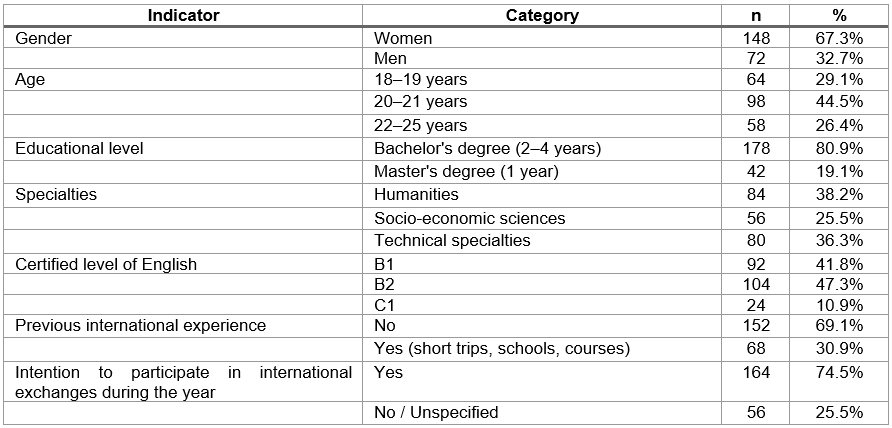
Among the 220 participants, approximately 65–70% were women and 30–35% were men, and their ages ranged from 18 to 25 years. Some of the students (about a third of the sample) had previous experience of short-term study trips, summer schools or language courses abroad, which allowed comparing groups with different levels of international experience. The sample is purposive sampling, since it involved only those higher education students who are potential participants or candidates for participation in international academic exchanges.
Table 1.
Characteristics of Participants (N = 220)
Instruments and Procedure
A variety of tools were used to collect data, which are aimed at assessing linguistic readiness in several dimensions.
A written test developed based on CEFR descriptors and academic English requirements (EAP). The test included four blocks:
Academic reading (reading) – work with an authentic fragment of a scientific/educational text in English with tasks on 1. understanding the main content; 2. Interpreting the argument; 3. working with terms and references.
Academic writing (writing) – a short-written task (150–200 words), where students had to formulate a position on participation in academic mobility and use the basic elements of academic style (linking words, hedging, references).
The lexical and grammatical block consists of tasks on the use of academic vocabulary, recognition of formal and informal constructions, and typical grammatical structures of academic discourse.
Mini-case “academic situation” – a description of a simulated situation (seminar, group project, correspondence with the program coordinator), where it is necessary to choose adequate language formulas and demonstrate understanding of communicative norms.
The overall score reflected the integral index of linguistic readiness, which was then used as a quantitative indicator for further analysis.
The questionnaire consisted of several blocks, designed on a 5-point Likert scale (1 – “completely disagree”, 5 – “completely agree”):
Self-assessment of language competence (competence in reading, writing, speaking, listening in an academic context).
Academic self-efficacy – a sense of ability to:
write essays, reports, abstracts in English;
prepare presentations;
participate in discussions.
Language anxiety – emotional reactions associated with the need to communicate in English in a foreign-language academic environment (based on adapted statements from the FLA scales).
Coping strategies – use of resources:
language courses, conversation clubs, online platforms;
tandem learning, teacher consultations;
digital and AI tools to support speaking and writing.
Intercultural readiness – openness to another academic culture, readiness to interact with foreign students and teachers, tolerance for uncertainty.
The questionnaire also included a socio-demographic block: age, course, specialty, level of certified English, experience of living abroad, participation in international programs.
At the end of the questionnaire, 2–3 open-ended questions were offered, where participants could:
describe their main fears and expectations regarding studying abroad;
name what kind of language support they considered most necessary.
The answers received were used to supplement the quantitative results qualitatively.
Participants were recruited from academic mailing lists. Information messages from international relations departments and announcements in electronic learning environments (LMS, Google Classroom, etc.) were also used.
The linguistic readiness test developed by the authors previously underwent a validation process. For this purpose, a pilot study was conducted on a separate group of students (n ≈ 30–40) who met the same inclusion criteria as the main sample. The pilot study made it possible to check the clarity of the instructions, the adequacy of the task completion time, and the internal consistency of the test components.
The content validity of the instrument was ensured by expert assessments. The test structure and task formats were analyzed by three experts in applied linguistics and English for Academic Purposes (EAP), who assessed the correspondence of the test tasks to typical academic communicative situations encountered by education seekers during participation in international academic mobility programs. Based on the results of the expert analysis, minor adjustments were made to the wording of individual tasks.
The reliability of the test was assessed using the Cronbach’s alpha coefficient of internal consistency. The overall reliability of the test demonstrated an acceptable level (α ≥ 0.78).
Participation format
The language test was conducted in a classroom or online format (with time control, 40–50 minutes).
The questionnaire was filled out online (Google Forms or another platform) and took about 15–20 minutes.
The data were collected without specifying personal data. To ensure anonymity, each participant was assigned a code.
The results were used only in a generalized form.
In addition, students could discontinue participation at any point without giving a reason. Participation did not affect their academic performance.
Data analysis
Data processing was carried out using statistical software (SPSS / R).
At the preparatory stage, data were checked for completeness and variable coding and reversal of the corresponding items were carried out.
Descriptive statistics consisted of calculating mean values, standard deviations, minimum/maximum values for indicators of linguistic readiness, self-esteem, anxiety, strategies; distribution of participants by language test level and previous international experience. Correlation analysis was conducted to establish the relationship between the results of the language test and self-esteem of language readiness, academic confidence, level of language anxiety and use of strategies.
Comparative analysis of groups was carried out based on the comparison of participants with/without previous international experience. Groups with different levels of English proficiency (levels B1, B2, C1) were also compared for indicators of anxiety, academic confidence and strategies. The study carried out modeling of predictors of linguistic readiness and compiled a multivariate regression model, in which the dependent variable was the integral indicator of linguistic readiness (a combination of test results and self-assessment), and the independent variables were: level of language proficiency; academic confidence; language anxiety; intensity of strategy use; previous international experience.
Results and Discussion
The average integral score of the language test for Ukrainian university students was 62.4 points out of 100 (SD = 12.7). This generally indicated an average level of readiness. Three groups were distinguished according to the assessment scale:
High level of readiness (≥75 points) – 18.6% of students
Average level (55–74 points) – 56.8% of students
Low level (<55 points) – 24.6% of students
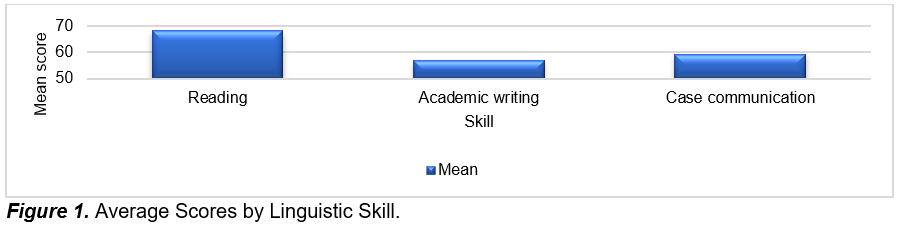
The participants showed the best results in academic reading tasks (M = 68.2), the lowest – in academic writing tasks and formulating reasoned answers (M = 57.1). Case tasks related to communication in academic situations (correspondence with the coordinator, formulating a request, participating in a discussion), where the average score was 59.4, were of particular difficulty (See Figure 1).
The questionnaire data showed that students rated their language competence somewhat higher than the test results showed. The average self-assessment of language readiness was 3.62 on a 5-point scale (SD = 0.71).
The highest self-assessments were for the following activities:
understanding academic texts (M = 3.87),
working with educational materials in English (M = 3.74).
The lowest self-assessments were for the following: participating in oral discussions (M = 3.21), academic writing (M = 3.18), and presentations in English (M = 3.09).
A comparison of groups showed that students with prior international experience demonstrated significantly higher self-assessment (M = 3.95) compared to students without experience (M = 3.48).
At the same time, the average level of academic confidence in completing academic tasks in English was 3.41 (SD = 0.78). The least confidence was caused by writing academic essays (M = 3.02), participating in seminar discussions (M = 3.11), and working in international project teams (M = 3.17).
The subjective assessment of readiness to participate in international academic exchanges was 3.36 (SD = 0.83). Only 22.3% of students reported being fully prepared to study in a foreign-language environment. However, 36.8% recognized low or insufficient readiness.
Thus, most students have English at a level sufficient to complete basic academic tasks, but have significant gaps in skills that are critical for successful participation in international academic exchanges.
To examine the relationships among linguistic readiness and psychological and educational factors, a Pearson correlation analysis was conducted. The following variables were included in the analysis:
LR — integral index of linguistic readiness; SE — self-assessment of language competence; AC — academic confidence; LA — language anxiety; STR — use of language and academic preparation strategies; EXP — previous international experience (0/1; point-biserial correlation). The results showed significant correlations between the main indicators (Table 2).
Table 2.
Correlations between main variables (n = 220)
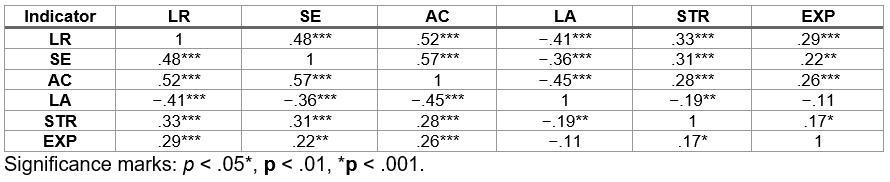
Linguistic readiness (LR) had a strong positive relationship: with academic confidence (r = .52), with self-assessment of language skills (r = .48), with learning strategies (r = .33), with international experience (r = .29). Language anxiety (LA) was negatively correlated with LR (r = −.41), with academic confidence (r = −.45).
Thus, students with international experience have higher LR, SE, AC indicators, but the relationship with anxiety is weak and statistically insignificant (See Figure 2).
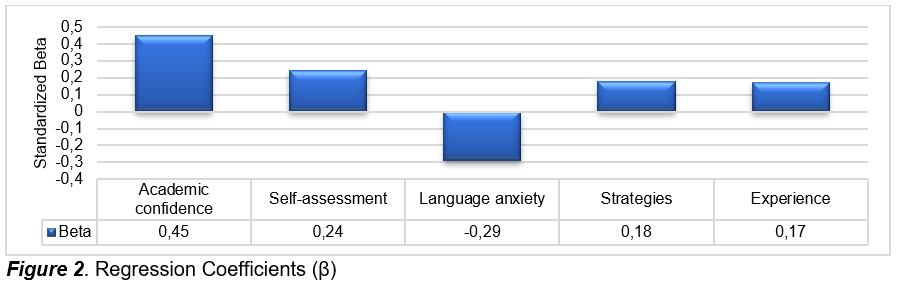
Regression analysis of predictors of linguistic readiness made it possible to show factors that influence the linguistic readiness of higher education applicants. The regression model included 5 predictors: academic confidence (AC); self-assessment of language competence (SE); language anxiety (LA); learning strategies (STR); previous international experience (EXP).
Outcome variable: integral index of linguistic readiness (LR).
Table 3.
Multiple linear regression for predicting linguistic readiness
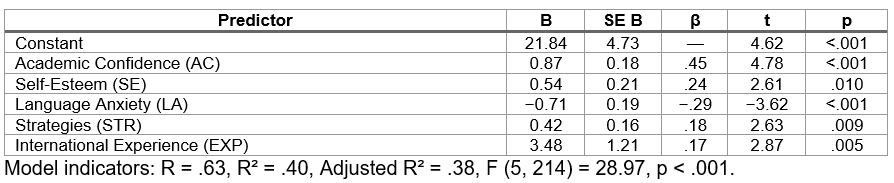
Thus, academic confidence is the strongest predictor (β = .45). Language anxiety has a significant adverse effect (β = −.29).
Self-rated language competence is also a significant positive predictor (β = .24).
Learning strategies affect LR. Still, their effect is moderate (β = .18). Previous international experience positively and independently affects the level of linguistic readiness (β = .17).
Overall, the model accounted for 40% of the variance in the linguistic readiness score. This is a high figure for educational psychology research.
The main difficulties in developing linguistic skills are divided into several groups of difficulties: linguistic, psycho-emotional and academic-organizational. First, the majority of students showed insufficient development of key pre-academic language skills necessary for studying abroad.
Most participants noted difficulties with such skills as constructing a logically structured essay (52.7%); writing detailed written arguments in English (48.9%) and using a formal academic style (44.6%).
This is consistent with the results of the test, in which academic writing had the lowest average scores (M = 57.1).
More than a third of students (>35%) indicated that they had difficulties participating in discussions in English and presenting the results of their work in English.
Also noticeable is insufficient academic vocabulary. In particular, 44.1% of participants indicated that they lacked professional and academic vocabulary, which is important for understanding lectures and scientific texts.
Analysis of Language Anxiety indicators and open-ended responses of participants indicated a significant role of emotional factors in the formation of linguistic readiness. At the same time, 39.5% of respondents reported that they felt a pronounced fear of making mistakes when communicating in English.
Students with high anxiety had lower test results (M = 56.3) compared to students with low anxiety (M = 68.7). The correlation between anxiety and readiness was significant and negative (r = −.41, p < .001).
Fear of not understanding the lecture or the teacher is also important. For example, 34% of participants indicated that this is a major barrier for them. Academic Confidence was average (M = 3.41), and 27.8% of participants felt “not confident enough to study abroad”. Academic and organizational barriers were also present. In particular, 42% of students reported that they did not have regular practice at university. Limited access to native speakers was also noticeable. In particular, 38% indicated that they lacked real practical communication with native English speakers. Importantly, there was a marked inequality in access to language courses among students: 28% of participants said that they could not afford additional courses that would increase their readiness.
The study aimed to identify strategies that students use to improve their English that do not depend on university resources.
The most common individual strategies included the use of Online platformsCoursera, BBC Learning English, YouTube - 64.5% and the development of academic writing through templates and samples - 41.8%. At the same time, 38.2% used AI-tools for practice (grammar check, writing training).
Reading academic texts in English was used by 36.4% AI-based writing assistants are popular, which students indicate as “useful for structuring written work and correcting stylistic errors”.
Social and interactive strategies included participation in conversation clubs (42.7%), tandem learning (27.3%), participation in international projects and online hackathons (19.5%) and joint completion of tasks with stronger students (32.3%).
However, as the open-ended data indicated, access to such strategies is uneven: “We need more speaking practice with foreigners. We practice pronunciation only in class once a week.”
“I don’t have anyone to practice real English with.”
The analysis showed that universities provided only partial support for academic and language readiness.
The most frequently available institutional mechanisms were: English for Academic Purposes (EAP) courses – 28.6% of students confirmed their availability; English for Academic Writing courses – 20.9%; pre-departure orientation modules – only 14.5%; mentoring or consultations with international program coordinators – 26.4%; access to international educational platforms (Canvas, Coursera, FutureLearn) – 33.2%. Students report that institutional support is useful, but fragmented.
Table 4.
Strategies Used by Students and Universities to Increase Linguistic and Academic Readiness (N = 220)
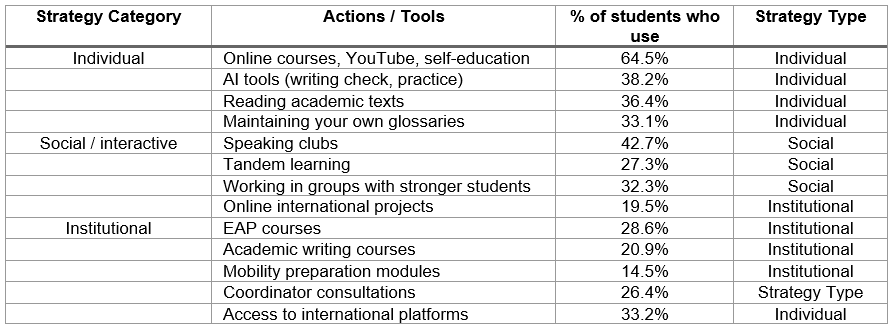
Based on correlation analysis, it was found that the indicator "intensity of strategy use" (STR) showed a positive relationship with linguistic readiness (r = .33, p < .001), self-assessment of language competence (r = .31, p < .01) and academic confidence (r = .28, p < .01). Thus, active students who worked independently on the language and used various tools indicated higher readiness for the international academic environment.
The aim of the proposed study was to conduct a comprehensive analysis of the linguistic readiness of Ukrainian university students to participate in international academic exchanges. It was also proposed to focus on several tasks: to assess the level of readiness, identify existing barriers, and describe individual and institutional strategies.
The proposed results found that the average integral indicator of linguistic readiness (62.4 out of 100) belonged to functional indicators that differ from the academic maturity level. A small proportion of students with a high level (18.6%) and a significant proportion with a low level (24.6%) indicated a pronounced stratification within the sample. The advantage in academic reading (M = 68.2) and the lag in academic writing (M = 57.1) also correspond to the results of other studies, since writing is recognized as a more complex skill in learning a foreign language. The researchers indicated that for most language learners, writing was the most problematic area, even more so than oral communication, which also involved individual expressions or gestural mimicry (O’Dowd & Dooly, 2020). Similarly, studies have shown that ESL/EFL students most often had difficulties with text organization, coherence, academic style, and working with sources (Neves & Barbosa, 2020; Arroba Muñoz et al., 2025; Polyezhayev et al., 2024).
The results obtained in the article regarding the weak development of academic writing are consistent with more recent work, in which academic “writing readiness” includes vocabulary, grammatical complexity, structure, formatting, and time management. It is these identified components that have been most vulnerable among students who have learned English as a foreign language. The excess of self-esteem (M = 3.62) over objective test results is also consistent with other scientific data on the inaccuracy of metacognitive assessments of one’s own language competence in student environments, especially when feedback on academic writing is absent (Costa & Canen, 2021).
The results identified three large groups: linguistic, psycho-emotional, and academic-organizational difficulties. Linguistic difficulties (problems with structured essays, argumentation, formal style, participation in discussions, presentations, and lack of academic vocabulary) practically repeated the research picture described in scientific works from the Asian region. In particular, the prevalence of complaints about limited vocabulary, limited repertoire of grammatical structures, etc., was confirmed. Language anxiety as a psychological barrier clearly coincided with the classical conceptualizations of foreign language anxiety, which were proposed by individual researchers (Chiappa & Finardi, 2021; Kaya, 2021; Mushyrovska et al., 2022). It was also established that anxiety worsened the functioning of working memory, reduced cognitive resources. Academic-organizational barriers included irregular language practice, limited contact with native speakers, and financial restrictions for additional courses. This was consistent with the work of other scholars, who identified, in particular, “structural inequality” in access to language resources (Souza, 2023; Kulichenko et al., 2018).
The identification of student and university strategies demonstrated the superiority of individual self-regulatory strategies (online courses, YouTube, self-education, use of AI tools, etc.). This confirmed the findings of other researchers, who showed that it was the systematic use of self-regulatory strategies that enhanced language self-efficacy (Moore et al., 2021 Miškeljin et al., 2025). Social-interactive strategies were consistent with the findings on the role of collaboration, authentic communication, and “communities of practice” for the development of language competence and academic confidence. At the same time, university strategies are less developed than in many universities in Western Europe or North America (Leal et al., 2022). EAP courses, academic writing courses, etc., are less popular here and do not have such an impact. The proposed results found that the obtained regression model (R² = .40) depends on a combination of psychological factors (academic confidence, anxiety), cognitive-metacognitive (self-esteem, strategies), and experience (international mobility). This result was fully consistent with existing modern models that linked L2 productivity and readiness for foreign language interaction. Several studies have shown that self-efficacy is a powerful indicator of learning behavior (Leal et al., 2024; Zavalniuk et al., 2022). The results obtained complemented these models, as they integrated five components (confidence, self-esteem, anxiety, intensity of strategy use, and international experience) into a single empirical scheme.
The results obtained also had important practical implications specifically for Ukrainian higher education institutions operating within the European Higher Education Area and actively involved in academic mobility programs, primarily Erasmus+. The identified gap between the formal level of English proficiency (B1–B2) and the real academic language readiness of students indicated the importance of reorienting language training (Zayachuk, 2025). First of all, the results confirmed the importance of systematically implementing academic English (EAP) courses and academic writing as mandatory or optional components of educational programs, especially for students in 2–4 years of undergraduate studies and the initial level of master's studies. It was also found that the high level of language anxiety indicated the need to integrate psychologically oriented approaches into students' language training. For Ukrainian universities, the way out of the situation should be to combine language courses with training in academic confidence. The predominance of individual self-regulatory strategies over institutional ones indicated a structural deficit of university support. In Ukrainian realities, this highlighted the need to develop institutional mechanisms for language support for mobility participants, in particular language centers, conversation clubs, tandem programs, etc. as auxiliary learning tools. The latter thesis has been repeatedly proposed by other researchers (Torubara, 2025; Wingrove et al., 2025). In general, the proposed results are important for use by international departments of universities as an analytical basis for the selection and preparation of candidates for academic mobility.
The methodology used in the study, however, has some differences that need to be paid attention to during the subsequent interpretation of the results. First of all, the sample included higher education applicants from only a few Ukrainian universities. This does not allow us to reflect the full diversity of student environments in higher education institutions. Therefore, this may create unevenness in the study, since students of the humanities could be represented more than students of technical fields. Also, correlation analysis allowed us to describe the relationships, but did not allow us to form cause-and-effect relationships. Conclusions. Accordingly, some of the findings regarding academic confidence and linguistic readiness should be viewed as pilot.
Conclusions
Thus, most participants had an average level of readiness: high results in reading and understanding educational materials, however, they had difficulties in academic writing, oral academic speaking and using English in practical academic situations. Students’ self-esteem was often overestimated in relation to their actual test results. The work identified three groups of key barriers: linguistic (problems with academic vocabulary, inability to participate in oral discussions in English), psycho-emotional (language anxiety, fear of making mistakes) and organizational (fragmentary teaching of EAP, insufficient level of practical modules for preparing for mobility). Important strategies that students use autonomously are: online platforms and self-education; reading academic texts; participation in speaking clubs; tandem learning; use of AI to support academic writing. The regression analysis model indicated that the main predictors of linguistic readiness are academic confidence, language anxiety, self-esteem and learning strategies.
At the same time, given the limited financial and organizational resources typical of many Ukrainian universities, the results of the study showed the possibility of implementing low-cost strategies to increase language readiness. Such strategies would include integrating elements of academic English (EAP) into existing academic disciplines without creating separate courses. An effective tool in conditions of limited resources would also be the systematic use of open educational resources, free online platforms and digital tools, in particular AI tools to support academic writing.
The results of the multivariate analysis determined that: academic confidence is the strongest positive predictor; language anxiety significantly reduced readiness; the intensity of the use of strategies increases the level of readiness; previous international experience also contributes to higher indicators.
Based on the results obtained, directions for improving students' preparation for academic mobility are proposed. It is indicated that universities should introduce systemic EAP (academic reading, writing, speaking) programs and create a mandatory mobility preparation module. For students, it is worth increasing the intensity of individual strategies: academic reading, written practices, the use of AI and reducing anxiety through controlled exposure (practice-based speaking), reflection and group work.
Thus, the linguistic readiness of Ukrainian students for international academic exchanges develops based on several interrelated factors: the level of academic language skills, emotional and psychological background and systematic university support. Despite the average level of readiness, most students did not possess a sufficient set of academic skills necessary for effective participation in international educational programs. Therefore, there is a need for targeted, systematic and multidimensional language training, consisting of individual and institutional strategies.
Bibliographic references
Arroba Muñoz, J., Pinos Montenegro, J., & Zurita Altamirano, J. (2025). English Language Role in Higher Education Student Exchange Programs. Revista Internacional de Cooperación y Desarrollo, 12(1), 81–99. https://doi.org/10.21500/23825014.7666
Atobatele, F.A., Kpodo, P.C., & Eke, I.O. (2024). Language support programs and international student academic success: Evaluating evidence and identifying gaps. Open Access Research Journal of Multidisciplinary Studies, 7(1), 163–174. https://doi.org/10.53022/oarjms.2024.7.1.0021
Barbosa, M. L. d. O., & Neves, C. E. B. (2020). Internationalization of higher education: institutions and knowledge diplomacy. Sociologias, 22(54), 22–44. https://doi.org/10.1590/15174522-104425
Barger, C., & Sandoval Rubilar, P. (2020). Language Orientations of Chilean Secondary Students in Relation to the Study of English as a Foreign Language. Colombian Applied Linguistics Journal, 22(2), 142–156. https://doi.org/10.14483/22487085.15554
Chiappa, R., & Finardi, K. R. (2021). Coloniality prints in internationalization of higher education: The case of Brazilian and Chilean international scholarships. Scholarship of Teaching and Learning in the South, 5(1), 25-45. https://doi.org/10.36615/b3cab604
Conceição, M. C. (2020). Language policies and internationalization of higher education. European Journal of Higher Education, 10(3), 231–240. https://doi.org/10.1080/21568235.2020.1778500
Costa, R. P., & Canen, A. G. (2021). Internationalization of Higher Education Institutions: perceptions of scholars. Ensaio: Avaliação e Políticas Públicas em Educação, 30(114), 94-115. https://doi.org/10.1590/s0104-403620210002903229
Diniz de Figueiredo, E. H., Jordão, C. M., Antunes, B. P., Emmerich, A., & Cons, T. R. (2021). Perspectives of postgraduate professors and students on internationalization and English language use at a university in the south of Brazil. Scholarship of Teaching and Learning in the South, 5(1), 6. https://doi.org/10.36615/868p0786
Du, T., & Lei, J. (2023). English-medium instruction in higher education. Journal of Multilingual and Multicultural Development, 1–2. https://doi.org/10.1080/01434632.2023.2222971
Ennser-Kananen, J., & Saarinen, T. (2023). Internationalization in English? Problematizing the role of language in higher education internationalization. In International Encyclopedia of Education (Fourth Edition) (pp. 167–173). Amsterdam, Netherlands: Elsevier. https://doi.org/10.1016/b978-0-12-818630-5.02016-9
Escobar-Alméciga, W. Y. (2022). Framing English as a Medium of Instruction Within the Iberian-American Spanish-Speaking Education Contexts. Profile: Issues in Teachers' Professional Development, 24(1), 211–225. https://doi.org/10.15446/profile.v24n1.93434
Gacel-Ávila, J. (2021). Conclusion: Latin America and the Caribbean Internationalization Process. In The Bloomsbury Handbook of The Internationalization of Higher Education in The Global South. Bloomsbury Academic. https://doi.org/10.5040/9781350139275.ch-018
Gimenez, J., & Morgan, W. J. (2014). Academics across borders: narratives of linguistic capital, language competence and communication strategies. Globalisation, Societies and Education, 15(1), 68–95. https://doi.org/10.1080/14767724.2014.937402
Guimarães, F. F., Finardi, K. R., El Kadri, M. S., & Taquini, R. (2020). The mission statements of the federal universities and the projection of internationalization in Brazil. System, 94, 102331. https://doi.org/10.1016/j.system.2020.102331
Guimarães, F. F., & Hildeblando Júnior, C. A. (2021). Digital resources and English as an additional language in higher education: possibilities for internationalization. Ilha do Desterro A Journal of English Language, Literatures in English and Cultural Studies, 74(3). https://doi.org/10.5007/2175-8026.2021.e80233
Ivashchuk, A., Malyk, V., Trubenko, I., Varha, N., & Zhalinska, I. (2023). Analysis of current trends in teaching English in Ukraine. Revista on Line de Política e Gestão Educacional, 27(2), e023048. https://doi.org/10.22633/rpge.v27iesp.2.18749
Jones, D., & Murray, N. (2025). The impact of the Russia-Ukraine war on English medium instruction teachers’ professional identity in a Ukrainian medical university. International Journal of Educational Development, 116, 103315. https://doi.org/10.1016/j.ijedudev.2025.103315
Kamaşak, R., Sahan, K., & Rose, H. (2021). Academic language-related challenges at an English-medium university. Journal of English for Academic Purposes, 49, 100945. https://doi.org/10.1016/j.jeap.2020.100945
Kaya, F. (2021). Language Proficiency Development and Study Abroad Experience: A Study On EFL Learners. GIST – Education and Learning Research Journal, 23, 33–58. https://doi.org/10.26817/16925777.943
Kulichenko, A. K., Sotnik, T. V., & Stadnychenko, K. V. (2018). Electronic Portfolio as a Technique of Developing Creativity of a Foreign Language Teacher. Information Technologies and Learning Tools, 4(66), 286–304. https://doi.org/10.33407/itlt.v66i4.2178
Leal, F., Abba, J., & Finardi, K. R. (2024). Immersed in the Dominant Global Imaginary: Reflecting on Internationalization of Higher Education Discourses in Brazil. Journal of Studies in International Education, 29(3). https://doi.org/10.1177/10283153241286022
Leal, F., Finardi, K., & Abba, J. (2022). Challenges for an internationalization of higher education from and for the global south. Perspectives in Education, 40(3). https://doi.org/10.18820/2519593x/pie.v40.i3.16
Lima-Lopes, R. E. d., & Biazi, T. M. D. (2021). Digital resources and English as an additional language in higher education: possibilities for internationalization. Ilha do Desterro A Journal of English Language, Literatures in English and Cultural Studies, 74(3). https://doi.org/10.5007/2175-8026.2021.e79735
Lysiuchenko, O. (2021). Intercultural Communicative Competence in the Development of Students’ Linguistic Skills. Revista Gestão Inovação e Tecnologias, 11(3), 1013–1040. https://revistageintec.net/old/wp-content/uploads/2022/02/1993.pdf
Maringe, F. (2022). Internationalisation in Increasingly Decolonising Global South University Sectors: A Prospective View of Opportunities and Challenges. In: Cremonini, L., Taylor, J., Joshi, K. (eds). Knowledge Studies in Higher Education (pp. 249–267). Springer International Publishing. https://doi.org/10.1007/978-3-031-05106-7_12
Martin-Jones, M., Souza, A., & Carvalho, G. (2024). Internationalization of higher education in Brazil: Institutional strategies and different discourses about language among academics at one federal university. Revista Brasileira de Linguística Aplicada, 24(1). https://doi.org/10.1590/1984-6398202444881
Mattos, E., & Diniz, L. R. A. (2025). Advancing a Pedagogy of Internationalization from a Critical Lens. In Global South-North Dichotomies in Higher Education (pp. 159–178). London, England: Routledge. https://doi.org/10.4324/9781003536406-14
Miškeljin, I., Knežević, L., Gavrilović, Ž., & Kurteš, O. (2025). The importance of different elements of English as a foreign language for participation in international student mobility programs: Students' perspectives. Zbornik radova Filozofskog fakulteta u Pristini, 55(3), 101–114. https://doi.org/10.5937/zrffp55-61029
Moore, I., Torgerson, C., & Beckmann, N. (2021). Systematic review measuring the efficacy of study abroad in undergraduate language learners on linguistic proficiency gains. Review of Education, 9(3). https://doi.org/10.1002/rev3.3306
Mushyrovska, N., Kholod, I., Neher, O., Zozulia, I., & Pavliuk, I. (2022). Fundamental cognitive-semantic theories in linguistics. Revista Eduweb, 16(3), 261–273. https://doi.org/10.46502/issn.1856-7576/2022.16.03.19
Neves, C. E. B., & Barbosa, M. L. d. O. (2020). Internationalization of higher education in Brazil: advances, obstacles, and challenges. Sociologias, 22(54), 144–175. https://doi.org/10.1590/15174522-99656
O’Dowd, R., & Dooly, M. (2020). Intercultural communicative competence development through telecollaboration and virtual exchange. In The Routledge Handbook of Language and Intercultural Communication (pp. 361–375). London, England: Routledge. https://doi.org/10.4324/9781003036210-28
Polyezhayev, Y., Terletska, L., Kulichenko, A., Vorobiova, L., & Snizhko, N. (2024). The role of web applications in the development of multilingual competence in CLIL courses in higher education. Revista Eduweb, 18(3), 106–118. https://doi.org/10.46502/issn.1856-7576/2024.18.03.9
Reus, L. (2020). English as a medium of instruction at a Chilean engineering school: Experiences in finance and industrial organization courses. Studies in Educational Evaluation, 67, 100930. https://doi.org/10.1016/j.stueduc.2020.100930
Souza, A. B. B. d. (2023). Language and internationalization in Brazilian Higher Education: From policy to practice. Revista Brasileira de Linguística Aplicada, 23(4). https://doi.org/10.1590/1984-6398202322152
Tavares, V. (2021). International Students in Higher Education: Language, Identity, and Experience from a Holistic Perspective. Lexington Books/Fortress Academic.
Tejada-Sanchez, I., & Molina-Naar, M. (2021). English Medium Instruction and the Internationalization of Higher Education in Latin America: A Case Study from a Colombian University. Latin American Journal of Content & Language Integrated Learning, 13(2), 339–367. https://doi.org/10.5294/laclil.2020.13.2.8
Torubara, O. (2025). National language policies and English proficiency in Ukrainian academia. European Journal of Language Policy, 17(2), 255–282. https://doi.org/10.3828/ejlp.2025.14
Turchyn, I., Zaitseva, S., Rudenko, N., Saienko, V., Kuzemko, N., & Denefil, O. (2023). Using Distance Learning Models as Opportunities for Blended Learning for Foreigners. Revista Romaneasca pentru Educatie Multidimensionala, 15(4), 178–191. https://doi.org/10.18662/rrem/15.4/787
Wingrove, P., Zuaro, B., Yuksel, D., Nao, M., & Hultgren, A. K. (2025). English-medium instruction in European higher education: Measurement validity and the state of play in 2023/2024. Applied Linguistics. https://doi.org/10.1093/applin/amaf020
Witkowsky, P. (2024). Supporting International Students Through Transition. In Supporting International Students in US Higher Education (pp. 69–84). Springer Nature Switzerland. https://doi.org/10.1007/978-3-031-46395-2_5
Yu, Q., Brunsting, N. C., Smart, J., & Bingham, W. P. (2024). Language Proficiency, Second Language Educational Experience, and Psychological Well-being Among International Students at U.S. Universities. Research in Higher Education, 66(1). https://doi.org/10.1007/s11162-024-09821-7
Zavalniuk, I., Kholod, I., Bohatko, V., & Pavlyuk, O. (2022). Lexical-syntactical repetition in the system of stylistic figures: Status, specification, functions. Ad Alta: Journal of Interdisciplinary Research, 12(1), 268–274. https://www.magnanimitas.cz/ADALTA/120125/papers/A_48.pdf
Zayachuk, Y. (2025). International student mobility as an internationalization strategy and challenge for higher education of Ukraine. Social Sciences & Humanities Open, 11, 101507. https://doi.org/10.1016/j.ssaho.2025.101507

Este artículo no presenta ningún conflicto de intereses. Este artículo está bajo la licencia Creative Commons Atribución 4.0 Internacional (CC BY 4.0). Se permite la reproducción, distribución y comunicación pública de la obra, así como la creación de obras derivadas, siempre que se cite la fuente original.