
Original Article
Eduweb, 2026, enero-marzo, v.20, n.1. ISSN: 1856-7576
Doi: https://doi.org/10.46502/issn.1856-7576/2026.20.01.13
Métodos pedagógicos creativos para fomentar la tolerancia y la empatía en la educación musical: un estudio comparativo entre vocalistas e instrumentistas
Ihor Zakus
R. Glier Kyiv Municipal Academy of Music, Associate Professor, Kyiv, Ukraine.
https://orcid.org/0009-0006-4943-5074
Artem Mendelenko
R. Glier Kyiv Municipal Academy of Music, Lecturer, Kyiv, Ukraine.
https://orcid.org/0009-0002-8737-6272
Yuliia Loboda
R. Glier Kyiv Municipal Academy of Music, Lecturer, Kyiv, Ukraine.
https://orcid.org/0009-0001-2355-8336
Nataliia Kalinichenko
R. Glier Kyiv Municipal Academy of Musiс, Lectuter, Kyiv, Ukraine.
https://orcid.org/0009-0002-5632-8956
Olena Martsenkivska
R. Glier Kyiv Municipal Academy of Musiс, Associate Professor, Vice-Rector for Scientific and Pedagogical Work on the Organization of the Educational Process, Kyiv, Ukraine.
https://orcid.org/0000-0003-1732-5787
Como citar:
Zakus, I., Mendelenko, A., Loboda, Y., Kalinichenko, N., & Martsenkivska, O. (2026). Creative pedagogical methods for fostering tolerance and empathy in music education: A comparative study of vocalists and instrumentalists. Revista Eduweb, 20(1), 217-230. https://doi.org/10.46502/issn.1856-7576/2026.20.01.13
Recibido: 20/01/26 Aceptado: 01/03/26
Abstract
This study aims to evaluate the effectiveness of creative teaching methods in developing empathy and tolerance in music students. Methods included functional analysis, analytical-synthetic approaches, the Mayer–Salovey–Caruso Emotional Intelligence test, the Cultural Intelligence Scale, Likert scales, the Wilcoxon criterion, and the Cohen coefficient. Findings indicate that tolerance supports the perception of musical styles, high-quality group performance, and intercultural and professional ethical competence, while empathy enhances emotional perception and expressive performance. Creative methods such as interactive music platforms, intercultural techniques, musical improvisation, game-based learning, musical discussions, and empathic reconstruction proved effective. Group No. 1 (vocal) showed high group performance and cognitive tolerance development, while Group No. 2 (instrumental) excelled in individual performance and metacognitive tolerance. The study highlights the practical significance of creative approaches for cultivating empathy and tolerance in musician training.
Keywords: intercultural competence, musical skills, non-standard teaching approaches, professional competence, psychological readiness.
Resumen
Este estudio tiene como objetivo evaluar la efectividad de los métodos de enseñanza creativos en el desarrollo de la empatía y la tolerancia en estudiantes de música. Los métodos utilizados incluyeron análisis funcional, enfoques analítico-sintéticos, la prueba de Inteligencia Emocional Mayer–Salovey–Caruso, la Escala de Inteligencia Cultural, escalas Likert, el criterio de Wilcoxon y el coeficiente de Cohen. Los resultados indican que la tolerancia favorece la percepción de estilos musicales, el desempeño grupal de alta calidad y la competencia ética intercultural y profesional, mientras que la empatía mejora la percepción emocional y la interpretación expresiva. Métodos creativos como plataformas musicales interactivas, técnicas interculturales, improvisación musical, aprendizaje basado en juegos, discusiones musicales y reconstrucción empática demostraron ser efectivos. El Grupo No. 1 (vocal) destacó en desempeño grupal y desarrollo cognitivo de la tolerancia, mientras que el Grupo No. 2 (instrumental) sobresalió en desempeño individual y tolerancia metacognitiva. El estudio resalta la importancia práctica de los enfoques creativos para cultivar empatía y tolerancia en la formación de músicos.
Palabras clave: competencia intercultural, competencias musicales, enfoques de enseñanza no estándar, competencia profesional, preparación psicológica.
Introduction
The transformation of the classical education system is focused on improving students’ ability to memorize information and developing their initiative. Acquiring these skills allows students to perceive educational materials through analysis, solve non-standard professional problems, and develop tolerance and empathy. Tolerance and empathy skills are necessary for successful learning during group work and interaction with the teacher. These skills also influence the perception of the emotionality and depth of music and its cultural characteristics. Rethinking teaching strategies influences the growth of professional skills and adherence to social ethics, as confirmed by recent studies (Cronenberg et al., 2023; Goffi-Fynn, 2024).
Creative teaching methods, which are advanced methods of developing professional skills and actively and experimentally engaging students, influence the development of creative thinking and imagination (Chen, 2024; de Abreu, 2025; Humberstone et al., 2024). In the training of musicians, this process contributes to the implementation of creative projects and the emotional perception of music, relying on cognitive skills. The choice of non-standard teaching methods influences students’ choice of new methods for reproducing musical ideas.
Despite the advantages of creative methods for teaching and developing tolerance and empathy in students, this approach also has a negative impact (Brandel et al., 2024; Sitanggang et al., 2025). The negative effect is reflected in the workload of students as a result of searching for approaches to constant self-expression. During group interaction, creative approaches can lead to a decrease in tolerance towards students who are more closed and do not show activity when solving creative tasks, which is reflected in a decrease in self-esteem. Reducing the negative impact of creative methods and gradually developing tolerance and empathy in the learning process is possible by changing the intensity of learning and ensuring that tasks are distributed evenly among all students.
However, the consideration of creative methods for involvement in the educational process is primarily associated with an emphasis on acquiring only specialized skills or exclusively psychological resilience. The relationship between the use of creative methods for assessing the development of tolerance and empathy in the educational process has not been sufficiently researched. The aim of this work is to identify the advantages of creative educational approaches for developing empathy and tolerance skills in students. Research hypothesis: mastering tolerance and empathy in future musicians through creative educational approaches contributes to the improvement of musical skills.
Literature Review
The conceptual basis is based on the praxis philosophy of music education developed by Elliott (2000). Within this approach, music is viewed not as an autonomous aesthetic object, but as an activity immersed in a social and cultural context. Music education is interpreted as a process of active participation in “musical practice” that combines cognitive, emotional, and ethical dimensions. Elliott emphasizes that affect and musical understanding are formed through the experience of collaboration, listening, and reflection. This interpretation allows us to justify the connection between the development of empathy, tolerance, and the quality of musical performance, since musical competence emerges as an integrated characteristic of professional and social interaction.
The transformation of the educational process is the subject of contemporary scientific research focused on the formation of professional rules of conduct and tolerant attitudes toward other students. The studies indicate the need to develop tolerance and empathy in students to improve their professional skills (Palazzolo, 2024; Zhongsheng, 2025). The need to introduce non-standard teaching approaches that promote change in traditional education and are focused on personal development is discussed in the works of Wan (2023). Wan (2023) notes that the use of non-standard teaching approaches in music education influences the improvement of creative thinking. Creativity skills influence more effective group musical interpretation as a result of adaptation to the performance methods of other musicians (Wan, 2023).
The concept of “musicking” proposed by Small (1998) is of significant theoretical importance. The author expands the understanding of music as a process of interaction in which meaning is created not only during performance, but also in shared listening and communication between participants. The musical experience emerges as a social act that reflects the system of relationships between people, cultures, and values. In this context, tolerance and empathy are not additional psychological qualities, but rather internal conditions for productive “musicking.”
The impact of non-standard teaching strategies on improving tolerance and empathy in professional training is discussed in studies by Davila‐Barrio et al. (2023); Corral et al. (2023); Fernández (2024). The development of empathy in the educational process contributes to the social development of students, which is reflected in the quality of musical interpretation in groups. The emphasis on developing empathy contributes to improving the musical experience through joint projects with other students and the exchange of knowledge (Davila‐Barrio et al., 2023). A tolerant attitude towards students and the exchange of experience contributes to the understanding of artistic ways of expressing music, which promotes creative performance (Corral et al., 2023). A study by Fernández (2024) indicates that creative methods promote the study of different music, which allows the generation of musical textures to create new sounds for compositions.
Methodological guidelines for the pedagogical implementation of these ideas are contained in Swanwick (2008), where music education is defined as a process of holistic immersion in artistic content. Swanwick emphasizes the importance of balance between technical training, creative interpretation, and personal reflection. The development of musicality is linked to the ability of students to comprehend the structure of a piece, its intonational features, and the cultural context of its creation. Therefore, the formation of empathy and tolerance can be seen as part of a pedagogical strategy aimed at a deep understanding of musical content and the conscious acceptance of different performance positions.
The study by Chang et al. (2022) found that the formation of tolerance and empathy promotes focused learning. Such learning promotes the combination of interdisciplinary approaches, which stimulates original thinking. Author Cain (2023) notes that developed empathy allows for more accurate transmission of experiences through musical works, which influences creative and improvisational self-expression.
A separate segment of scientific works is aimed at fostering empathy and tolerance in future musicians with the help of digital tools (Ruan, 2024; Wen, 2024). In particular, Ruan (2024) notes that professional interactive music programs motivate students to better understand music. The Soft Mozart application promotes comprehensive individual and group music training, which ensures an increase in professional competence. Wen (2024) notes that interactive online technologies allow for a change in the approach to learning, which contributes to the formation of tolerance and the solution of professional tasks using creative approaches.
Analysis of scientific works has made it possible to determine the importance of original educational strategies for the holistic formation of students’ personalities. The characteristics of tolerance and empathy are considered superficially from a psychological point of view due to the use of non-standard educational practices. Little-studied aspects include the use of optimal original strategies that influence tolerance and empathy in future musicians of various genres (vocalists and instrumentalists).
Methodology
The study used general theoretical and experimental methods. General theoretical methods, which included functional-analytical and analytical-synthetic approaches, helped to determine the need to develop tolerance and empathy in future musicians and to identify creative teaching mechanisms for generating these competencies. Such methodological tools influenced the understanding of the specifics of training, professional practice of musicians, and signs of tolerance and empathy. The theoretical materials obtained were combined to form a holistic view of creative teaching methods. The experimental fragment was made possible by 28 musicians who were divided into two groups. The area of specialization became the basis for the creation of two groups of students. Group No. 1 included 14 students who studied vocal performance (pop and jazz). Group No. 2 included 14 students who acquired skills in playing musical instruments (piano, guitar, saxophone). Future musicians were trained in their second year. The emphasis on second-year students was due to their ability to adapt to the volume of educational materials. The total training period lasted 15 weeks. The research sample was formed on the basis of convenience sampling, as students from one educational institution who were in their second year of study and agreed to participate in the pedagogical experiment were involved. This approach was determined by organizational capabilities and the specifics of the educational process.
Empathy in future musicians before and after training was assessed using the Mayer–Salovey–Caruso Emotional Intelligence Test (further – MSCEIT) (Sambol et al., 2025). The MSCEIT criteria for assessing empathy were the degree to which students assimilated emotions when interacting with other students and in musical works (understanding the idea of a musical work); understanding the emotionality of musical works depending on their complexity (the specifics of musical interpretation depending on the genre, cultural diversity, etc.); the ability to reflect emotional signals (nonverbal communication between students). The Cultural Intelligence Scale (further – CIS) was used to analyze the degree of tolerance in future musicians (Widodo, 2024). The CIS includes cognitive (understanding the characteristics of other musical cultures), motivational (developing student interest), behavioral (responding to external factors), and metacognitive (understanding the characteristics of different music) aspects. Tolerance and empathy on the CIS scale and the MSCEIT methodology were assessed by seven teachers while observing students during the learning process. During the observation, R. Likert’s scale was used, which allowed, with the help of 5 points, to set a scale of mastery of tolerance and empathy skills in students (Memmedova & Ertuna, 2024). Students achieving a score of 5 points corresponded to a high level of development. Appendix A provides indicators of the degree of tolerance and empathy for each student. The indicator of musical performance was established using a 10-point scale. Appendix B shows the individual indicators for each student. Statistical calculations using Wilcoxon’s F criterion (Siegel & Castellan, 1988) were used to compare the indicators of tolerance and emotionality development.



The comparison of the musical performance abilities of students in groups 1 and 2 using the acquired skills of tolerance and empathy was carried out using the P. Cohen coefficient (Cohen, 1988):
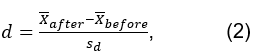

To account for the large size of the effect, it is worth considering that the calculated value should be greater than 0.8; for a medium effect, from 0.5 to 0.8; for a minor effect, less than 0.4.
Results
The educational process should include both the improvement of musical abilities and tolerance and empathy, which are interrelated with creative competence and intelligence. Previous studies have shown that students need to have tolerance and empathy skills in order to perceive the opinions of other students, especially in the process of collaborative work (Powers, 2025; Rastruba et al., 2025). Tolerance and empathy influence the awareness of responsibility for one’s own actions and statements, which contributes to a positive atmosphere among students. Other studies focus on the need to develop tolerance and empathy in future musicians (Cholifah, 2024; Behrens, 2025). This has a positive effect on group musical interpretation, allowing musical interpretation methods to be adapted to different musicians. In studies (Canham, 2023; Setiawan et al., 2024), the development of tolerance is associated with an understanding of the importance of reproducing cultural specificity and the composer’s intention in musical works. Based on the data from previous scientific works, an idea of the importance of tolerance and empathy skills in future musicians is formed. Figure 1 examines the characteristics of the formation of professional skills in musicians depending on indicators of tolerance and empathy.
Skills of tolerance and empathy broaden individuality in musical performance and promote quality interaction with other students. Thus, a conscious perception of musical works and their connection with national traditions is formed. During performance, this allows for the preservation of constructive technical methods of performance, combining them with cultural characteristics. Collective performance becomes more synchronized and focused on expressiveness, determined by the perception of signals from other group members (glances, gestures) for tempo performance. Tolerance skills influence the search for ways to perform well, rather than reflecting one’s own stereotypes, which impair the dynamics of performance.
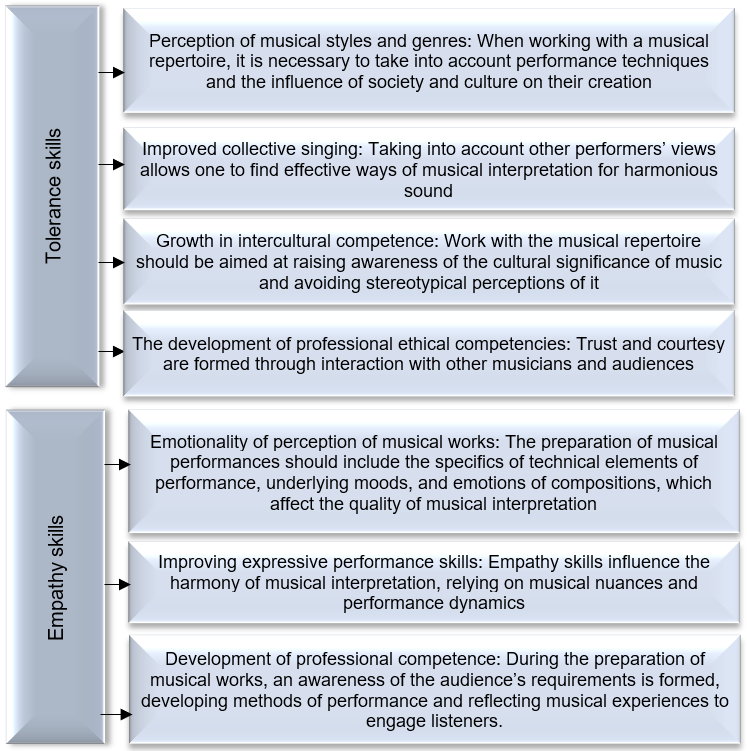
Figure 1. Assessment of the need to develop tolerance and empathy in future musicians.
Source: developed by the authors based on materials (Canham, 2023; Cholifah, 2024; Setiawan et al., 2024; Behrens, 2025; Powers, 2025; Rastruba et al., 2025).
Recent studies have focused on developing tolerance and empathy in students by changing traditional educational strategies (Yao & Li, 2023; Ambrose et al., 2025; Wang, 2025). Their development through non-standard approaches in teaching occurs through student communication, which is reflected in the perception of students’ musical improvisations (tolerance) and the establishment of relationships with other performers (empathy). The works Guo et al. (2024); Tan (2025) indicate that it is the creative approach that allows for higher results. The emphasis on student self-expression allows them to value the opinions of others by avoiding a critical approach. Table 1 lists creative methods that can be used in the educational process of future musicians to develop tolerance and empathy.
Table 1.
Creative teaching methods for developing empathy and tolerance in future musicians