
Original Article
Eduweb, 2026, enero-marzo, v.20, n.1. ISSN: 1856-7576
Doi: https://doi.org/10.46502/issn.1856-7576/2026.20.01.14
Competencia digital y motivación como predictores del éxito académico en la formación en línea de aspirantes universitarios
Nataliia Kyrnis
Candidate of Economic Science, Associate Professor of the Department of Hotel, Restaurant and Resort Business, Educational and Research Institute of Full-Time Education, Poltava University of Economics and Trade, Poltava, Ukraine.
https://orcid.org/0000-0003-3564-4319
Oksana Voroshchuk
Candidate of Pedagogical Sciences, Associate Professor of the Department of Social Pedagogy and Social Work, Vasyl Stefanyk Carpathian National University, Ivano-Frankivsk, Ukraine.
https://orcid.org/0000-0003-0835-544X
Oksana Skorobahatska
Candidate of Pedagogical Sciences, Associate Professor of the Department of Education Management and Pedagogy of Higher Education, Educational and Research Institute of Pedagogy and Psychology, Sumy State Pedagogical University named after A. S. Makarenko, Sumy, Ukraine.
https://orcid.org/0000-0002-5072-5195
Hanna Kravchenko
Doctor of Pedagogical Sciences, Professor, Head of the Department of Pedagogy, Management, Special Education and Social Work, Educational and Scientific Institute of Management and Psychology, State Higher Educational Institution "University of Educational Management" of the National Academy of Pedagogical Sciences of Ukraine, Kyiv, Ukraine.
https://orcid.org/0000-0002-2156-3203
Mykhailo Sydor
Candidate of Art History, Associate Professor of the Department of Vocal and Choral, Choreographic and Fine Arts, Faculty of Primary Education and Arts, Drohobych Ivan Franko State Pedagogical University, Drohobych, Ukraine.
https://orcid.org/0000-0003-1616-6075
Cómo citar:
Kyrnis, N., Voroshchuk, O., Skorobahatska, O., Kravchenko, H., & Sydor, M. (2026). Digital competence and motivation as predictors of academic success in online training for university applicants. Revista Eduweb, 20(1), 231-248. https://doi.org/10.46502/issn.1856-7576/2026.20.01.14
Recibido: 08/12/25 Aceptado: 02/03/26
Abstract
This study explores the impact of online education on the learning quality and academic achievements of higher education applicants. Grounded in the Technological Pedagogical Content Knowledge (TPACK) framework and Self-Determination Theory, the research adopted a mixed-methods design involving 270 participants. A 13-week online intervention combining real-time feedback, interactive modules, and collaborative forums was implemented. Data were analyzed using ANOVA, regression, Structural Equation Modeling (SEM), and cluster analysis. The findings indicate that participants possessed sufficient digital competence and high intrinsic motivation. Cluster analysis revealed three distinct learner profiles; the "Engaged-Tech-Savvy" group demonstrated significantly higher academic success compared to "Moderately Engaged" and "Disengaged" groups. Results confirm that digital competence and intrinsic motivation are key predictors of academic achievement, with course quality mediating this relationship. The study provides practical recommendations for higher education institutions regarding community building, digital infrastructure, and teacher training to better prepare applicants. Future research should integrate objective usage data to further validate these findings.
Keywords: Engagement, motivation, academic success, learning quality, digital technology.
Resumen
Este estudio explora el impacto de la educación en línea en la calidad del aprendizaje y los logros académicos de los aspirantes a la educación superior. Fundamentada en el marco del Conocimiento Tecnológico Pedagógico del Contenido (TPACK) y la Teoría de la Autodeterminación, la investigación adoptó un diseño de métodos mixtos con 270 participantes. Se implementó una intervención en línea de 13 semanas que combinó retroalimentación en tiempo real, módulos interactivos y foros colaborativos. Los datos fueron analizados utilizando ANOVA, regresión, Modelado de Ecuaciones Estructurales (SEM) y análisis de conglomerados. Los hallazgos indican que los participantes poseían suficiente competencia digital y una alta motivación intrínseca. El análisis de conglomerados reveló tres perfiles de aprendizaje distintos; el grupo "Comprometido y Tecnológico" (Engaged-Tech-Savvy) demostró un éxito académico significativamente mayor en comparación con los grupos "Moderadamente Comprometido" y "Desvinculado". Los resultados confirman que la competencia digital y la motivación intrínseca son predictores clave del rendimiento académico, con la calidad del curso actuando como mediadora en esta relación. El estudio ofrece recomendaciones prácticas para las instituciones de educación superior con respecto a la construcción de comunidad, la infraestructura digital y la formación docente para preparar mejor a los aspirantes. Futuras investigaciones deberían integrar datos objetivos de uso para validar aún más estos hallazgos.
Palabras clave: Compromiso, motivación, éxito académico, calidad del aprendizaje, tecnología digital.
Introduction
Globally, the educational system has been reshaped because of the advent of digital technologies in the teaching-learning process, shifting from the traditional method of teaching and learning to a virtual learning environment. According to Bazán‐Ramírez et al. (2020), the shift from the traditional method of teaching to virtual environments became necessary because of the advent of the COVID-19 pandemic in early 2020. Globally, the COVID-19 pandemic forced many universities, colleges, and schools to shut down, and these educational institutions adopted emergency remote instruction. They also accelerated the integration of online teaching and learning models into their curricula. As Abdullah et al (2024) rightly put it, the shift has allowed learners residing in regions with scarce resources to access instructors and connect with high-quality content. Consequently, there is debate among researchers and other educational stakeholders on how online education impacts academic achievement, student motivation, cognitive outcomes, and the quality of the entire educational process. It is also pertinent for digital literacy, factors enhancing or reducing online education effectiveness, as well as individual trajectories, to be given concern among educators. The ability to utilize collaboration tools, address issues surrounding learning management systems, overcome and troubleshoot technical issues, and evaluate digital sources are some of the digital literacy skills that act as a gatekeeper, as learners who lack these basic digital literacy skills tend to have poor academic engagement and performance (Chávez‐Miyauchi et al., 2021). Consequently, it becomes needful to ascertain the impact of online education on the quality of learning and academic achievement of applicants.
Across all stages of learning, it appears that online education, which is driven by the advancement of digital technologies and, more recently, by the outbreak COVID-19 pandemic, has evolved from is auxiliary instruction mode to the dominant format. Even though online education is a pervasive presence, the way it impacts the academic achievements of applicants for education is yet to be determined. There is debate whether the digital academic environment delivers inferior or superior educational quality when compared with the traditional method of teaching and learning. Despite these debates, there is still an absence of a comprehensive knowledge of the way and manner online teaching and learning influences the quality of the entire educational process, academic achievements, cognitive outcomes, and motivation. This apparent gap in knowledge persists because many studies conducted so far tend to focus on Massive Open Online Courses (MOOCs) or higher education, and they often do not address the distinct cohort of applicants more particularly those whose trajectories appear to be highly sensitive, as well as those who are at formal education threshold, which may lead to instructional delivery disruptions. These applicants are mainly graduates from secondary schools who are seeking admission into higher educational institutions to address present-day challenges such as disparate access to technology infrastructure, variable levels of digital literacy, and differing degrees of self-regulation. Unless how these factors interact with online modalities are thoroughly examined, it is difficult to discern the aspects of online education that enhance the quality of learning and which diminish it. For example, real-time discussion forums as well as interactive video lectures tend to enhance academic engagement and deeper understanding, while peer interaction that is insufficient, asynchronous modules that are poorly designed, and inadequate feedback mechanisms may hinder mastery of relevant concepts and erode motivation. In addition, many empirical studies conducted so far failed to capture the context of Ukraine. The educational system of Ukraine has its own resource problems, curricular standards, and socio-political environment. It shows a distinct set of circumstances that appears to affect the dynamics of the effectiveness of online learning. To date, there appears to be a paucity of robust and nation-wide research that carefully evaluated the impact of online formats on the indicators of academic performance or success, such as retention rates, entrance examination scores and graduation outcomes for applicants.
The general objective of this study is to examine the impact of online education on the quality of learning and academic achievement of applicants. Specifically, the study sought:
To analyze the level of satisfaction of participants with online education, their motivation and digital competences.
To empirically assess the academic achievements of participants, comparing them depending on the intensity and quality of online learning.
To identify factors (motivational, technological, pedagogical) that affect the quality of online education.
To build a statistical model that explains the change in academic results under the influence of online education.
To formulate recommendations for institutions that prepare applicants for entrance exams or study in higher education.
Hypotheses
H1. Intensive and structured online learning is positively correlated with academic achievements.
H2. Low digital competence reduces the effectiveness of online education regardless of motivation.
H3. Motivational factors (goal orientation, self-motivation) mediate the relationship between online education and success.
H4. The cognitive quality of online courses (clarity of structure, interactivity, feedback) is a predictor of high assessment results.
H5. Applicants with high levels of involvement in online learning demonstrate better success compared to groups with low participation.
Literature Review
The review of related literature are guided by the following subheadings:
Effects of Online Education on Quality of Learning
The role of online education in enhancing the quality of learning cannot be overemphasized. According to Chigisheva et al. (2021), online education significantly reshapes the online learning experience in ways that both diminish and enhance the breadth, depth, and durability of learning. Learning quality tend to improve when design in line with sound pedagogical principles. On the contrary, the absence of these sound pedagogical principles, according to Bravo‐Agapito et al. (2021), more particularly when technology is not prudently utilized, it deters learning. Importantly, online frameworks such as Universal Design for Learning (UDL), backward design and constructive alignment clearly incorporate teaching design (Chávez-Miyauchi et al., 2021). As rightly stated by Zúñiga Rodríguez & Cáceres Mesa (2021), formative assessment are linked closely to focused measurable as well as learning objectives when content is separated into bite-sized modules. Examples of these formative assessments include polls, simulations and quizzes. In addition, concepts that are abstract in nature can be illustrated more clearly when compared with a textbook. In the words of Zapata‐Garibay et al. (2021), there are different elements of multimedia which foster comprehension and clearer understanding such as videos, virtual labs and animations. When PDFs content is uploaded, records that are not properly edited with the absence of scaffolding may lead to cognitive overload, poor retention of what is being taught as well as engaging superficially with academic material. Be that as it may, the way and manner online education fosters education quality when compared to traditional approaches to teaching has become a matter of concern to many educational stakeholders all over the world. Arguably, instant feedback and structured academic environment are some of the benefits of traditional methods of teaching nu Turchyn et al (2023) maintain that digital teaching and learning process enhances an educational system that more interactive and flexible. In terms of motivation, be it extrinsic or intrinsic, digital education, serve as a tool by which learners develop ownership as well as self-discipline of their academic journey (Romero & Bobkina, 2021). Differently stated, the absence of physical classroom cues reduces pressure from peers for learners at the beginning stage with an attribute of strong self-regulatory skills. This often result to low motivational level due to the screens with isolated nature. Besides, Sapien Aguilar et al. (2020) is of the view cognitive outcomes including transfer of knowledge, retention of knowledge as well as critical thinking tend to crucial in terms of assessing and evaluative the effectiveness and efficiency of digital learning.
Effect of Online Education on Academic Achievement of Applicants
Studies have shown that online education impact academic success of applicants. In the words Dennis & Harrison (2021), engaging with instruction, changing the ways content are accessed by learners and demonstrating mastery are some ways online education reshapes academic achievement. A well-designed delivery model tend to boost academic achievement through data-driven personalization, flexible pacing and immediate feedback (Molina Gutiérrez et al., 2021). In this regard, Aldhafeeri, & Alotaibi. (2022) maintained that learners revisit difficult variables, replay video lessons and pause to take notes without pressure that stem from fixed classroom schedule, which may result in higher retention and deeper comprehension. Real-time insights into progress are provided through adaptive learning pathways, interactive quizzes and analytics dashboards and this enables reinforcement of weak areas and timely interventions, thereby lifting course grades and test scores (Kordrostami & Seitz. 2021). Academic achievement, which is often measured by test scores, grades, progression to higher levels of study and grade, Koseda et al. (2024) stated that students thriving in independent settings obtained better academic achievement because of the rapid proliferation of digital technologies into teaching and learning. They revisit materials at their convenient and also tailor pacing to their needs. On the contrary, students with poor family background, with inadequate access to digital technologies tend to experience higher rates of school dropout, slower progression and low grades (Landrum et al., 2020). Nevertheless, the same flexibility tends to place a heavy burden on self-regulation. According to Masalimova et al. (2022), applicants with the attributes of goal-setting, prudent time-management as well as metacognitive skills may capitalize on these benefits. This will help them achieve superior success when compared to traditional learners (Romero Alonso, et al. 2021). On the other hand, Romero & Bobkina, (2021) stressed that those applicants that lack discipline or motivation tend to miss deadlines, fall behind and as well perform poorly on course assessments, resulting to low graduation rates and poor academic performance.
Theories of Online Learning
Technological Pedagogical Content Knowledge (TPACK)
Technological Pedagogical content Knowledge (TPACK) states that the effectiveness of teaching in the context of online academic environment is dependent on the integration three aspects of knowledge such as content, pedagogy as well as technological knowledge. However, technological content knowledge, pedagogical content, and technological pedagogical knowledge are the key variables of Technological Pedagogical content Knowledge (TPACK) that are created through the interaction of these three domains. Through these intersections, one can clearly understand and illustrate the ability to blend pedagogy content as well as technology. Technological Pedagogical content Knowledge (TPACK) therefore help educators to select digital tools that foster assessment, presentation and also scaffold pedagogical practices.
Technological Pedagogical content Knowledge (TPACK) is highly related to this research. This is due to the fact that applicant’s academic outcomes appear to improve when Technological Pedagogical content Knowledge (TPACK) in included in the academic environment. Hence, Technological Pedagogical content Knowledge (TPACK) serve as a platform through which applicants incorporate digital tools including simulations, data visualization as well as interactive videos. All these digital tools help applicants to determine and understand variables that are difficult and also enhance their acquisition of skills. Thus when the prudent use of digital technology only for PDFs uploading makes learning superficial which reduces motivational level of learners. It becomes necessary to use Technological Pedagogical content Knowledge (TPACK) in terms of enhancing quality learning.
Self Determination Theory (SDT)
The Self Determination Theory (SDT) which was propounded in the 1980s and refined later in 2000 states that autonomy, competence as well as relatedness are the three innate emotional needs that undermine intrinsic level of motivation and optimal learning. According this theory, autonomy refers to the act of giving students control and choice regarding their academic journey which enhances a sense of ownership. In terms of competence, there is usually a feeling that is effective in terms of mastering tasks and this feeling is usually encouraged by clear learning objectives and constructive feedback. Relatedness simply means interaction as well as a sense of belonging with friends, age mates and teachers which promotes motivation and academic wellbeing.
Self Determination Theory (SDT) is also related to the present study because motivational levels of applicants may increase when autonomy is enhanced via skill mastery, flexible pacing, personalized research topics as well as modules. Also, motivational level of applicants tend to increase when digital badges, adequate feedback and scaffolding assignments are given. Thus, using collaborative discussions, mentorship and group projects to build relatedness goes a long way to cultivate a learning community. On the contrary, the neglect of these variables may lead to poor engagement and learning outcomes of applicants.
Issues of Academic Integrity
It is vital for applicants to complete their task painstakingly with the absence of plagiarism, unauthorized aid and teaching because of the way and manner educational system has been transformed using digital tools and resources. According to Regalado‐Pezua & Galeano (2022), the term light simply means physical illumination and it also denotes words like awareness visibility as well as transparency. As stated by Knopf et al. (2021) when visibility is built intentionally into the design of platforms, policies as well as assessments, it addresses the integrity related problems. In addition, Kordrostami & Seitz (2021) maintained that examination malpractices is lower when evaluations are not properly monitored. Apart from that, the use of simple task including time stamps, transparency layers and a single sign on (SSO) systems tend to reduce dishonesty. According to Realyvásquez‐Vargas et al. (2020), assessment process that is transparent and open reduces ambiguity. Hence, it goes a long way to reduce academic misconduct. In this regard, Landrum et al. (2020) noted that rubrics, visible expectations as well as criteria for grading aid learners to clearly understand variables that influence acceptable collaboration as well as cheating. Hence, open-book examinations with higher-order questions, such as application analysis and synthesis, shift the focus from memorization to mastery demonstration and make it more challenging to gain an unfair advantage by searching for online answers (Turchyn et al., 2023; Morgulets & Derkach, 2019; Quispe‐Prieto et al., 2021).
Factors of Success, Motivation, Self-Regulation, Digital Skills- How Each Improves Online Learnings
Online teaching and learning are effective when the necessary success factors are in place. This is because well-structured modules and clear learning goals provide students with a channel to progress academically and reduce ambiguity (Zhao et al., 2023). In addition, Abdullah et al. (2024) posited that mastery is reinforced through prompt, specific feedback, whereas timely technical support prevents frustration and school dropout rates. However, intrinsic and extrinsic motivation tend to drive academic engagement. According to Chávez‐Miyauchi et al. (2021), learners are equipped with time management, goal setting, adjustment strategies, and self-regulated monitoring of understanding. Also, routines are built among learners through calendar reminders, structured schedules, and modular deadlines. There are many tools, such as learning analytics dashboards, journals, and self-assessment quizzes, that enhance awareness of the metacognitive process. As rightly stated by Chigisheva et al. (2021), friction is removed from the learning process through proficiency with digital technologies. Learners focus on content rather than technology through collaboration suites like Zoom, Teams, and Google Workspace, and also address basic troubleshooting (Aldhafeeri, & Alotaibi, 2022; Kovačević et al., 2021; Guillén‐Gámez & Mayorga‐Fernández, 2020). Conclusively, academic integrity and quality of work will be enhanced when there is an absence of plagiarism, references being digitally managed, and evaluating sources. Based on the literature reviewed so far, many studies, to the best of our knowledge, lack empirical evidence. The reviewed studies were based on mere observations and theory, thereby creating an empirical gap to cover. This apparent knowledge gap makes the present study germane.
Methodology
Research Type
The study adopted a mixed methods design, combining a qualitative focus group and a quantitative survey with an achievement-test block component. A quasi-experimental design, using pre-test and post-test measures, was employed within the quantitative strand to compare results across different levels of online participation. The study was therefore structured with a correlational component and a controlled experimental component, such as low-intensity or traditional control groups. versus high intensity online learning with the sole aim of exploring moderating and mediating factors.
Study Sample
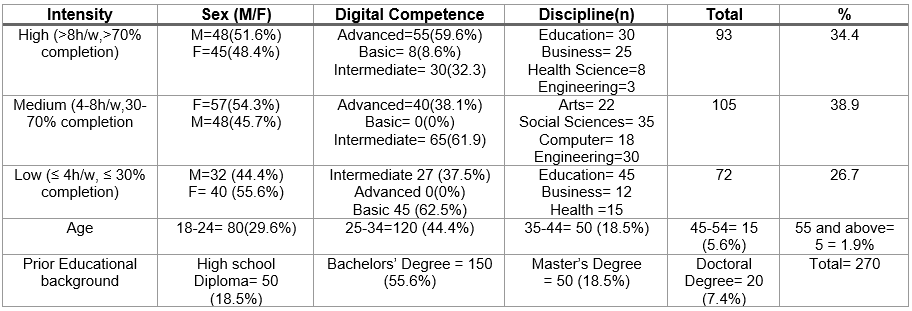
The study sample consists of 270 participants, including students, teachers, and administrative staff from higher institutions offering online programs. Content related to sharing LMS data on usage and active enrollment in the online preparatory program was required for the study. Additionally, the researchers stratified participants by online engagement level—low, medium, and high—using LMS log metrics, including module completion, hours accessed, and interaction frequency. Therefore, gender representation, prior levels of digital competence, and discipline were ensured through random sampling within each stratum (See Table 1).
Table 1.
Participants Demographic data
Reliability of Instruments
The Cronbach Alpha method was used to conduct a trial test with similar study participants for the three instruments outside the study area. The Motivation for Online Learning Inventory (a= 0.92), Online Learning Quality Scale (a=0.87), as well as academic Performance Test (pre-test a= 0.81. post-test a=0.78). All these instruments showed acceptable internal consistency and for the current sample to reconfirm reliability, Chronbach alpha values are computed.
Data Collection Methods
In this study, the Online Learning Scale (OLOS), a 30-item Likert instrument, is used, covering interaction, individualization, structure, and technical support. The Academic Performance Test (APT) consists of a second-semester examination and a standardized 50-item test aligned with program learning outcomes. Self-motivation. Intrinsic and extrinsic motivation are measured using the Motivation for Online Learning Inventory, which contains twenty items. The Digital Competence Scale (DCS) was adapted from the DigCompEdu framework. The instrument employed for the collection of data is made up of 25 items measuring communication, digital literacy, safety, the handling of information, the creation of content as well as problem solving. In addition, EdTech Usage questionnaire was developed by the researchers. The questionnaire covered the perceived usefulness of simulations, video lectures, LMS features as well as video lectures.
Procedure
Ethical approval, informed consent and the collection of baseline information were secured by the researchers. However, the researchers conducted the intervention from week one to twelve and they ensured that study respondents participated in the low, medium and high digital learning intensities. They also recorded participation metrics in LMS logs. The activities in the intervention involved reflection journals, weekly modules and synchronous webinars as well as two collaborative case studies. In addition, teachers received training for four hours on LMS tools and different instructions while LMS analytics, 10% audit of sessions and bi weekly facilitator checklist were monitored using Fidelity. Furthermore, there was an occurrence of posttest administration in week 13 and in week 14, a focus group interview was conducted which involve 30 participants. This interview provided insights on perceived digital competence, quality as well as motivational levels and the research team stored, accessed and also anonymized the collection of data from the respondents.
Data Analysis
This research made use of different statistical tools for analyzing data. In this regard, standard deviation frequency distributions as well as mean were employed to analyse digital competence, motivational levels OLQS dimensions and satisfaction scores. In addition, Independent t-test as well as one-way ANOVA were adopted in the study. Pearson correlation analysis examined relationships among the study variables. Multiple regression models predicted post-test scores while controlling for OLQS variables, pre-test performance, digital competence, and motivation. Structural equation modeling tested for moderation and mediation effects on students' academic achievement. Cluster analysis identified distinct learner profiles for recommendations. All analyses were conducted using SPSS version 28.
Ethical Considerations
The researchers obtained written consent and notified study participants that participation was voluntary and that they had the right to withdraw from the study if needed. Besides, confidentiality and anonymity were maintained in this research and ethical guidelines were painstakingly followed.
Results
The results of this study are discussed below. The data in Table 1 show that intrinsic motivation, digital competence, and satisfaction are above the midpoint of the scale. It means that participants’ perception regarding the online environment is positive because they felt capable with the digital technologies used.
Table 2.
Descriptive Statistics

Intrinsic motivation (M = 3.94, SD = 0.68) had the highest mean score among all variables. This result showed that learners were driven by enjoyment, personal value in line with learning process and intrinsic interest. This is a type of digital learning environment where self-paced learning as well as autonomy enhanced internalized motivation. Satisfaction with online learning (M = 3.82, SD = 0.71) was relatively high. Thus, students perceived the online courses as well-organized. Digital competence (M = 3.72, SD = 0.63) was slightly lower than intrinsic motivation and satisfaction, but still had a positive trend.
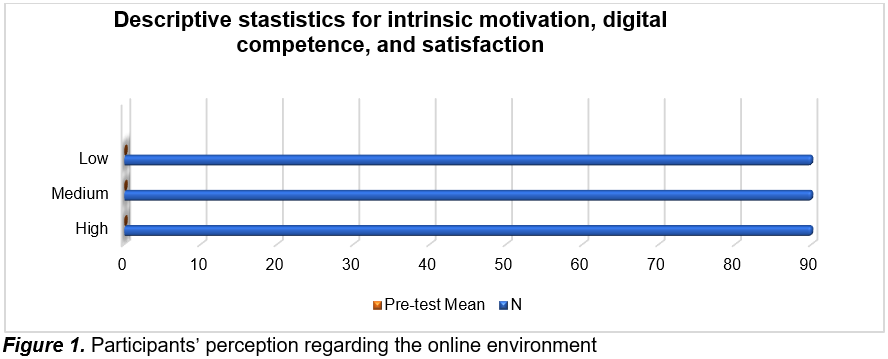
Table 3.
Academic Performance by Intensity of Engagement

Data in Table 3 revealed that all the participants in the intensity groups indicated significant gains from pre-test to post-test. This is because the pre-test mean score on the Academic Performance Test was lower than the post-test score, and the paired t-test showed a significant improvement. However, the high intensity group obtained the largest score increase, and it was followed by medium and low.
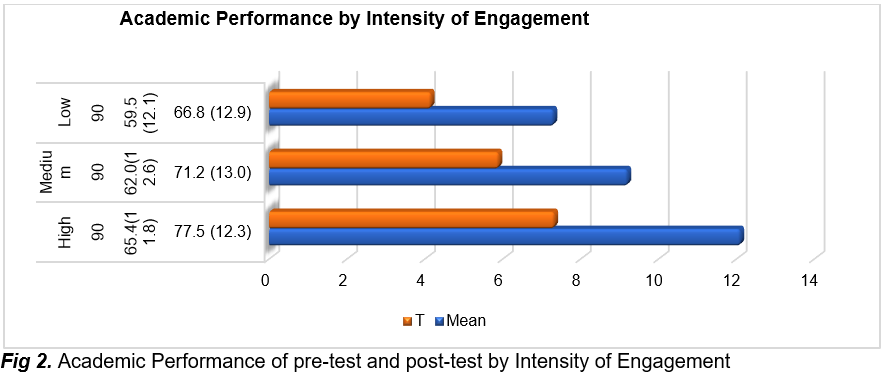
Table 4.
ANOVA for difference across Intensity Groups (Post-test Score)

In Table 4, ANOVA was used to test whether the post-test mean score will differ significantly across high, medium, and low levels of intensity. ANOVA result (F (2,267) = 6.48, p= 0.002) shows a statistical significant difference across the three independent groups (high, medium and low intensity), but with small effect size (η² = 0.046).
Table 5.
Correlation Matrix
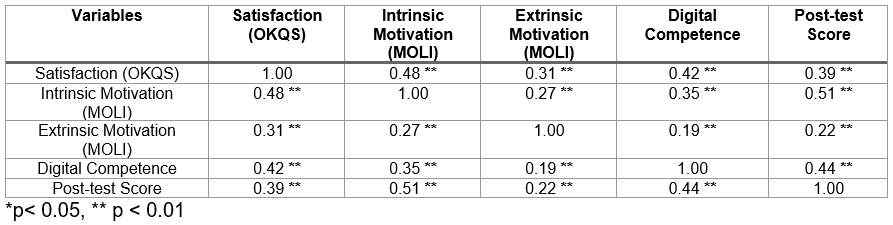
In Table 5, Pearson correlation matrix was used to determine the relationship between extrinsic motivation, intrinsic motivation, post-test academic performance and digital competence. The analysis helps determine how these variables co-vary and whether competence and motivational factors align with higher academic Achievement and perceived quality of education. The results indicated that satisfaction was moderate. Positive, digital competence correlates significantly both post-test performance and satisfaction, extrinsic motivation significantly, though statistically significant, shows weaker relationship whereas intrinsic motivation has the strongest link to post-test score. The pattern of correlation in Table 4 supports that digital competence and motivational elements, especially intrinsic motivation, are major factors that influence academic achievement and the quality of education.
Table 6.
Regression Coefficients

Data in Table 6 reveal that pretest score remains the strongest predictor while digital competence and intrinsic motivation also have substantial effects. Also, intensity of participation contribute modestly. These findings implies that both technology proficiency and higher internal drive enhance academic achievement. The implication is that both level of engagement and quality of design matter.
Table 7.
SEM path Coefficients
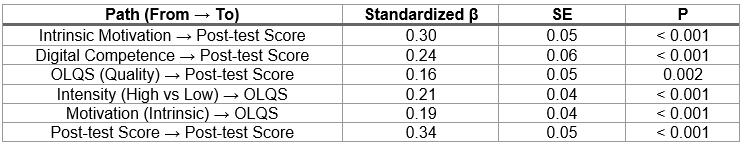
Data in Table 7 reveal a good model fit. This is because both digital competence and intrinsic motivation directly affect academic achievement, whereas OLQS quality partially mediates the effect of motivation and intensity on performance.
Table 8.
Cluster Profiles (Mean Scores)
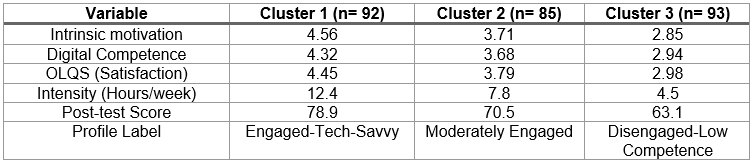
Cluster 1 (Engaged-Tech-Savvy) shows the highest intensity and achievement, motivation and competence. Cluster 2 (Moderately Engaged) falls within the mid-range while cluster 3 (Disengaged-Low Competence) obtained the lowest result across competence, motivation, engagement, and performance. Hence, one can infer that distinct learner profiles respond to the quality of online education differently.
Table 9.
Recommendations for institutions that prepare applicants for entrance exams
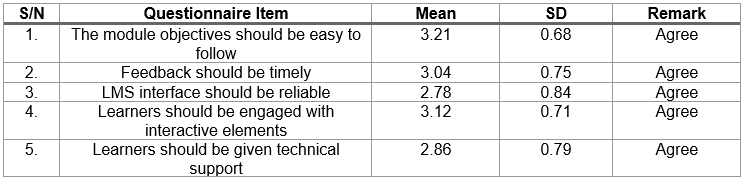
Data in Table 9 show that all the items were rated agreed by the study participants, indicating that all the items are the ways higher educational institutions can prepare applicants for entrance examinations.
Hypothesis 1: Intensive and structured online learning is positively correlated with academic achievements
Table 10.
Test of Hypothesis 1

Data in Table 10 shows that a higher intensity of engagement shows a moderate relationship with larger test score gains. Ever after adjusting pre-test performance, intensity still remains a significant predictor. The implication is that intensive and structured online learning is positively correlated with academic achievements.
Hypothesis 2: Low digital competence reduces the effectiveness of online education regardless of motivation.
Table 11.
Test of Hypothesis 2

The hypothesis tested in Table 11 indicated that intrinsic motivation and digital competence both significantly predict post-test scores after controlling for pre-test while the positive coefficient for DCS indicated that higher competence improves performance. The result therefore show that Low digital competence reduces the effectiveness of online education regardless of motivation.
Hypothesis 3: Motivational factors (goal orientation, self-motivation) mediate the relationship between online education and success.
Table 12.
Test of Hypotheses 3 (Mediation Results)

The hypothesis tested in Table 12 shows that intrinsic motivation was strongly predicted by OLQS, and intrinsic motivation predicts post-test scores. The indirect effect accounts for 48% of the total effect of OLQS on post-test, showing that mediation was partial. The implication is that motivational factors mediate the relationship between online education and success.
Hypothesis 4: The cognitive quality of online courses (clarity of structure, interactivity, feedback) is a predictor of high assessment results.
Table 13.
Test of Hypotheses 4

In Table 13, OLQS reveals a modest but significant effect, indicating that higher perceived course quality predicts better post-test performance after adjusting for competence, intensity and pre-test. This means that the cognitive quality of online courses (clarity of structure, interactivity, feedback) is a predictor of high assessment results.
Hypothesis 5: Applicants with high levels of involvement in online learning demonstrate better success compared to groups with low participation
Table 14.
Cluster profiles for Hypotheses 5
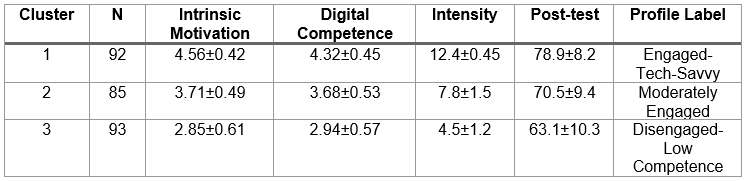
Table 15.
ANOVA on post-test Score (Cluster Difference)

In table 14, the ANOVA revealed that a statistically significant difference across all clusters- (Engaged-Tech-Savvy), (Moderately Engaged) and Disengaged-Low Competence. This difference also has large effect size.
Table 16.
Pairwise Tukey HSD (95%CI)

In Table 16, the Tukey post-hoc tests showed that every pairwise comparison was significant. Simply interpreted, applicants with high levels of involvement in online learning demonstrate better success compared to groups with low participation
Discussion
The findings of the study, in accordance with the first objective of this study, indicated that study participants exhibited a high satisfaction level with online education. This result was probably obtained because of the personalized and interactive nature of the academic environment, allowing learners to receive feedback on time and also engage actively with multimedia resources. Items such as clear objectives and content alignment showed that the modules were structured very well. To support this result, Delgado (2021) and Flores Ferro et al. (2021) agreed that AI powered platforms fosters learning effectiveness via real-time feedback as well as adaptive pathways, supporting digital technologies for enhancing learning satisfaction as well as the development of digital competence
Secondly, the result of this study revealed that learners in clusters, more particularly those who supported that higher academic engagement led to better academic results when compared with learners opinion in moderately engaged and disengaged groups. This result showed that participation intensity as well as digital competence go a long way to foster students’ academic outcomes. Besides, the result of ANOVA showed the presence of a large effect, indicating that 31% of the variance scores is determined by engagement level. Moreover, the result of Tukey HSD post-hoc tests revealed differences among all peers, indicating that when there is high engagement as well as digital competence, it leads to excellent academic outcomes. This finding is consistent with the findings by Romero Alonso et al. (2021) and Salas‐Pilco & Yang (2020) that when the self-directed learning and motivational level of learners are high, they perform better academically. The results of this research also determined the factors shaping the quality of digital education such as digital competence as well as intrinsic motivation. The study maintained that intrinsic motivation mediates the cordial affinity between excellent academic achievement and perceived quality of learning (Kulichenko et al., 2018; Polyezhayev et al., 2024). Besides, multiple regression showed that both intrinsic motivation and digital competence are significant predictors of post-test scores. Mediation analysis also indicated that intrinsic motivation partially mediates the affinity between perceived quality of learning and academic achievement. The moderation result also revealed that digital competence moderates the motivation-performance link. This suggests that motivation is more impactful for students with higher competence (Bond et al., 2020; Bazán‐Ramírez et al., 2020).
These findings reinforce the relevance of technological and motivational dimensions. In this regard, Prokopenko et al. (2024) reported that teacher training and technical support for the successful integration of AI enhance the adoption of digital technologies in online education. The findings of the study demonstrated that post-test performance was positively predicted by the perceived course quality (OLQS), more particularly after controlling for intensity, digital competence, as well as pre-test scores. The correlation matrix showed that moderate positive relations between OLQS, motivation and post-test reinforce the interdependence of these variables. This result implies that interactivity, adequate and timely feedback, and structure clarity contribute to learning gains; hence, they are not merely cosmetic. The result of this study is in agreement with the findings by Ferrer et al. (2022) and Lovón Cueva & Cisneros Terrones (2020) that assessment results drive cognitive quality of online education. Finally, the findings of the study revealed some of the key recommendations for higher educational institutions preparing applicants for entrance examinations including- enhancing a sense of community through peer activities that are structured, using targeted training modules to strengthen digital competence, improving the usability and stability of the LMS, and maintaining a good alignment between the content of examinations as well as their outcomes (Pichkur et al., 2023). This study, however, was limited by the sample size of 270 participants, which makes it difficult to generalize the study findings. This is because it may not represent all the applicants from diverse socioeconomic backgrounds. In addition, transfer effects and insights into long-term retention may be restricted because of the short 13-week intervention period. Over-reliance on self-reported measures, particularly for digital competence as well as motivation, tends to introduce technical issues and response bias from the study participants. Perhaps, this may have hindered levels of engagement for the disengaged-low competent cluster.
Conclusions
This research investigated the impact of digital education on the quality of learning and academic outcomes of applicants who prepare for advanced examinations in higher institutions. The results of this research revealed a high satisfaction level among applicants with regard to content relevance, timely feedback and course clarity. The results also indicated that strong motivation as well as adequate digital competence were available. It was deduced that perceived quality of academic environment and engagement intensity came up as predictors of enhanced post-test scores. The results showed a distinct profile of applicants, stressing that participants in the group with a higher level of academic engagement obtained better academic outcomes than those in the disengaged and moderate groups. Hence, motivation, digital competence, and active participation foster academic outcomes. This research showed that academic performance of learners will improve peer structured activities are used, targeted training modules are used to foster a sense of community, enhance digital competence, improve stability and usability of LMS, and also maintain a good relationship between examination content and outcomes. This will foster effective personalized learning. Based on the foregoing, future research that will be conducted in Ukraine should therefore extend the periods of intervention and also ensure the expansion of the participant pool, complement, and add meaning to the results obtained via the survey. Addressing these gaps in knowledge will help future researchers to build a sustainable and all-inclusive model to prepare applicants who intend to write entrance examinations in high academic institutions
Bibliographic references
Aldhafeeri, F.M., & Alotaibi, A.A. (2022) Effectiveness of digital education shifting model on high school students’ engagement. Journal of Education and Information Technologies, 27(1) 6869–6891 https://doi.org/10.1007/s10639-021-10879-4
Abdullah, T., Alam, A., & Sanauddin, N. (2024). Moral Education in the Digital Age: A Durkheimian Exploration of Values Transmission through Online Learning. International Journal of Distance Education and E-Learning, 10(1), 85-100. http://dx.doi.org/10.2139/ssrn.5313019
Bazán‐Ramírez, A., Alfredo Quispe‐Morales, R., Huauya‐Quispe, P., & Ango‐Aguilar, H. (2020). Accessibility, difficulties and advantages of the online study for COVID‐19 in a presential postgraduate on education. Propósitos y Representaciones, 8(SPE3), e659. https://doi.org/10.20511/pyr2020.v8nSPE3.659
Bond, M., Buntins, K., Bedenlier, S., Zawacki‐Richter, O., & Kerres, M. (2020). Mapping research in student engagement and educational technology in higher education: A systematic evidence map. International Journal of Educational Technology in Higher Education, 17(1), 1–30. https://doi.org/10.1186/s41239-019-0176-8
Bravo‐Agapito, J., Romero, S. J., & Pamplona, S. (2021). Early prediction of undergraduate Student's academic performance in completely online learning: A five‐year study. Computers in Human Behavior, 115, 106595. https://doi.org/10.1016/j.chb.2020.106595
Chávez‐Miyauchi, T.‐E., Benítez‐Rico, A., Alcántara‐Flores, M., Vergara‐Castañeda, A., & Ogando‐Justo, A.‐B. (2021). Personal motivation and learning self‐management in students, as result of the transition to online courses during COVID‐19 pandemic. Nova Scientia, 13(spe). 1–16. https://doi.org/10.21640/ns.v13ie.2739
Chigisheva, O., Soltovets, E., Dmitrova, A., Akhtyan, A. G., Litvinova, S. N., & Chelysheva, Y. V. (2021). Digital literacy and its relevance to comparative education researchers: Outcomes of SciVal analytics. Eurasia Journal of Mathematics, Science and Technology Education, 17(10), em2017. https://doi.org/10.29333/ejmste/11183
Delgado, F. (2021). Teaching physics for computer science students in higher education during the COVID‐19 pandemic: A fully internet‐supported course. Future Internet, 13(2), 35. https://doi.org/10.3390/fi13020035
Dennis, M., & Harrison, T. (2021). Unique ethical challenges for the 21st century: Online technology and virtue education. Journal of Moral Education, 50(3), 251-266. https://doi.org/10.1080/03057240.2020.1781071
Ferrer, J., Ringer, A., Saville, K., Parris, M. A., & Kashi, K. (2022). Students’ motivation and engagement in higher education: The importance of attitude to online learning. Higher Education, 83, 317–338. https://doi.org/10.1007/s10734-020-00657-5
Flores Ferro, E., Maureira Cid, F., Hadweh Briceno, M., Gutiérrez Duarte, S. A., Silva‐Salse, A., Peña‐Troncoso, S., Castillo Retamal, F., González Flores, P., Pauvif Carcamo, F., Bahamondes Acevedo, V., Zapata Vera, G., Zavala‐Crichton, J. P., Maureira Sánchez, J., Brevis‐Yéber, M., & Lagos Olivos, C. (2021). Level of satisfaction of online classes by students of Physical Education of Chile in times of pandemic. Retos‐Nuevas Tendencias en Educación Física Deporte y Recreación, 41, 123–130. https://doi.org/10.47197/RETOS.V0I41.82907
Guillén‐Gámez, F. D., & Mayorga‐Fernández, M. J. (2020). Quantitative‐comparative research on digital competence in students, graduates and professors of Faculty Education: An analysis with ANOVA. Education and Information Technologies, 25(5), 4157–4174. https://doi.org/10.1007/s10639-020-10160-0
Knopf, T., Stumpp, S., & Michelis, D. (2021). How online collaborative learning leads to improved online learning experience in higher education. En Proceedings of the 8th European Conference on Social Media (pp. 119–127).
Kordrostami, M., & Seitz, V. (2021). Faculty online competence and student affective engagement in online learning. Marketing Education Review, 32(3), 240–254. https://doi.org/10.1080/10528008.2021.1965891
Koseda, E., Cohen, I. K., McIntosh, B., & Cooper, J. (2024). Internationalisation and digital transformation in HEIs: The impact of education 4.0 on teaching, learning and assessment. Policy Futures in Education, 23(1), 1-9. https://doi.org/10.1177/14782103241226531
Kovačević, I., Labrović, J. A., Petrović, N., & Kužet, I. (2021). Recognizing predictors of students' emergency remote online learning satisfaction during COVID‐19. Education Sciences, 11(11), 693. https://doi.org/10.3390/educsci11110693
Kulichenko, A. K., Sotnik, T. V., & Stadnychenko, K. V. (2018). Electronic portfolio as a technique of developing creativity of a foreign language teacher. Information Technologies and Learning Tools, 66(4), 286–304. https://doi.org/10.33407/itlt.v66i4.2178
Landrum, B., Bannister, J., Garza, G., & Rhame, S. (2020). A class of one: Students' satisfaction with online learning. Journal of Education for Business, 96(2), 82–88. https://doi.org/10.1080/08832323.2020.1757592
Lovón Cueva, M. A., & Cisneros Terrones, S. A. (2020). Impact of virtual classes on the university students in the context of COVID‐19 quarantine: The case of the PUCP. Propósitos y Representaciones, 8(SPE), e588. https://doi.org/10.20511/pyr2020.v8nSPE3.588
Masalimova, A. R., Erdyneeva, K. G., Kislyakov, A. S., Sizova, Z. M., Kalashnikova, E., & Khairullina, E. R. (2022). Validation of the scale on pre-service teachers’ digital competence to assist students with functional diversity. Contemporary Educational Technology, 14(4), ep382. https://doi.org/10.30935/cedtech/12301
Molina Gutiérrez, T. D. J., Lizcano Chapeta, C. J., Álvarez Hernández, S. D. R., & Camargo Martínez, T. T. (2021). Crisis estudiantil en pandemia. ¿Cómo valoran los estudiantes universitarios la educación virtual?. Revista Conrado, 17(80), 283–294. Recuperado a partir de https://conrado.ucf.edu.cu/index.php/conrado/article/view/1845
Morgulets, O. B., & Derkach, T. M. (2019). Information and communication technologies managing the quality of educational activities of a university. Information Technologies and Learning Tools, 71(3), 295–304. https://doi.org/10.33407/itlt.v71i3.2831
Polyezhayev, Y., Terletska, L., Kulichenko, A., Vorobiova, L., & Snizhko, N. (2024). The role of web applications in the development of multilingual competence in CLIL courses in higher education. Revista Eduweb, 18(3), 106–118. https://doi.org/10.46502/issn.1856-7576/2024.18.03.9
Prokopenko, O., Matviienko, V., Chunikhina, T., Ohol, V., & Jasurkova, A. (2024). Transforming teacher education: The influence of artificial intelligence on educational practices and human resource dynamics. En Proceedings of the 2024 International Conference on Artificial Intelligence and Teacher Education (ICAITE) (pp. 35–42). ACM. https://doi.org/10.1145/3702386.3702389
Quispe‐Prieto, S., Franchini Cavalcanti‐Bandos, M., Caipa‐Ramos, M., Páucar‐Cáceres, A., & Rojas‐Jiménez, H. H. (2021). A systemic framework to evaluate student satisfaction in Latin American universities under the COVID‐19 pandemic. Systems, 9(1), 15. https://doi.org/10.3390/systems9010015
Pichkur, M. O., Poluden, L. I., Demchenko, I. I., & Sotska, H. I. (2023). Digital footprints monitoring of higher art education applicants’ training. Information Technologies and Learning Tools, 94(2), 128–149. https://doi.org/10.33407/itlt.v94i2.5205
Realyvásquez‐Vargas, A., Maldonado‐Macías, A. A., Cecilia Arredondo‐Soto, K., Baez‐López, Y., Carrillo‐Gutiérrez, T., & Hernández‐Escobedo, G. (2020). The impact of environmental factors on academic performance of university students taking online classes during the COVID‐19 pandemic in Mexico. Sustainability, 12(21), 9194. https://doi.org/10.3390/su12219194
Regalado‐Pezua, O., & Galeano, M. L. T. (2022). From Face‐to‐face education to online education: Challenges at a business school in Peru. In Zhuplev A., & Koepp R. (Eds.), Global trends, dynamics, and imperatives for strategic development in business education in an age of disruption (pp. 149–170). IGI Global. https://doi.org/10.4018/978-1-7998-7548-2.ch008
Romero Alonso, R. E., Tejada Navarro, C. A., & Núñez, O. (2021). Actitudes hacia las TIC y adaptación al aprendizaje virtual en contexto COVID‐19, alumnos en Chile que ingresan a la educación superior [Attitudes towards ICT and adaptation to virtual learning in the context of COVID‐19, students in Chile entering higher education]. Perspectiva Educacional, 60(2), 99–120. https://doi.org/10.4151/07189729-vol.60-iss.2-art.1175
Romero, E. D., & Bobkina, J. (2021). Exploring critical and visual literacy needs in digital learning environments: The use of memes in the EFL/ESL university classroom. Thinking Skills and Creativity, 40, 1-16. https://doi.org/10.1016/j.tsc.2020.100783
Salas‐Pilco, S. Z., & Yang, Y. (2020). Learning analytics initiatives in Latin America: Implications for educational researchers, practitioners and decision makers. British Journal of Educational Technology, 51(4), 875–891. https://doi.org/10.1111/bjet.12952
Sapien Aguilar, A. L., Pinon Howlet, L. C., del Gutiérrez Diez, M. C., & Bordas Beltrán, J. L. (2020). Higher education during the health contingency COVID‐19: Use of ICTs as learning tools. Case study: Students of the Faculty of Accounting and Administration. Revista Latina de Comunicación Social, 78, 309–328. https://doi.org/10.4185/RLCS-2020-1479
Turchyn, I., Zaitseva, S., Rudenko, N., Saienko, V., Kuzemko, N., & Denefil, O. (2023). Using Distance Learning Models as Opportunities for Blended Learning for Foreigners. Revista Romaneasca Pentru Educatie Multidimensionala, 15(4), 178-191. https://doi.org/10.18662/rrem/15.4/787
Zapata‐Garibay, R., Eduardo González‐Fagoaga, J., Meza‐Rodríguez, E. B., Salazar‐Ramírez, E., Plascencia‐López, I., & Judith González‐Fagoaga, C. (2021). Mexico’s higher education students’ experience during the lockdown due to the COVID‐19 pandemic. Frontiers in Education, 6, 683222. https://doi.org/10.3389/feduc.2021.670400
Zhao, Y., Zhao, M., & Shi, F. (2023). Integrating moral education and educational information technology: A strategic approach to enhance rural teacher training in universities. Journal of the Knowledge Economy, 15(3), 15053–15093. https://doi.org/10.1007/s13132-023-01693-z
Zúñiga Rodríguez, M., & Cáceres Mesa, M. L. (2021). El sentido escolar frente al COVID‐19. La percepción de estudiantes de universidades públicas en Hidalgo. Revista Conrado, 17(78), 46–53. Recuperado a partir de https://conrado.ucf.edu.cu/index.php/conrado/article/view/1642

Este artículo no presenta ningún conflicto de intereses. Este artículo está bajo la licencia Creative Commons Atribución 4.0 Internacional (CC BY 4.0). Se permite la reproducción, distribución y comunicación pública de la obra, así como la creación de obras derivadas, siempre que se cite la fuente original.