
Original Article
Eduweb, 2026, abril-junio, v.20, n.2. ISSN: 1856-7576
Doi: https://doi.org/10.46502/issn.1856-7576/2026.20.02.4
Effectiveness of the integrated research skills development model (IRSDM) in higher education: a quasi-experimental study in Ukraine
Volodymyr Yatsenko
Candidate of Pedagogical Sciences, Senior Researcher, Senior Researcher of the Department of Geography and Economics, Department of Geography and Economics, Institute of Pedagogy of the National Academy of Educational Sciences of Ukraine, Kyiv, Ukraine.
https://orcid.org/0000-0002-7948-2983
Oksana Protas
Doctor of Pedagogical Sciences, Professor, Professor of the Department of Social Pedagogy and Social Work, Faculty of Education, Vasyl Stefanyk Сarpathian National University, Ivano-Frankivsk, Ukraine.
https://orcid.org/0000-0002-4176-8353
Olena Striliuk
PhD in History, Associate Professor, Associate Professor of the Department of World History and International Relations, T. H. Shevchenko National University “Chernihiv Colehium”, Chernihiv, Ukraine.
https://orcid.org/0000-0002-5278-5263
Anna Chepeliuk
Candidate of Pedagogical Sciences, Associate Professor, Associate Professor of the Department of Theory and Methods of Physical Education and Sports Drohobych Ivan Franko State Pedagogical University, Faculty of Human Health and Natural Sciences, Drohobych, Ukraine.
https://orcid.org/0000-0001-7447-8478
Andrii Rybalko
Candidate of Pedagogical Sciences, Associate Professor, Associate Professor of the Department of Chemistry and Physics, Department of Chemistry and Physics, Educational and Scientific Institute of Agroecology and Land Management, National University of Water and Environmental Engineering, Rivne, Ukraine.
https://orcid.org/0000-0003-1744-8488
Cómo citar:
Yatsenko, V., Protas, O., Striliuk, O., Chepeliuk, A., & Rybalko, A. (2026). Effectiveness of the integrated research skills development model (IRSDM) in higher education: a quasi-experimental study in Ukraine. Revista Eduweb, 20(2), 53-69. https://doi.org/10.46502/issn.1856-7576/2026.20.02.4
Recibido: 01/02/26 Aceptado: 30/04/26
Resumen
El propósito del estudio fue determinar el impacto del modelo integrador del autor, construido sobre una combinación de aprendizaje basado en proyectos, aprendizaje basado en la indagación, aprendizaje basado en la investigación y enfoques de laboratorios de investigación digital, en el nivel de desarrollo de la competencia investigativa de los solicitantes de educación. El estudio se implementó como un cuasi-experimento con la formación de grupos de control y experimental en el diseño de pre-prueba/post-prueba. La muestra total consistió en 248 estudiantes, que se dividieron en grupos experimentales (n = 124) y control (n = 124). La intervención duró un semestre (14 semanas) e incluyó cuatro módulos consecutivos destinados a desarrollar las habilidades de formulación de un problema científico. Los resultados mostraron un aumento en las habilidades de investigación en el grupo experimental en comparación con el grupo de control, lo que confirmó la efectividad del modelo IRSDM. Los mayores cambios positivos se registraron en los componentes de formulación de problemas de investigación, pensamiento analítico y trabajo con fuentes académicas. Las conclusiones destacan que la novedad científica del estudio consistió en el desarrollo y prueba empírica de un modelo integrador de formación de competencias investigativas en el contexto educativo ucraniano.
Palabras clave: aprendizaje basado en proyectos, competencia investigadora, cuasi-experimento, modelo de aprendizaje integrado, tecnologías educativas digitales.
Abstract
The study aimed to determine the impact of the author's integrative model, combining Project-Based Learning, Inquiry-Based Learning, Research-Based Learning, and Digital Research Labs, on learners' research competence development. The study was implemented as a quasi-experiment, with control and experimental groups formed in a pre-test/post-test design. The total sample consisted of 248 students, divided into an experimental (n = 124) and a control (n = 124) group. The intervention lasted one semester (14 weeks) and included four consecutive modules aimed at developing skills in formulating a scientific problem, working with sources, and methodological literacy. The author's scale of research skills was used to assess the results. The results showed greater improvement in research skills in the experimental group than in the control group, confirming the effectiveness of the IRSDM model. The greatest positive changes were recorded in the components of research problem formulation, analytical thinking, and working with academic sources. The conclusions emphasize that the study's scientific novelty lies in the development and empirical testing of an integrative model. From a practical perspective, the proposed model can be adopted by higher education institutions seeking to modernize research training and enhance students’ readiness for academic and professional challenges.
Keywords: digital educational technologies, integrated learning model, Project-Based Learning, quasi-experiment, research competence.
Introduction
In the 21st century, the formation of students' research skills has become one of the main factors in ensuring the quality of higher education. In the global academic space, the transition from a translational model of learning to a research-oriented paradigm is increasingly clearly outlined. Within its framework, students were not passive recipients of knowledge. They turned into active subjects of knowledge who were able to formulate scientific problems, critically analyze information, interpret data and present the results of their own research. In this context, research skills (research skills / research competencies) integrated various aspects of the cognitive, informational, methodological and communicative components, forming the basis for academic autonomy and professional mobility of future specialists.
International studies of recent years have demonstrated the effectiveness of innovative pedagogical approaches aimed at developing research competencies, in particular inquiry-based learning, problem-based learning, course-based undergraduate research experiences (CURE), and formative research (investigación formativa) (Valeriano Carrasco & James Wilfredo, 2023). The experience of Latin American countries has become important, where, in the context of transformational changes in educational systems, the search for models that combine academic standards, digitalization of education and contextual socio-cultural features has been implemented (Spector, 2025; Vovchasta et al., 2024). The studies that have been conducted have demonstrated that the systematic implementation of research-oriented courses, interdisciplinary projects and digital tools has significantly contributed to increasing the level of critical thinking, information literacy and academic independence of learners (Castillo-Martínez & Ramírez-Montoya, 2021).
At the same time, in the current conditions of Ukraine, the development of students' research skills is also becoming relevant. The educational system operates in conditions of military challenges, digital transformation and the need to integrate into the European scientific and educational space (Khryk et al., 2021; Turchyn et al., 2023). This has led to increased requirements for the quality of training of specialists who must reproduce knowledge and critically evaluate information, work with different types of sources and make informed decisions in conditions of uncertainty and complex situations. In addition, the spread of information threats and disinformation has actualized the importance of research skills as a component of academic integrity and information security (Aliyeva et al., 2023; Bohomaz et al., 2023; Boichenko et al., 2023). Despite the active implementation of digital technologies and the reform of higher education in Ukraine, the issue of the holistic integration of research-oriented approaches into the educational process remains insufficiently researched. Existing practices are often fragmentary and do not provide high-quality formation of research competencies. This has created the need to develop and empirically test integrated pedagogical models.
The purpose of the article was to develop and experimentally test the effectiveness of an integrated model of research skills development, which was created on the basis of international pedagogical approaches for the further development of research competencies of higher education students in Ukraine. Accordingly, the main tasks of the study were the theoretical substantiation of the integrated model of research skills development based on the analysis of international experience, and the empirical assessment of the level of development of research skills of education students before and after the implementation of the model (according to the quasi-experimental pre-test / post-test design with a control group).
It is also proposed to confirm or refute the following hypotheses:
H1. The use of the Integrated Research Skills Development Model (IRSDM) significantly increased the level of research skills among students.
H2. Students in the experimental group demonstrated a statistically significant increase in the level of research skills between the pre-test and the post-test, while in the control group such changes were insignificant.
Literature Review
In the international scientific discourse of the last decade, research skills (research skills / research competencies) have been analyzed from the perspective of understanding the integrative component of university learning outcomes. They encompass the ability to formulate scientific questions, conduct a critical analysis of the literature, apply appropriate methods of data collection and processing, understand the results and present them in understandable and acceptable forms. In modern models of the competency approach, research skills have been combined with cognitive, methodological, informational and communicative components.
Systematic reviews of publications in 2021–2024 demonstrated the fact that research competencies are increasingly integrated into the curricula of bachelor's, master's and postgraduate programs (Adeoye & Jimoh, 2023; Campos-Ugaz et al., 2022). The existence of such an approach undoubtedly corresponded to the concept of “research-informed teaching”, which involved involving students in elements of scientific activity from the first years of study (Guzmán-Valenzuela et al., 2023; Marín et al., 2025). At the same time, special attention is paid to the development of metacognitive strategies, the ability for self-regulated learning, and critical thinking as prerequisites for effective research activities.
In international practice, a number of approaches have been developed that have shown effectiveness in developing research skills (Mubarak & Selimin, 2023; Karpliuk et al., 2024).
The capabilities of Inquiry-based learning were based on involving students in independently formulating a problem, putting forward hypotheses, and finding solutions through the analysis of empirical data. Studies have shown that the systematic use of IBL increased the level of analytical thinking, argumentation ability, and skills in working with sources (Ratnawati & Idris, 2020; Sobarzo-Ruiz, 2023). This approach has become especially popular in STEM education, although it has also been increasingly used in social and humanitarian disciplines.
Problem-based learning is considered a model that promotes the integration of theoretical knowledge and practical research skills. Within the framework of PBL, students worked on real or close to real problems that required a thorough analysis of sources, the formation of an evidence base, and the presentation of results (Tapullima-Mori et al., 2025; Vélez Jiménez et al., 2022). Meta-analyses have shown the positive impact of PBL on the formation of critical thinking skills and interdisciplinary integration of knowledge.
The CURE model involved integrating a research component directly into the structure of the course. Unlike individual research projects, CURE ensured the mass involvement of students in research activities. Empirical studies have shown that such courses generally had a positive impact on academic motivation, confidence in one’s own research abilities, and the ability to independently plan scientific work (Ampa & Nurqalbi, 2021; Dighliya, 2024). The concept of investigación formativa (formative research) was actively developed, which involved the gradual formation of research skills through the integration of elements of scientific work into regular academic disciplines. Existing studies have shown that such a model contributed to an increase in the level of information literacy, academic writing, and the ability to independently search for scientific sources (Hryn et al., 2024; Mora-Pablo & González, 2025). However, despite the active development of these approaches, it has been proven that their implementation in educational practice has been mostly fragmented. Individual methods (IBL, PBL, CURE, digital tools) are used in isolation, without proper integration into a single pedagogical system. This limits their synergistic potential and does not ensure the formation of students' research skills.
Moreover, researchers emphasized that the need for institutional support and training of teachers to implement research-oriented methods was extremely important (Okolie et al., 2021).
The modern development of research skills is impossible without the formation of information and digital literacy. Recent studies have shown that educators often used digital tools fragmentarily and without proper critical assessment of sources (Songkram et al., 2024; Uribe-Tirado & Machin-Mastromatteo, 2024). The integration of information literacy courses into curricula has contributed to the development of skills in searching, selecting and analyzing scientific information. In addition, digital learning environments, online platforms and data analysis tools have expanded the possibilities of involving students in research activities (Salinas Velastegui et al., 2023). Modern universities have actively introduced digital modules for the preparation and support of writing diploma and master's theses. This approach has showed positive influence the quality of academic texts and the methodological soundness of research.
Despite the growing number of studies devoted to the development of research skills in higher education, the analysis of the current scientific literature has pointed out the existence of some gaps. First of all, there was no single operationalization of the concept of “research skills” in scientific works (Sernaqué et al., 2023). In different studies, this term covered different components: from critical thinking and information literacy to narrowly methodological skills. Primarily, examples of this situation were the lack of a clear differentiation between the concepts of research skills, research competencies, inquiry competence and academic literacy, etc (Meissner & Shmatko, 2018). In addition, most publications were based on short-term pedagogical interventions (semester courses, individual PBL or IBL modules), while the long-term impact of innovative approaches on the academic trajectory of students was not sufficiently investigated (Koyuncuoglu, 2020). This closed the prospect for further research on the proposed issue. Thus, there is a scientific and practical gap associated with the lack of integrated models that would combine effective pedagogical approaches within a single structured system and provide a long-term impact on the development of students' research skills.
In this sense, the development of holistic pedagogical solutions that would ensure the integration of research-oriented approaches, digital tools, and interdisciplinary teaching methods has become particularly relevant.
Therefore, international studies will demonstrate the effectiveness of such approaches as Project-Based Learning, Inquiry-Based Learning, Research-Based Learning and digital laboratories in the development of individual components of research activities (Alberto et al., 2024). However, the analysis of modern publications has shown the fragmentation of the use of these approaches. In most cases, they were implemented in isolation, which limited their synergistic potential. Therefore, there was a need to create an integrated model. The proposed model provided for the structured implementation of problem-based, research and digital learning within a single system. The model became a certain pedagogical construct that was focused on measurable learning outcomes and experimental verification of effectiveness. Unlike existing approaches, the proposed model aims to integrate different pedagogical strategies and is focused on achieving measurable learning outcomes that are subject to empirical verification.
Methodology
Research design
The research design involved conducting a quasi-experimental study with control and experimental groups in a pre-test/post-test design. This study determined the cause-and-effect relationships between the implementation of the Integrated Research Skills Development Model (IRSDM) and the main changes in the system of research skills of higher education students.
The division into groups was made on the basis of academic study groups/streams (cluster approach), since individual randomization was organizationally difficult in the conditions of the real educational process.
Experimental group (EG): training using the IRSDM.
Control group (CG): training according to the traditional program/usual approaches, i.e., teaching took place here without specially structured IRSDM research training.
The intervention lasted 14 weeks (one semester) and was integrated into the corresponding educational course/module. Measurements were carried out twice: Pre-test (T1) at the beginning of the semester; Post-test (T2) after the intervention.
IRSDM was designed based on the international approaches PBL, Inquiry-Based Learning, Research-Based Learning and Digital Research Labs and implemented on the basis of 4 consecutive modules.
This approach was chosen intentionally to avoid disrupting the natural educational process in Ukrainian higher education institutions. Individual randomization of students was not possible due to organizational, ethical, and administrative constraints, as it would have required restructuring of existing academic groups and schedules. Therefore, the use of intact groups (cluster allocation) ensured the validity of the study.
Participants
The total number of study participants was 248 students studying in higher and professional pre-higher education institutions of Ukraine. Students of educational programs of the humanitarian and socio-pedagogical direction were involved in the study. Disciplines that provided for the implementation of research tasks were integrated into the curricula of the group participants. In general, the sample was drawn up on the basis of purposeful selection and the following criteria were taken into account: 1. the possibility of integrating experimental methods into the educational process; 2. the presence of disciplines with a research component; 3. consent of the administration and teachers to implement the intervention; 4. voluntary informed consent of students. After the sample was formed, the participants were divided into experimental (EG) and control (CG) groups at the level of academic groups (cluster approach). The distribution was balanced: experimental group (EG): n = 124; control group (CG): n = 124.
The experimental group studied based on the author's IRSDM model. However, the control group mastered the educational material using the traditional method without the purposeful integration of research and digital modules.
In order to ensure the internal validity of the study, a preliminary test was conducted, which made it possible to determine the differences between the groups at the initial stage.
Table 1.
Characteristics of the study participants
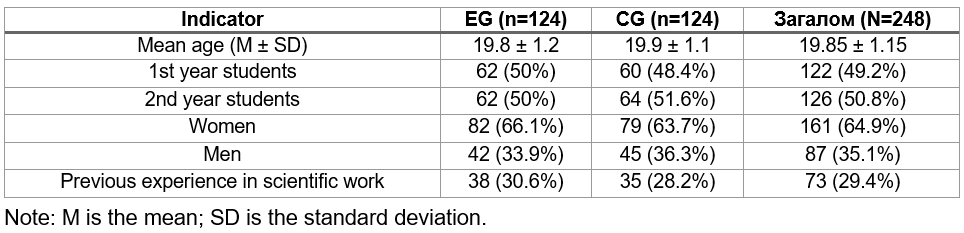
The sample size (N = 248) is sufficient for the application of parametric methods of statistical analysis (t-test, ANCOVA) and factor analysis of the research skills scale. These indicators exceeded the minimum requirements for ensuring statistical power (power ≥ 0.80 with an average effect d ≈ 0.5).
Integrated model of research skills formation
The authors of the article developed an integrated model of research skills formation as an important innovative pedagogical system aimed at the formation of research competence of students based on the integration of internationally proven approaches: Project-Based Learning (PBL), Inquiry-Based Learning (IBL), Research-Based Learning (RBL) and the Digital Research Labs methodology.
Unlike previous and traditional forms of organizing learning, which were based on the preparation of a final written work, IRSDM provided for the formation of such skills as research thinking, methodological literacy and digital academic competence. This was carried out on the basis of the implementation of sequential educational modules.
The model is based on the following principles: integration, phasedness, research involvement and academic integration, digitalization.
IRSDM was carried out over one semester (12–14 weeks), which consisted of four interconnected modules:
Module 1. Formulation of the problem and research question. This module provides for the analysis of current educational/social issues; the formation of a research question, the definition of the object, subject and purpose of the study and the development of critical thinking in applicants.
The structure of the model provided a gradual transition from basic research skills to more complex analytical and interpretive competencies. This approach was consistent with the logic of scaffolded learning and the gradual development of research competence.
Module 2. Working with sources and academic integrity. This stage provides for the search for scientific sources in international databases; assessment of the reliability of sources. The basics of citation and bibliography management were also covered. This stage also includes the use of digital tools (reference managers, academic search engines).
Module 3. Implementation of a mini-study (PBL + Inquiry). This stage includes the selection of data collection methods; development of tools (questionnaire, observation, etc.); collection and primary processing of data. Group project work is also provided.
Module 4. Interpretation and academic presentation of results. At this final stage, the analysis of results and the construction of arguments were carried out. Participants also visualized the data. A research report was prepared, and some participants made a scientific poster.
Research procedure
The study was conducted over one academic semester (14 weeks). The overall work involved three consecutive stages: preparatory, intervention and final.
From week 1 to 2, the preparatory stage lasted, during which the consent of the participants was obtained, initial testing was conducted. Teachers were also trained in the implementation of the IRSDM over a period of 1–2 weeks through a short methodological workshop. The training included an explanation of the model structure, detailed instructions for each of the four modules, sample tasks, and uniform assessment criteria. This ensured consistency in the application of the model across academic groups and minimized variability. At this stage, the assessment criteria for both groups were also unified. The pre-test included a diagnostic scale of research skills and a short practical task on formulating a research problem.
From week 3 to 13, the intervention stage lasted. The experimental group (EG) studied based on the author's IRSDM model, which included four consecutive modules (presented above). In general, the training took place through problem-oriented task methods; group project work; digital research tools; step-by-step methodological support. The control group (CG) was trained according to the traditional course program, which included a lecture-seminar form of work. The duration of the training load in both groups was the same.
At week 14, a final stage was held, during which a re-test (post-test) and evaluation of mini-research projects were carried out using a standardized rubric. Final quantitative indicators were also collected. The obtained data were prepared for statistical analysis.
Measurement tools
Various quantitative and performative tools were used to assess the effectiveness of IRSDM.
An author's scale of research skills was developed, consisting of 25 statements grouped into 5 main subscales: 1. Formulation of a scientific problem. 2. Working with academic sources. 3. Methodological literacy. 4. Analysis and interpretation of data. 5. Academic communication. The assessment was carried out using a 5-point Likert scale (1 - completely disagree; 5 - completely agree). The validity and reliability of the scale were also tested, and the following indicators were obtained: Cronbach’s α for the overall scale: ≥ 0.85; α for subscales: ≥ 0.78; KMO ≥ 0.80; Bartlett’s test of sphericity (p < .001); EFA with varimax rotation was conducted.
The evaluation of mini research projects was carried out according to an analytical rubric, which included 4 criteria.
Problem formulation – 10 points
Working with sources – 10 points
Methodological literacy – 10 points
Justification of conclusions – 10 points
Maximum score – 40.
The assessment was carried out by two independent experts. Inter-expert agreement was carried out on the basis of the intraclass correlation coefficient (ICC ≥ 0.80).
Additionally, data were collected on research experience; digital literacy and average academic score. These variables were used as covariates in ANCOVA.
Data analysis
Statistical data processing was carried out on the basis of SPSS (version XX). Before the main analysis, data completeness and normality of distribution were checked (Shapiro–Wilk test). Since the distribution of research skills indicators did not have critical deviations from normal (p > .05), parametric methods were used for further analysis. To assess the internal consistency of the scale, the Cronbach’s α coefficient was calculated: (α ≥ 0.85). Construct validity was tested based on exploratory factor analysis (EFA): KMO ≥ 0.80; Bartlett’s test of sphericity — p < .001; The obtained factor structure corresponded to the theoretically defined components of research competence. To determine the homogeneity of the experimental (EG) and control (CG) groups before the intervention, the following was conducted: Independent samples t-test for pre-test indicators. No statistically significant differences between the groups were found at the initial stage (p > 0.05).
To insert the dynamics of the development of research skills in each group, the following was used: Paired samples t-test (comparison of pre-test and post-test). Also, Independent samples t-test (post-test) was conducted to compare the results in both groups. ANCOVA was also conducted, in which: dependent variable — post-test result; The independent variable is the groups, and the covariate is the pre-test score. The intervention effect indicator was determined based on partial eta squared (η²): The evaluation of mini-research projects was carried out using: Independent samples t-test (total score) and ICC calculation (inter-rater agreement test). An ICC coefficient ≥ 0.80 was defined as a high level of agreement.
Results and Discussion
Results
Research competence is one of the main meta-competences, which allows to ensure the ability of the student to independently learn, critically analyze information and produce new knowledge. Within the framework of this study, the effectiveness of the author's model was determined by comparing the results of the experimental and control groups according to the indicators of the formation of research skills. Before the intervention, the experimental and control groups were compared based on the indicator of the formation of research skills. The results of the independent samples t-test did not reveal statistically significant differences.
Table 2.
Comparison of indicators of research skills before the intervention

After the semester intervention, the level of development of research skills of higher education students was re-measured. The results of independent samples t-test showed the presence of intergroup differences in the integral indicator of research competence. The average score of the experimental group exceeded the corresponding indicator of the control group.
Table 3.
Comparison of EG and CG results after the intervention (Post-test)
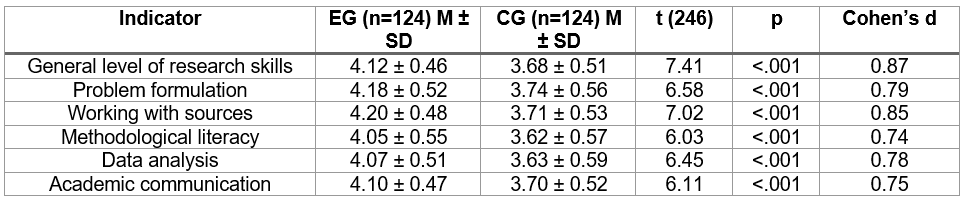
As can be seen from the table, after the intervention, all indicators of research competence in the experimental group exceeded the corresponding indicators of the control group (p < .001). The effect sizes (Cohen's d ranging from 0.74 to 0.87) indicate a strong practical impact of the intervention on student learning outcomes. According to conventional controls, these values correspond to significant effects, confirming that the IRSDM model led to improvements in research skills. The largest effect was recorded for working with sources (d = 0.85), formulating a scientific problem (d = 0.79) and analytical skills (d = 0.78). These results support hypothesis H1 on the model’s effectiveness.
Figure 1 shows the dynamics of changes in the level of research skills in the experimental and control groups before and after the intervention. As can be seen from the graphic visualization, at the initial stage (pre-test) the average scores of both groups were almost identical. After the semester intervention, the experimental group had an increase in the average score. The visualization clearly reflects the pronounced effect of the implementation of the IRSDM model.
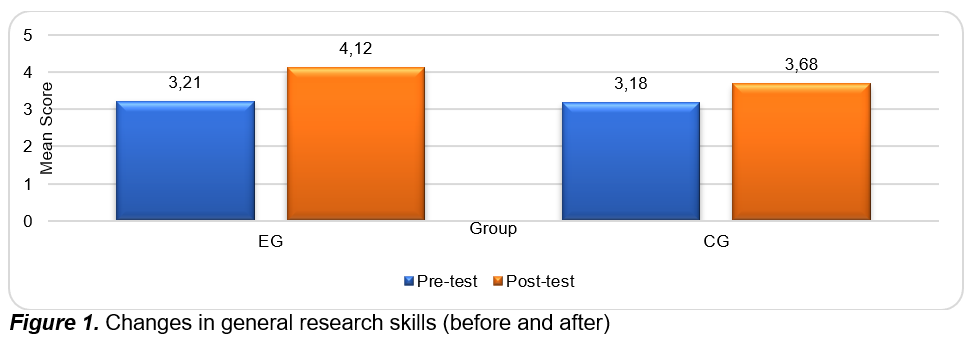
To control for the potential impact of baseline differences in research skills, an analysis of covariance (ANCOVA) was conducted, with posttest as the dependent variable, group as the independent variable, and pretest as the covariate. This approach allowed us to isolate the effect of the IRSDM model based on statistical adjustment for baseline differences. The results showed that the group effect remained statistically significant: F(1, 245) = 52.36, p < .001, partial η² = .18. The resulting partial η² value indicated a large effect size. Thus, the observed improvement in research skills was due primarily to the intervention, rather than to baseline group differences.
At the next stage, changes in the level of research skills within each group between the initial (pre-test) and final (post-test) measurements were studied. For this, paired samples t-test was conducted. The results showed positive dynamics in the experimental group.
Table 5.
Intra-group dynamics of research skills indicators (Pre–Post)

Thus, in the experimental group, an increase in the level of research skills was recorded (t = 15.84, p < 0.001). The value of Cohen’s d = 1.42 indicated a large effect of the intervention. In the control group, a positive trend is noticeable, but it did not reach the level of statistical significance (p = 0.054). In addition, the effect size was minimal (d = 0.17), which corresponds to a small effect. Thus, the results obtained confirm the hypothesis H2 and indicate that the dynamics in the experimental group are the result of the systematic implementation of the model.
Thus, the results presented in Table 5 support hypothesis H2 and indicate that the increase in the experimental group was not due to chance. Furthermore, the very large effect size (Cohen’s d = 1.42) indicated a significant impact on the development of students’ research skills.
The next part of the study involved determining the components of research competence that developed most under the influence of the model. The comparison was carried out between the pre-test and the post-test indicators in the experimental group using a paired samples t-test. The analysis showed that positive dynamics are noticeable for all components. However, the intensity of changes was not the same.
Table 6.
Dynamics of development of research competence components in the experimental group

Figure 2 shows the data of the performative evaluation of the mini-research projects of the learners based on the involvement of four criteria and the integral indicator.
Visual analysis indicated the superiority of the experimental group in all components of the evaluation.
A particularly pronounced difference is observed in the integral indicator of the quality of the research project.
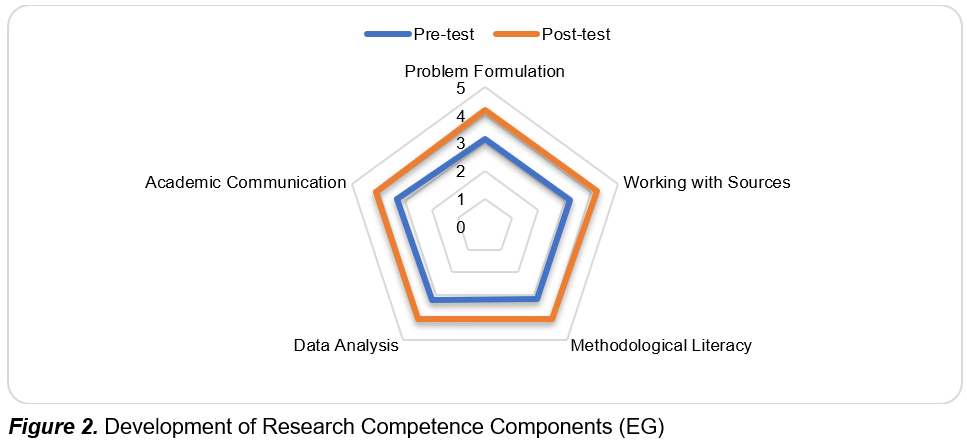
The largest increase is observed in working with academic sources (d = 1.31), reflecting a very large effect size and indicating a significant transformation in students' ability to search for, evaluate, and use scholarly information. Moreover, the indicator of formulating a scientific problem also showed growth (d = 1.25). The components of methodological literacy, analytical skills and academic communication also had large effects (d > 1.0). Thus, the model ensured the development of all structural components.
Discussion
The results of the quasi-experimental study indicated the effectiveness of the developed integrated model (IRSDM) for the formation of research competence of higher education students. Notably, the obtained data indicated noticeable intergroup differences after the intervention. The proposed hypotheses were confirmed. In particular, (H1) was confirmed: the use of IRSDM led to a statistically significant increase in the level of research skills compared to the traditional teaching method. The value of Cohen’s d within large effects and partial η² = .18 indicated the practical significance of the changes.
The second hypothesis (H2) was also empirically confirmed. The experimental group received an increase in indicators between the pre-test and the post-test. This made it possible to indicate that the detected effect was a consequence of the systematic implementation of IRSDM. The effectiveness of the model can be explained by its integrative structure, which consisted of cognitive, methodological, and digital components of research activity within a single pedagogical system. Unlike isolated teaching approaches, IRSDM provided research skills development that allowed students to move from basic problem formulation to data interpretation and academic communication.
The results obtained made it possible to indicate the importance of the formation of research skills for learners based on IRSDM. High effect sizes (Cohen’s d > 0.8) indicated that the model was not limited to a isolated improvement in individual skills. It affected the cognitive system of research competence. In addition, the most noticeable changes could be recorded in the components of problem formulation and work with academic sources. One factor explaining this result is the “digital amplification” effect. The integration of digital tools, academic databases, and reference management systems (Module 2) significantly expanded students’ access to high-quality sources and improved their ability to critically evaluate information. This explains the particularly large effect size for source work (d = 1.31), indicating not only improved skills but also a transformation in how students interact with academic knowledge. This can be explained by the fact that IRSDM shifted the focus from reproductive task performance to cognitively active activity. In this system, the functions of forming a research question, selecting relevant information and evaluating it began to play an important role. In the traditional learning model, these processes often remain implicit.
Thus, the results indicated that a digital research system can create conditions for the transition from superficial assimilation to a conceptual understanding of research methodology. Such data can also be found in other scientists (Barragán Díaz, 2019; Enriquez et al., 2023). Specifically, studies of digital technologies and project-oriented models indicated a positive impact on the formation of critical thinking and problem-solving skills (Laura-De La Cruz et al., 2023). The obtained results confirmed these conclusions and indicated a more pronounced effect. This can be explained by the phased integration of project activities with the methodological module. Unlike classical project-based learning, which often focuses primarily on the final product, the IRSDM model includes a structured phase of methodological reflection and step-by-step calcification. This ensures that students not only complete research tasks, but also consciously develop methodological understanding, which explains higher results in methodological literacy and data analysis (Lander et al., 2019). The authors also determined that it is worth focusing on the development of cognitive autonomy based on certain research questions (Nikitchenko et al., 2024; Sivarajah et al., 2019). In this study, similar mechanisms were identified in the degree of the problem formulation indicator.
Moreover, the developed model was distinguished by the structure of the sequence of stages. If previous models were implemented as an open process, then in the proposed model each stage was logically connected to the next and was associated with digital support tools. This made it possible to reduce cognitive overload. This structured sequential ordering acted as a form of cognitive scaffolding, reducing fragmentation in learning and supporting the gradual acquisition of research practices.
In addition, the theory of research-based learning, which is presented in modern literature, emphasized the importance of integrating research experience into the educational process. At the same time, the results obtained regarding performative assessment are fully consistent with this paradigm. A significant increase in the quality of mini-research projects also indicated that the practical implementation of the research cycle had a significant impact. Furthermore, the developed model expanded the research component by involving the digital component. In addition, the integration of academic search engines and visualization tools formed the effect of “digital amplification” for conducting research activities. Other studies also indicated the effectiveness of individual pedagogical tools and digital laboratories (Rodríguez et al., 2019; Tamozhska et al., 2024). In this case, the integration of such approaches into a single structured model provided a synergistic effect. It was the combination of such aspects as problematization and digital academic literacy that led to the high value of the effect (Bapanova et al., 2023; Castillo-Martínez et al., 2023). The results also indicated the importance of the constructivist learning paradigm, according to which knowledge is formed based on active activity and reflection. The developed model also indicated that research competence does not arise only because of completing coursework. This requires systemic space of formation. Thus, the study contributed to the understanding that the effectiveness of the development of research skills is determined by an integrated structure. This distinguishes the present study from previous research, which primarily focused on individual approaches rather than their systematic combination. Although earlier scientists emphasized the importance of individual methods (Edeh et al., 2021; Garay-Argandona et al., 2021). Moreover, the authors of this article suggested the importance of a systemic approach.
Despite the statistically significant results obtained, the study had several limitations that needed to be considered. First, the proposed sample was formed according to the principle of purposive selection and included students of humanitarian and socio-pedagogical majors. This approach significantly limited the possibilities for further generalization of the results. Also, the use of a quasi-experimental design with cluster distribution into groups did not provide for individual randomization, which could potentially affect the internal validity of the study. Additionally, the sample consisted primarily of students in humanities and social sciences programs. Therefore, caution should be exercised when generalizing the results to STEM or engineering disciplines, where the structure of research activities and the role of quantitative methods may differ significantly.
Conclusions
Thus, the study indicated that the implementation of IRSDM influenced the increase in the overall level of development of research skills of education seekers compared to the traditional learning model. Within the framework of the quasi-experimental design, positive dynamics were recorded in the experimental group according to the post-test results. In addition, noticeable intergroup differences were recorded after the intervention, which confirms the effectiveness of the proposed model.
The greatest increase in indicators was found in the formulation of a scientific problem, work with academic sources and data interpretation. This indicated the effectiveness of the phased structure of the model and the principle of methodological support, which ensure the consistent development of research skills. At the same time, the integration of digital tools within the IRSDM made it possible to develop academic digital literacy skills and increase the level of independence of students in performing research tasks, acting as a key structural element of the model.
Additionally, it was found that students in the experimental group had a higher quality of research project implementation according to the criteria of the logic of research construction, adequacy of methodology and validity of conclusions.
The main scientific contribution of the study is the development and empirical verification of a holistic pedagogical system that integrates research-oriented learning and digital technologies into a single structured model. Unlike existing approaches that are often used fragmentarily, the proposed model overcomes the fragmentation of individual methods and ensures their interaction aimed at achieving measurable educational results.
The practical significance of the study lies in the possibility of implementing IRSDM in higher and professional pre-higher education institutions of Ukraine as an effective tool for modernizing educational programs in accordance with international standards. The use of the model can contribute to improving the quality of training of education seekers and the development of their academic autonomy. Prospects for further research are related to testing the proposed model in other educational contexts, in particular in fully digital or distance learning environments, as well as in technical and natural sciences.
Bibliographic references
Adeoye, M. A., & Jimoh, H. A. (2023). Problem-Solving Skills Among 21st-Century Learners Toward Creativity and Innovation Ideas. Thinking Skills and Creativity Journal, 6(1), 52-58. https://doi.org/10.23887/tscj.v6i1.62708
Alberto, M. C. L., Viviana, B. V. C., Vladimir, B. E. C., & Fernanda, P. A. P. (2024). Innovative strategies to strengthen teaching-researching skills in chemistry and biology education: a systematic literature review. Frontiers in Education, 9. https://doi.org/10.3389/feduc.2024.1363132
Aliyeva, G. B., Honcharuk, V., Pavliuk, N., Zinchenko, V., & Sivachenko, I. (2023). Review of modern pedagogical technologies and methods in the field of philology according to European standards (literature review). Revista on line de Política e Gestão Educacional, 27(esp.2), e023049. https://doi.org/10.22633/rpge.v27iesp.2.18778
Ampa, A. T., & Nurqalbi, N. (2021). Innovative Learning Strategies to Increase Students’ Participation and Quality of English Teaching and Learning Process. Technium Social Sciences Journal, 26, 314-325. https://doi.org/10.47577/tssj.v26i1.5195
Bapanova, G. K., Orekhova, N. V., Kadirsizova, S. B., Kasbayeva, G. S., & Sholpankulova, G. K. (2023). Research Skills as the Student Learning Achievement. International Journal of Educational Reform, 34(3), 543-558. https://doi.org/10.1177/10567879231155874
Barragán Díaz, D. M. (2019). La experiencia estudiantil universitaria en América Latina: una revisión de literatura. Revista Colombiana de Educación, 1(78), 147-172. https://doi.org/10.17227/rce.num78-6708
Bohomaz, O., Koreneva, I., Lihus, V., Kambalova, Y., Shevchuk, V., & Tolchieva, H. (2023). Regarding the development of educational and scientific potential in the 21st century: technological challenges. Conhecimento & Diversidade, 15(38), 479-495. https://doi.org/10.18316/rcd.v15i38.11100
Boichenko, M., Churychkanych, I., Kulichenko, A., Shramko, R., & Rakhno, M. (2023). Mind maps to boost the learning of English as L2 at higher education institutions in Ukraine. Amazonia Investiga, 12(70), 229-240. https://doi.org/10.34069/AI/2023.70.10.21
Campos-Ugaz, O., Campos-Ugaz, W. A., Hernández, R. M., Doig, S. G. A., Ortíz, J. B. F., Saavedra-López, M. A., & Garay-Argandoña, R. (2022). Formative Research to Strengthen Enquiry Competence in University Students. International Journal of Learning, Teaching and Educational Research, 21(11), 443-464. https://doi.org/10.26803/ijlter.21.11.25
Castillo-Martínez, I. M., Cerros Regalado, C. P., Glasserman-Morales, L. D., & Ramírez-Montoya, M. S. (2023). Academic literacy among the university students in Mexico and Spain: A holistic perspective. Frontiers in Psychology, 13. https://doi.org/10.3389/fpsyg.2022.1055954
Castillo-Martínez, I. M., & Ramírez-Montoya, M. S. (2021). Research Competencies to Develop Academic Reading and Writing: A Systematic Literature Review. Frontiers in Education, 5. https://doi.org/10.3389/feduc.2020.576961
Dighliya, B. (2024). Innovative Teaching Methods for Skill Development. In Advances in Higher Education and Professional Development (pp. 229-250). IGI Global Scientific Publishing. https://doi.org/10.4018/979-8-3693-3443-0.ch009
Edeh, N. I., Ugwoke, E. O., & Anaele, E. O. (2021). Effects of innovative pedagogies on academic achievement and development of 21st-century skills of taxation students in colleges of education. Innovations in Education and Teaching International, 59(5), 533-542. https://doi.org/10.1080/14703297.2021.1919174
Enriquez, G., Zevallos, E., Zenteno, F., Pariona, D., & López, R. (2023). Formative research and the achievement of skills based on undergraduate theses in university higher education. Journal of Technology and Science Education, 13(2), 498. https://doi.org/10.3926/jotse.1744
Garay-Argandona, R., Rodriguez-Vargas, M. C., Hernandez, R. M., Carranza-Esteban, R., & Turpo, J. E. (2021). Research competences in university students in virtual learning environments. Cypriot Journal of Educational Sciences, 16(4), 1721-1736. https://doi.org/10.18844/cjes.v16i4.6031
Guzmán-Valenzuela, C., Chiappa, R., Rojas-Murphy Tagle, A., Ismail, N., & Pedraja Rejas, L. (2023). Investigating critical thinking in higher education in Latin America: Acknowledging an epistemic disjuncture. Critical Studies in Teaching and Learning, 11(SI), 71-99. https://hdl.handle.net/10520/ejc-cristal-v11-nsi1-a6
Hryn, O., Domanova, H., Pavlenko, L., Striliuk, O., & Shara, L. (2024). Developing research competence in students through the study of socio-humanitarian subjects. Multidisciplinary Reviews, 8, 2024spe061. https://doi.org/10.31893/multirev.2024spe061
Karpliuk, S., Moyseyenko, I., Lysenko, T., Moroz, O., & Protas, O. (2024). The role of ICT in education: Comparing virtual and traditional learning methods. Multidisciplinary Reviews, 8, 2024spe068. https://doi.org/10.31893/multirev.2024spe068
Khryk, V., Ponomarenko, S., Koval, L., Verhun, A., Morhulets, O., Nikonenko, T., & Koval, L. (2021). Digitization of education as a key characteristic of modernity. International Journal of Computer Science and Network Security, 21(10), 191-195. https://doi.org/10.22937/IJCSNS.2021.21.10.26
Koyuncuoglu, D. (2020). An Investigation of Potential Leadership and Innovation Skills of University Students. International Journal of Education in Mathematics, Science and Technology, 9(1), 103-115. https://doi.org/10.46328/ijemst.1374
Lander, J., Seeho, S., & Foster, K. (2019). Learning Practical Research Skills Using An Academic Paper Framework – An Innovative, Integrated Approach. Health Professions Education, 5(2), 136-145. https://doi.org/10.1016/j.hpe.2018.06.002
Laura-De La Cruz, K. M., Pérez Yufra, D. N., Mendoza-Gómez, C. R. d. P., & Mendoza-Del Valle, L. A. (2023). Formative Research and Research Competencies in Foreign Language Students in Higher Education. TECHNO REVIEW. International Technology, Science and Society Review /Revista Internacional de Tecnología, Ciencia y Sociedad, 15(1), 107-117. https://doi.org/10.37467/revtechno.v15.5078
Marín, J., Roman Castillo, E., Sigüeñas Fernandez, R. L., Jara Alarcón, T. J., & Dominguez Aguilar, D. (2025). Development of Research Competencies in University Students: A Systematic Review. The International Journal of Interdisciplinary Educational Studies, 21(1), 1-21. https://doi.org/10.18848/2327-011x/cgp/v21i01/1-21
Meissner, D., & Shmatko, N. (2018). Integrating professional and academic knowledge: the link between researchers skills and innovation culture. The Journal of Technology Transfer, 44(4), 1273-1289. https://doi.org/10.1007/s10961-018-9662-8
Mora-Pablo, I., & González, M. (2025). Centering English as a foreign language (EFL) teachers’ research skills to enhance their teaching practice: An examination of a teacher education program in Mexico. System, 131, 103677. https://doi.org/10.1016/j.system.2025.103677
Mubarak, Z. K., & Selimin, M. A. (2023). Significance of Innovative Learning Skills in the Era of Education 4.0. International Journal of Sustainable Construction Engineering and Technology, 14(3), 339-352. https://doi.org/10.30880/ijscet.2023.14.03.029
Nikitchenko, L., Davydova, Z., Krylova, V., Samborska, O., & Arkushyna, H. (2024). Innovative Approaches to Learning and Teaching in Ukrainian Higher Education. Cadernos de Educação, Tecnologia e Sociedade, 17(1), 495-505. https://doi.org/10.14571/brajets.v17.n1.495-505
Okolie, U. C., Igwe, P. A., Mong, I. K., Nwosu, H. E., Kanu, C., & Ojemuyide, C. C. (2021). Enhancing students’ critical thinking skills through engagement with innovative pedagogical practices in Global South. Higher Education Research & Development, 41(4), 1184-1198. https://doi.org/10.1080/07294360.2021.1896482
Ratnawati, N., & Idris, I. (2020). Improving Student Capabilities through Research-Based Learning Innovation on E-Learning System. International Journal of Emerging Technologies in Learning (iJET), 15(04), 195. https://doi.org/10.3991/ijet.v15i04.11820
Rodríguez, G., Pérez, N., Núñez, G., Baños, J.-E., & Carrió, M. (2019). Developing creative and research skills through an open and interprofessional inquiry-based learning course. BMC Medical Education, 19(1), 134. https://doi.org/10.1186/s12909-019-1563-5
Salinas Velastegui, V. G., Paredes Salinas, J. G., & Tufiño Aguilar, A. A. (2023). Metacognition and Higher Education. Medwave, 23(S1), eUTA226. https://doi.org/10.5867/medwave.2023.s1.uta226
Sernaqué, M. A. C., Luis, M. C., Alarcon, M. A. C., Farías, V. A. G., Valdiviezo, O. B., & Chávez, J. J. T. (2023). Development of Research Competences in University Professors: A Bibliographic Review. International Journal of Membrane Science and Technology, 10(3), 1750-1755. https://doi.org/10.15379/ijmst.v10i3.1790
Sivarajah, R. T., Curci, N. E., Johnson, E. M., Lam, D. L., Lee, J. T., & Richardson, M. L. (2019). A Review of Innovative Teaching Methods. Academic Radiology, 26(1), 101-113. https://doi.org/10.1016/j.acra.2018.03.025
Sobarzo-Ruiz, R. (2023). habilidades investigativas en la formación inicial docente en Chile. Revista Realidad Educativa, 3(1), 163-166. https://doi.org/10.38123/rre.v3i1.275
Songkram, N., Chootongchai, S., Keereerat, C., & Songkram, N. (2024). Potential of ChatGPT in academic research: exploring innovative thinking skills. Interactive Learning Environments, 33(2), 1689-1711. https://doi.org/10.1080/10494820.2024.2375342
Spector, P. E. (2025). Promoting your research in the digital age. In How to Conduct and Publish High-Quality Research in Industrial-Organizational Psychology (pp. 420–428). Cheltenham, UK: Edward Elgar Publishing. https://doi.org/10.4337/9781035307746.00039
Tamozhska, I., Chubuk, R., Pienov, V., Myroshnychenko, N., & Prokofyeva, L. (2024). Innovative teaching methods for developing basic skills in higher education students through real professional contexts. Salud, Ciencia y Tecnología - Serie de Conferencias, 3, 1214. https://doi.org/10.56294/sctconf2024.1214
Tapullima-Mori, C., Pizzan Tomanguillo, S. L., Pizzan Tomanguillo, N. d. P., Vásquez Sánchez, M., & Soria Quijaite, J. J. (2025). Charting the path to excellence: A review of research competencies in university students. Journal of Technology and Science Education, 15(2), 364. https://doi.org/10.3926/jotse.2729
Turchyn, I., Zaitseva, S., Rudenko, N., Saienko, V., Kuzemko, N., & Denefil, O. (2023). Using distance learning models as opportunities for blended learning for foreigners. Revista Romaneasca Pentru Educatie Multidimensionala, 15(4), 178-191. https://doi.org/10.18662/rrem/15.4/787
Uribe-Tirado, A., & Machin-Mastromatteo, J. D. (2024). Past, present and future of information literacy in Latin America. Journal of Information Literacy, 18(2), 6-36. https://doi.org/10.11645/18.2.632
Valeriano Carrasco, H. M., & James Wilfredo, H. G. (2023). Habilidades blandas en estudiantes de ingeniería de una universidad pública peruana. Ciencia Latina Revista Científica Multidisciplinar, 7(3), 8198-8221. https://doi.org/10.37811/cl_rcm.v7i3.6806
Vélez Jiménez, D., Soria Pérez, Y. F., Lujano Ortega, Y., & Sebastiani Elías, Y. d. F. (2022). Estrategias didácticas y desarrollo de habilidades investigativas en el nivel universitario. Revista Latinoamericana Ogmios, 2(5), 436-458. https://doi.org/10.53595/rlo.v2.i5.046
Vovchasta, N., Kan, O., Hlavatska, Y., Sovach, K., & Makukhina, S. (2024). Digitalisation and its role in developing hard skills among university students in Ukraine. Multidisciplinary Reviews, 8, 2024spe070. https://doi.org/10.31893/multirev.2024spe070

Este artículo no presenta ningún conflicto de intereses. Este artículo está bajo la licencia Creative Commons Atribución 4.0 Internacional (CC BY 4.0). Se permite la reproducción, distribución y comunicación pública de la obra, así como la creación de obras derivadas, siempre que se cite la fuente original.