
Original Article
Eduweb, 2026, abril-junio, v.20, n.2. ISSN: 1856-7576
Doi: https://doi.org/10.46502/issn.1856-7576/2026.20.02.5
Digital competence development of future professionals: Psychological and pedagogical conditions in a rapidly transforming educational landscape
Vitaliy Tretko
Doctor of Pedagogical Sciences, Full Professor, Professor of the Department of International Communication and Political Science, Khmelnytskyi National University, Ukraine.
https://orcid.org/0000-0003-3608-1378
Lyudmila Bilan
Candidate of Pedagogical Sciences, Associate Professor of the Department of Management and Educational Technologies, National University of Life and Environmental Sciences of Ukraine, Ukraine.
https://orcid.org/0000-0002-8132-7552
Valentyna Pliushch
Doctor of Pedagogical Sciences, Professor, Department of Natural Sciences and Methods of Their Teaching, Volodymyr Vynnychenko Central Ukrainian State Pedagogical University, Ukraine.
https://orcid.org/0000-0002-8099-1566
Andriy Tkachuk
Candidate of Technical Sciences (PhD (Technical Sciences)), Associate Professor, Dean of the Faculty of Information Technology, Mathematics and Natural Sciences, Associate Professor of the Department of Technological and Vocational Education, Volodymyr Vynnychenko Central Ukrainian State University, Ukraine.
https://orcid.org/0000-0002-7316-0107
Kateryna Skyba
Doctor of Pedagogical Sciences, Professor, Department of Germanic Philology and Translation Studies, Khmelnytskyi National University, Ukraine.
https://orcid.org/0000-0003-2911-5461
Cómo citar:
Tretko, V., Bilan, L., Pliushch, V., Tkachuk, A., & Skyba, K. (2026). Digital competence development of future professionals: Psychological and pedagogical conditions in a rapidly transforming educational landscape. Revista Eduweb, 20(2), 70-90. https://doi.org/10.46502/issn.1856-7576/2026.20.02.5
Recibido: 10/01/26 Aceptado: 16/04/26
Resumen
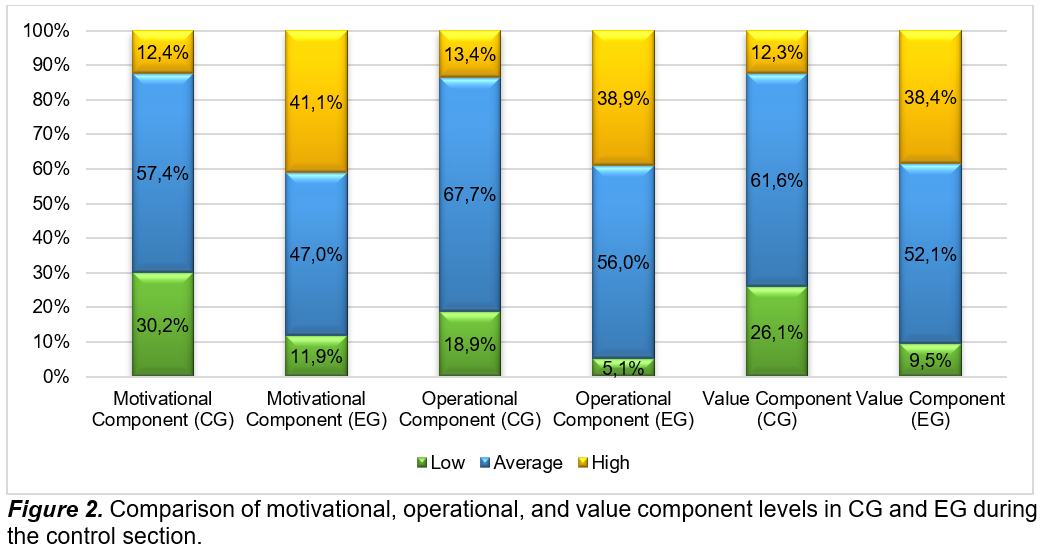
El artículo examina el desarrollo de la competencia digital entre futuros especialistas en el contexto de la rápida transformación digital de la educación superior. El objetivo del estudio es fundamentar y verificar experimentalmente la efectividad de las condiciones psicológicas y pedagógicas que aseguran la formación de la competencia digital. Se aplicó un diseño de investigación de métodos mixtos, combinando enfoques cualitativos y cuantitativos. La estructura de la competencia digital se operacionalizó a través de tres componentes: motivacional, operacional y basado en valores, con sus respectivos criterios e indicadores. En la etapa de determinación, la distribución de los niveles de competencia fue la siguiente: alto – 11,2%, promedio – 56,7%, bajo – 32,1%, lo que indica un nivel de desarrollo fragmentado e insuficiente. Los resultados demostraron mejoras estadísticamente significativas en el EG en comparación con el CG. La proporción de estudiantes con un nivel alto aumentó al 41,1% (motivacional), 38,9% (operacional) y 38,4% (valor), mientras que la proporción de indicadores de nivel bajo disminuyó al 11,9%, 5,1% y 9,5%, respectivamente. En contraste, el grupo de control mostró cambios mínimos. Los resultados demuestran que la implementación de las condiciones psicológicas y pedagógicas propuestas mejora significativamente la competencia digital de los estudiantes, especialmente en lo que respecta al comportamiento digital ético, el procesamiento de la información y las habilidades técnicas. El estudio contribuye a la mejora de los modelos de formación digital en la educación superior y tiene implicaciones prácticas para el diseño de entornos de aprendizaje enriquecidos digitalmente.
Palabras clave: condiciones psicológicas y pedagógicas, competencia digital, futuros especialistas, cultura digital, seguridad digital.
Abstract
The article examines the development of digital competence among future specialists under conditions of rapid digital transformation of higher education. The purpose of the study is to substantiate and experimentally verify the effectiveness of psychological and pedagogical conditions that ensure the formation of digital competence. A mixed-methods research design was applied, combining qualitative and quantitative approaches. The structure of digital competence was operationalized through three components: motivational, operational, and value-based, with corresponding criteria and indicators. At the ascertaining stage, the distribution of competence levels was as follows: high – 11.2%, average – 56.7%, low – 32.1%, indicating a fragmented and insufficient level of development. The results demonstrated statistically significant improvements in the EG compared to the CG. The proportion of students with a high level increased to 41.1% (motivational), 38.9% (operational), and 38.4% (value), while the share of low-level indicators decreased to 11.9%, 5.1%, and 9.5%, respectively. In contrast, the CG showed only minor changes. The findings prove that the implementation of the proposed psychological and pedagogical conditions significantly enhances students’ digital competence, particularly in terms of ethical digital behavior, information processing, and technical skills. The study contributes to improving digital training models in higher education and has practical implications for designing digitally enriched learning environments.
Keywords: psychological and pedagogical conditions, digital competence, future specialists, digital culture, digital security.
Introduction
The rapid digital transformation of higher education has intensified the need for developing digital competence among future specialists as a key component of their professional readiness. Contemporary frameworks emphasize that digital competence includes not only technical skills but also cognitive, ethical, and communicative dimensions required for effective functioning in a digital society. However, despite the widespread integration of digital technologies into educational environments, the outcomes of such integration remain inconsistent and often insufficient (Caena & Redecker, 2019).
Existing research primarily focuses on the conceptualization of digital competence or the implementation of isolated digital tools, while less attention is paid to the systematic design and empirical validation of comprehensive psychological and pedagogical conditions that ensure its holistic development. Moreover, current studies rarely provide statistically grounded evidence demonstrating how these conditions influence different structural components of digital competence in real educational settings (Cronin, 2017).
Thus, there is a clear research gap between the recognized importance of digital competence in higher education and the lack of empirically validated, systematically implemented psychological and pedagogical conditions that ensure its effective development across motivational, operational, and value-based dimensions.
This gap highlights the need for experimental research that not only substantiates such conditions but also verifies their effectiveness through quantitative and qualitative analysis.
Literature Review
The issue of developing digital competence in higher education has been widely explored in contemporary research, particularly in the context of global digital transformation. However, the existing body of literature demonstrates conceptual diversity and methodological fragmentation, which necessitates a more systematic and empirically grounded approach.
A significant number of studies emphasize the role of digital technologies in enhancing the quality of professional training. For instance, research on digital and blended learning environments highlights their potential to improve accessibility, flexibility, and student engagement (Cronin, 2017; Fullan, 2018). Similarly, Do (2024) underlines the importance of integrating digital tools into professional education, particularly in globally interconnected fields. While these studies convincingly demonstrate the transformative impact of digitalization, they primarily focus on technological integration rather than on the pedagogical mechanisms that ensure the development of digital competence as a holistic construct.
Another group of studies conceptualizes digital competence as a multidimensional phenomenon. Caena & Redecker (2019), as well as Vuorikari et al. (2022), define it as a complex combination of knowledge, skills, and attitudes, structured within European competence frameworks (DigComp, DigCompEdu). These approaches provide a solid theoretical foundation; however, they remain largely normative and do not sufficiently address the practical implementation of competence development in specific educational contexts. In particular, the operationalization of competence components and their measurable indicators is often underdeveloped.
Empirical studies focusing on the development of digital competence offer valuable insights but also reveal important limitations. For example, Mendoza Muñoz & Párraga Muñoz (2022) identify a strong relationship between information literacy and pedagogical management, yet their findings point to insufficient development of critical information-processing skills among educators. Similarly, Galarce-Miranda et al. (2023) demonstrate the effectiveness of structured online training programs in enhancing digital and pedagogical competence; however, their research is limited to professional development contexts and does not fully address the formation of competence at the undergraduate level.
Recent studies also highlight the importance of ethical and reflective dimensions of digital competence. Berríos-Barra & Calderón-López (2025) note progress in digital ethics and citizenship among teacher educators but identify a lack of reflective pedagogical practices and insufficient integration of digital technologies into teaching. This indicates that value-based aspects of digital competence remain underdeveloped in practice. At the same time, Brochero Sarabia & Hidalgo Colón (2022) emphasize the communicative dimension of digital competence, particularly in the context of pedagogical interaction, yet their work does not consider the broader integration of technical and motivational components.
Furthermore, studies on digital transformation in education (Tondeur et al., 2023; Zasiekina et al., 2025) stress the need for continuous professional development and adaptive learning environments. While these approaches contribute to understanding the dynamic nature of digital competence, they often lack empirical validation through controlled experimental designs and do not provide clear evidence of causal relationships between pedagogical conditions and competence development.
Thus, the analysis of the literature reveals several key gaps: insufficient integration of different components of digital competence into a unified model; limited attention to the motivational and value-based dimensions alongside technical skills; lack of empirically validated psychological and pedagogical conditions implemented within real educational settings; insufficient number of experimental studies using statistical methods to confirm the effectiveness of the proposed approaches.
In response to these limitations, the present study proposes a holistic model of digital competence that integrates motivational, operational, and value-based components into a unified structure. Unlike previous research, this model is not only theoretically grounded in existing competence frameworks but also operationalized through clearly defined criteria and indicators.
Moreover, the study establishes a direct connection between theory and practice by embedding the model within a system of psychological and pedagogical conditions and verifying its effectiveness through a quasi-experimental design with statistical validation (Student’s t-test). This approach allows not only to address the identified research gaps but also to provide empirical evidence of how structured pedagogical interventions contribute to the comprehensive development of digital competence among future specialists.
The purpose of the article is to theoretically substantiate the psychological and pedagogical conditions for the development of digital competence among future specialists, but also to empirically verify their effectiveness through a quasi-experimental research design.
Methodology
Research Design
This study employed a mixed-methods research design integrating quantitative and qualitative approaches to ensure a comprehensive analysis of the development of digital competence among future specialists. The research was conducted as a quasi-experimental study with a control group (CG) and an experimental group (EG), allowing for the assessment of causal relationships between pedagogical intervention and learning outcomes.
The study was implemented in three consecutive stages: ascertaining (diagnostic), formative (intervention), and control (evaluation).
This design enabled the identification of baseline levels of digital competence, the implementation of psychological and pedagogical conditions, and the evaluation of their effectiveness through comparative analysis.
Participants
The study involved 94 undergraduate students (years 1–3) enrolled in higher education institutions during the period 2023–2025. Participants were divided into two groups:
The groups were comparable in terms of curriculum, academic workload, and learning conditions, ensuring internal validity. Participation was voluntary, and ethical standards (informed consent, confidentiality) were strictly followed.
Variables and Operationalization
Independent Variable
The independent variable was the implementation of a set of psychological and pedagogical conditions, including:
Operationalization:
0 = absence of intervention (CG)
1 = implementation of intervention (EG).
Dependent Variable
The dependent variable was the level of digital competence.
Digital competence was conceptualized as a multidimensional construct consisting of three components:
Operationalization:
An integrated index was calculated as the aggregate score across all components. Competence levels were classified as:
Latent Variables
Each component was operationalized as a latent variable:
Each index was calculated as the mean score of its indicators.
Instruments and Data Collection
Data collection was carried out using a combination of complementary methods:
Diagnostic tools
Behavioral tools
Performance-based assessment
The triangulation of methods ensured the reliability and validity of the collected data.
Criteria and Indicators
The assessment of digital competence was based on a system of criteria and indicators corresponding to each component:
Motivational component
Criterion: readiness to use digital technologies
Indicators: initiative, frequency of use, collaboration in digital environments.
Operational component
Criterion: level of digital knowledge and skills
Indicators: information processing, critical analysis, content creation.
Value-based component
Criterion: digital culture and ethics
Indicators: academic integrity, cybersecurity awareness, ethical behavior.
Intervention Procedure
During the formative stage, the experimental group was exposed to the developed psychological and pedagogical conditions, while the control group continued traditional learning.
The intervention included:
The equivalence of learning conditions (content, workload, duration) across both groups ensured experimental validity.
Data Analysis
Quantitative data were analyzed using methods of mathematical statistics: descriptive statistics (means, percentages); comparative analysis between groups.
Student’s t-test for independent samples.
The level of statistical significance was set at p ≤ 0.05.
The obtained value (t = 3.12) exceeded the critical value (t ≈ 1.99) at df = 92, indicating statistically significant differences between the experimental and control groups.
Qualitative data (interviews, observations) were analyzed using content analysis to interpret changes in students’ motivation, behavior, and attitudes.
Validity and Reliability
The validity of the study was ensured through:
Reliability was supported by:
Results and Discussion
The content, components, and essence of digital competence of future specialists. The importance of creating an innovative, rich digital educational environment.
Digital competence encompasses five main components, according to the definitions set out in the European digital competence framework, DigComp 2.2: collaboration and communication, information literacy, security, creation of digital content, and problem-solving in the digital environment (Vuorikari et al., 2022). Therefore, we consider digital competence to be the ability to create content innovatively, critically evaluate information, adhere to legal and ethical norms, ensure cybersecurity, and interact effectively in the digital space, rather than merely using technical devices.
The digital transformation of the educational space of higher education involves the transition to active use, rather than passive consumption, of digital tools as means of communication, educational interaction, reflection, and assessment. In this context, it is important to create an innovative, rich digital educational environment that clearly provides access to learning management systems (LMS), innovative digital platforms, cloud technologies, collaborative editing tools, interactive multimedia tools, and feedback tools (Huallpa Zúñiga, 2023).
The digital competence of future specialists is formed in an innovative digital educational environment through interdisciplinary integration across all areas of digital technology training, not only during the study of individual disciplines in the informatics cycle. The use of digital tools is effective across professional disciplines and allows higher education students to immediately apply professional knowledge in digital formats, not just acquire it. Therefore, it is important for future professionals to consistently use distance and blended learning platforms to create interactive educational materials, facilitate online interactions, and maintain digital portfolios (Araújo da Silva & Alejandra Behar, 2023).
The ability of a higher education institution to create an innovative, favorable digital educational environment largely depends on the effectiveness of developing digital competence in future specialists, which encompasses didactic, organizational, technical, and methodological components. Special attention when creating an innovative, favorable digital educational environment requires developing a system to monitor the level of digital competence among higher education applicants, enabling the identification of problem areas, the objective assessment of educational outcomes, and the adjustment of the educational process. For this purpose, it is advisable to use electronic portfolios, digital standardized tests, expert assessment of projects, self-assessment, and feedback during the educational process. Involving students in the creation of educational digital products is also important for learning with social significance (e.g., online courses, video instructions, digital reference books, educational chatbots) (Knysh et al., 2026).
The use of adaptive learning in the formation of digital competence of future specialists. Key types of digital competence.
The use of adaptive learning is a promising area of digital competence formation, based on personalized trajectories and educational data analytics. Particularly effective in the distance format are platforms that identify weaknesses in specialist training, adapt the material to applicants' knowledge levels within the field, and provide individualized recommendations. A deeper assimilation of the material is facilitated by tools that foster self-assessment and reflection, thereby increasing the effectiveness of self-study. At the same time, addressing issues of digital equality requires the introduction of innovative digital technologies, compliance with ethical norms, and the protection of personal data. Digital inclusion, in this context, is of particular importance and aims to ensure equal access to digital resources for all categories of higher education applicants, particularly people with health problems, residents of rural areas, and people with low incomes (Tondeur et al., 2023).
Digital competence requires adaptation to new conditions, constant expansion and updating, and is not a stable characteristic, underscoring the need for continuous professional development for teachers, students, and specialists. An innovative and effective approach in this direction is massive open online courses (MOOCs), whose purpose is to enable rapid acquisition of new knowledge, exchange of experience, and expansion of digital tools. Participation in online conferences, digital training, and hackathons contributes to improving a person's digital literacy and to developing intercultural communication, professional mobility, and social skills (Zasiekina et al., 2025).
There are three main types of digital competence, each of which is directly important for higher education: communicative competence, information and media competence, and technical competence. Information and media competence enable the student to effectively select, search, create, and analyze digital content, which is the basis for the professional preparation of modern methodological materials. Communicative competence in the context of blended and distance learning involves possessing modern tools for online interaction, which, in the educational process, become an integral part of quality education. Technical competence includes the ability to use software complexes, work with digital devices to create multimedia instructions, simulate professional production processes, and automate the control of student knowledge (Mytnyk et al., 2024).
The experimental research.
As part of the study, an experimental study was conducted to develop the digital competence of future specialists amid the transformation of the modern education system and society, and to verify the effectiveness of the psychological and pedagogical conditions developed and implemented. In total, 94 students of the 1st–3rd years participated in the experimental study (2023−2025). All participants in the experiment were previously informed about the study’s content, purpose, and forms of participation for ethical reasons.
Respondents were divided into two groups to ensure scientific objectivity:
The combination of practice-oriented, educational, and cognitive activities of students was an important condition of the experiment, which allowed integrating the development of digital competence into professional disciplines and bringing all the proposed tasks closer to the real conditions of professional activity.
Special attention in the EG was paid to the use of digital platforms, in particular, the coordination of approaches to digitalization (Google, Workspace, Microsoft Teams, etc.), the formation of a single strategy for supporting the motivation of EG students, the development of common criteria for assessing students' knowledge when performing tasks, as well as the responsible attitude of respondents to work in a digital environment.
The phased structure of the experiment provided an opportunity to assess the effectiveness of psychological and pedagogical conditions objectively, track positive changes in the EG, and not merely diagnose respondents' initial digital competence.
Stating stage. The first step in the study's implementation was the starting phase, which aimed to conduct a comprehensive diagnosis of the experimental and control groups and their initial levels of digital competence. The results of this stage served as the basis for further comparisons and helped us identify the aspects requiring the greatest pedagogical support.
The data collected at the start of the study allowed us to identify the strengths of the respondents' digital preparation (basic knowledge and ability to use standard digital services) as well as problem areas (low readiness for digital activity, insufficient critical thinking, and fragmented cognitive knowledge). The starting point for further analysis was the study's results, which provided a basis for testing the effectiveness of the psychological and pedagogical conditions in shaping respondents' digital competence.
System of evaluation criteria. The study, conducted to validate the assessment of the level of formation of the specified competence, enabled us to use the three-component author's structure (motivational, operational, and value components) and their criteria and indicators.
A separate dimension of the competency approach reflects each component:
The motivational component includes, in its content criteria, the ability to apply digital tools for professional and educational tasks, taking into account the readiness for cooperation and the manifestation of initiative in the digital environment, and indicators – creating and editing content in digital environments, practical actions; organizing online team and individual work; integration into everyday operational processes of digital tools.
The operational component includes, in its content, criteria – the ability and level of knowledge for the conscious use of digital technologies and indicators – orientation in information flows, knowledge of digital procedures and concepts; data evaluation and critical analysis based on digital evidence; reasoned decision-making.
The value component includes, as content criteria, an attitude toward digital technologies, consideration of the culture of communication, the space for responsible and ethical activity, and indicators such as compliance with digital ethics, academic integrity, security rules, and readiness for mutual support and self-development.
The formative stage. The formative stage was the second stage of the experiment. It involved the direct implementation of psychological and pedagogical conditions to develop digital competence in the practice of teaching respondents in the experimental group. The purpose of this stage is to verify the effectiveness of the methodological approaches and the developed system of tasks in a real educational environment, ensuring a combination of practical and theoretical components of the higher education process.
During the formative stage, the control group studied in the usual mode, using traditional learning methods and educational approaches that met the requirements of the professional education standard. At the same time, the EG followed the proposed methodology. Therefore, the purity of the experiment was ensured, and the objectivity of the assessment of the impact of the proposed psychological and pedagogical conditions on the formation of digital competence of EG students was ensured.
Thus, the formative stage performed two key functions:
The central part of the experiment was the formative stage, in which the psychological and pedagogical conditions were theoretically substantiated, tested in practice, and the changes obtained were correlated with the initial data of the ascertaining section.
At this stage, we were able to conclude the impact of the developed psychological and pedagogical conditions on respondents' digital competence. When comparing the control group's intermediate results with the experimental group's indicators, particular attention was paid to ensuring that conditions were equivalent across both groups. This meant that students in both groups mastered the same topics, studied the same educational and professional program, had the same number of hours of extracurricular and classroom work, and worked with comparable types of tasks. The only difference was the presence, in the experimental group, of developed author's psychological and pedagogical conditions and methodological approaches that constituted the essence of pedagogical influence. The purity of the experiment was ensured by maintaining structural equivalence, since the changes in digital competence levels could be objectively linked to the implemented psychological and pedagogical conditions.
A comparison of the experimental and control groups' results revealed a statistically significant difference in the dynamics of digital competence development. The increase in indicators in the control group remained within the natural course of learning, that is, it was low. Moreover, in the experimental group, we observe positive, significant growth, as confirmed by both qualitative observations and quantitative measurements. This process confirmed the effectiveness of the developed psychological and pedagogical conditions and enabled us to identify the most effective pedagogical tools for developing digital competence.
Qualitative and quantitative analysis at the ascertaining stage of the study of the formation of students' digital competence.
The involvement of a significant number of students allowed not only to determine the initial level of digital competence formation by its key components (motivational, operational, and value) but also to identify educational, age, and experience differences in the ways of using digital tools. The results of the ascertainment stage showed that students' digital competence is non-systemic and fragmentary:
In addition, students have a poor understanding of academic integrity and digital security principles in the digital space. This confirms the need to develop skills for working in an online educational environment and to implement psychological and pedagogical conditions for the formation of digital competence.
To identify general trends and generalize the results on the formation of digital competence across different stages of professional training, respondents were grouped by digital competence level according to the specified criteria and indicators.
The results of quantitative diagnostics are presented in Table 1 and Figure 1 to clearly trace the distribution of respondents at the ascertaining stage by digital competence level.
Table 1.
Distribution of levels of formation of digital competence of respondents (assertive stage) – summarized data for all components

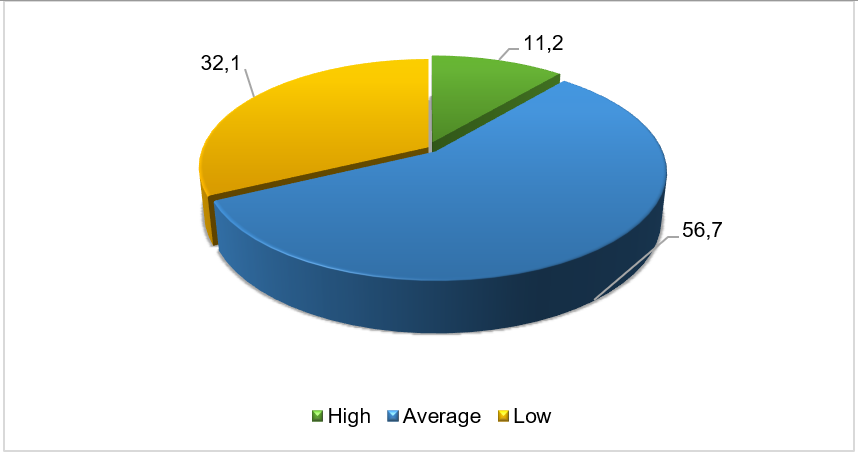
Figure 1. Distribution of levels of formation of digital competence of respondents (assertive stage) – summarized data for all components.
Analysis of the dynamics of the formation of digital competence of respondents.
In our study, we define digital competence as the ability to make critical, appropriate, and safe choices in professional practice; to create and modify digital resources; to protect and distribute them; to manage them; and to apply them in student learning.
We, for EG, have proposed a structure for the formation of digital competence of future specialists, consisting of three interconnected components:
It is this model of forming the digital competence of future specialists that can be effectively adapted to the needs of higher education institutions, because it involves the ability to work with information, the development of higher education students to communicate in a digital environment, as well as the ability to ensure information security in future professional activities.
The analysis of the results of the formative stage of the experimental study aimed to determine the development of digital competence and changes in the dynamics of respondents' levels after the introduction of the author's psychological and pedagogical conditions.
During one semester, assessment was carried out using a blended learning format, which allowed tracing the influence of pedagogical tools on digital distance interaction and in the traditional classroom environment.
The comparative approach was used to increase the reliability of the results: the study involved an experimental group (EG), in which psychological and pedagogical conditions for developing digital competence were implemented, and a control group (CG), in which the educational process was implemented according to the traditional model. The assessment was carried out according to three structural components of the outlined competence: motivational, operational, and value, which provide a multidimensional and comprehensive analysis of the dynamics of its development.
Analysis of the dynamics of the motivational component. We are talking about a significant increase in motivational readiness among respondents in the experimental group regarding digital activity, as confirmed by the results of the control section.
Table 2.
Comparison of the levels of the motivational component in the CG and EG during the control section

In contrast to the control group, most respondents at the average level retained their indicators. In contrast, in the experimental group, we observe a significant shift towards a high level of the motivational profile (41,1%). We note that the proportion of respondents with low motivation has almost halved, indicating a significant positive effect of the proposed author's psychological and pedagogical conditions on the formation of digital competence.
Fundamentally significant in the EG is the increase in the motivational component, because the basic driver of the formation of the outlined competence is precisely motivational readiness, which determines the depth of immersion in digital practices, the sustainability of further changes, and the level of students' involvement in working with technologies.
Analysis of the dynamics of the operational component. We are talking about a significant increase in the development of the operational component of digital competence (conducting in-depth analysis of digital information, the effective use of digital tools, and creating and editing their own digital products), as confirmed by the results of the control section.
Table 3.
Comparison of operational component levels in CG and EG during the control section (in %)

The data in Table 3 show that the results in the control group remained almost unchanged: the average level dominates, and only 13,4% of respondents reached the high level. The stability of the indicators confirms this ratio under the conditions of the traditional learning model, in which digital activity is fragmented.
In the experimental group, there was a significant redistribution of levels, indicating the effectiveness of the author's psychological and pedagogical conditions in shaping digital competence. The share of respondents with a high level of the operational component, according to the results of the control section, almost tripled, while the share with low indicators significantly decreased. Changes in the EG confirm the influence of the system of interactive tasks, an activity approach, and regular work with educational digital platforms.
Analysis of the dynamics of the value component. The formation of academic integrity, ethical attitudes, compliance with norms of responsible use of digital information, and readiness in the digital environment for tolerant and constructive communication constitute the value component of digital competence. This component received special attention within the experiment because it assesses behavioral and ideological readiness rather than technical readiness. Situational-value, reflective tasks were used for their development.
The results of the control section of the value component in the CG and EG are presented in Table 4.
Table 4.
Comparison of the levels of the value component in the CG and EG during the control section (in %)

In the control group, according to the results of the control section, the majority of respondents at the average level maintained their indicators (61,6%). In comparison, the share of respondents at the low level was 26,1%.
In the experimental group, a different trend is observed: 38,4% of respondents reached a high level, more than three times the CG's comparable indicator, while the share of respondents with a low level decreased to 9,5%.
The results obtained at the control stage indicate that implementing the author's psychological and pedagogical conditions in the development of digital competence significantly influenced the development of an ethical and responsible style of digital behavior among respondents.
We used the Student's t-test – one of the methods for testing statistical hypotheses. To verify the reliability of the results, a statistical analysis of the data obtained during the experiment was conducted to assess differences between the experimental and control groups.
We compare the obtained coefficient t = 3.12 with the theoretical (tabular) value of the Student's t-distribution.
We take into account the degree of freedom calculated by the formula df=N1+N2–2=92 at p=5% (significance level =0.05, which corresponds to 95% confidence), and t=1.98 is the theoretical value of the Student's t-distribution.
The obtained coefficient t = 3.12 significantly exceeds the tabular value, indicating that the proposed author's psychological and pedagogical conditions for the formation of digital competence in higher education institutions are effective.
The growth of indicators for all components confirms that the author's psychological and pedagogical conditions contribute to compliance with digital security standards, the formation of ethics and digital culture, and to ensuring that students master technical skills that determine the professional readiness of a future specialist to work in the digital environment.
Descriptive Statistics of Digital Competence
At the ascertaining stage, the initial level of digital competence in both groups was relatively homogeneous and characterized by predominantly average and low levels, indicating insufficient and fragmented development.
To ensure a more robust quantitative analysis, descriptive statistics (mean and standard deviation) were calculated for each component of digital competence (Table 5).
Table 5.
Descriptive statistics of digital competence (pre-test)