
Original Article
Eduweb, 2026, abril-junio, v.20, n.2. ISSN: 1856-7576
Doi: https://doi.org/10.46502/issn.1856-7576/2026.20.02.14
Pedagogical innovation in science teacher education: Integrating FizziQ to develop TPACK-21
Serhat Çoban
M.Sc. in Science Education, Ondokuz Mayıs University, Science Education, Graduate School of Education, Türkiye.
https://orcid.org/0009-0006-6231-8681
Mustafa Ergun
PhD in Science Education, Ondokuz Mayis University, Associate Professor, Faculty of Education, Samsun, Türkiye. (Corresponding author)
https://orcid.org/0000-0003-4471-6601
Cómo citar:
Çoban, S., & Ergun, M. (2026). Pedagogical innovation in science teacher education: Integrating FizziQ to develop TPACK-21. Revista Eduweb, 20(2), 229-252. https://doi.org/10.46502/issn.1856-7576/2026.20.02.14
Recibido: 02/11/25 Aceptado: 25/01/26
Abstract
This study explores how integrating the FizziQ mobile application into lesson planning processes influences the development of preservice science teachers’ (PSTs) TPACK-21 competencies. This inquiry relied on a mixed-methods approach, where a single-group pre- and post-test design was complemented by qualitative data derived from both individual interviews and focus group sessions. The sample comprised 46 PSTs enrolled in a science education program at a public university in Türkiye. Following an initial assessment, PSTs were introduced to the 5E instructional model and the FizziQ application, and subsequently engaged in designing and implementing lesson plans supported by mobile technologies. The findings show a clear increase in TPACK-21 scores after working with FizziQ. In addition, qualitative data suggest that the use of FizziQ encouraged more inquiry oriented and student centered instructional approaches, while also revealing certain challenges related to usability and curriculum alignment. These results suggest that smartphone based learning tools such as FizziQ can support the development of integrated technological and pedagogical competencies in science teacher education, particularly when embedded within structured instructional frameworks.
Keywords: Educational technology, FizziQ, mobile application, preservice science teachers, TPACK-21.
Resumen
Este estudio analiza cómo la integración de la aplicación móvil FizziQ en los procesos de planificación de clases influye en el desarrollo de las competencias TPACK-21 de los futuros docentes de ciencias. Para ello, se adoptó un enfoque de métodos mixtos, combinando un diseño de grupo único con pretest y postest con datos cualitativos obtenidos mediante entrevistas y un grupo focal. Los participantes fueron 46 futuros docentes de ciencias matriculados en un programa de educación científica en una universidad pública de Türkiye. Tras una evaluación inicial, se presentó a los participantes el modelo instruccional 5E y la aplicación FizziQ; posteriormente, diseñaron e implementaron planes de clase apoyados en tecnologías móviles. Los resultados muestran un aumento claro en las puntuaciones TPACK-21 después del trabajo con FizziQ. Además, los datos cualitativos sugieren que el uso de FizziQ favoreció enfoques de enseñanza más orientados a la indagación y centrados en el estudiante, aunque también puso de manifiesto ciertos desafíos relacionados con la usabilidad y la alineación curricular. En conjunto, estos resultados indican que herramientas de aprendizaje basadas en teléfonos inteligentes, como FizziQ, pueden apoyar el desarrollo de competencias tecnológicas y pedagógicas integradas en la formación inicial del profesorado de ciencias, especialmente cuando se incorporan dentro de marcos instruccionales estructurados.
Palabras clave: Aplicación móvil, FizziQ, formación inicial del profesorado de ciencias, tecnología educativa, TPACK-21.
Introduction
In recent years, digital technologies have increasingly reshaped how teaching and learning take place across educational contexts. In today’s knowledge driven society, education must cultivate students’ 21st-century skills cognitive, metacognitive, social, and technological competencies that promote creativity, collaboration, self regulation, and problem solving (Voogt & Roblin, 2012). Science teachers play a key role in developing all competencies by designing student-centered, inquiry-based, and technology-enriched learning environments. It is not easy to fully integrate 21st-century skills into science classes. While critical thinking stands out in particular, students’ proficiency in technology use, collaboration, and problem-solving remains at a more limited level (Uğur & Sungur, 2021). Within the context of current trends, the use of artificial intelligence tools alone is not sufficient to develop 21st-century skills (Gökçe & Nacaroğlu, 2026). Recent OECD (2018, 2025) reports further highlight that digital and mobile technologies enable teachers to personalize instruction, enhance engagement, and strengthen digital pedagogical competence. These reports emphasize that mobile supported teaching not only enhances instructional quality but also fosters lifelong learning skills, key components of 21st-century education.
Theoretical Framework: TPACK and TPACK-21
The Technological Pedagogical Content Knowledge (TPACK) framework proposed by Mishra & Koehler (2006) provides a conceptual model for understanding how teachers integrate technology with pedagogy and subject matter. This integration is considered a key factor in effective teaching performance (Alemán-Saravia et al., 2023). Building on this foundation, the expanded TPACK-21 framework integrates 21st-century learning dimensions that encompass skills such as collaboration, innovation, self-regulation, and digital literacy (Valtonen et al., 2017). Recent studies show a clear increase in global TPACK research, with growing attention to technology integration, digital competence, and teacher professional development (Ergun & Uzuner, 2026). The TPACK-21 model has been shown to have a positive impact on student learning outcomes across various educational stages and disciplines (Hu et al., 2025), while enhancing teachers’ ability to design technology rich and student centered instruction (Nanola et al., 2024; Teknowijoyo et al., 2024).
However, scholars emphasize that successful implementation of TPACK-21 requires consideration of contextual factors, including subject nature, teaching method, duration, and cultural context (Alawadh et al., 2019; Diamah et al., 2022; Ergun & Uzuner, 2026; Hu et al., 2025). Technology use does not necessarily improve instructional outcomes unless it is supported by teachers’ PCK and integrated TPACK competencies (Ng et al., 2025). Recent studies suggest that TPACK-21 can support teachers in developing organizational capacity and adaptability, while also encouraging more innovative teaching practices and digital learning ecosystems (Guo, 2021; Karaduman & Akman, 2024). While Chai et al. (2013) noted that a lack of technological knowledge directly affects TPACK-21 levels, Albayrak Sarı et al. (2016) found a positive relationship between TPACK competencies and attitudes toward information and communication technologies (ICT) among teachers in various fields. Taken together, these studies point to the increasing role of TPACK-21 in teacher education. In particular, it helps teachers integrate technology into their teaching, support inquiry-based learning, and respond to changing technological demands (Dzakia et al., 2023; Miguel-Revilla et al., 2020).
Although the number of studies on TPACK and mobile learning is steadily increasing, important gaps remain in the literature. Existing studies have largely focused on student learning outcomes or teachers’ self-perceived digital competencies, rather than examining how preservice teachers transform their pedagogical practices during authentic lesson design processes (Aslan et al., 2025; Kaya Yatar & Ergun, 2024; Valtonen et al., 2017; Voogt & Roblin, 2012). In particular, empirical studies that investigate the integration of mobile experimentation tools within the TPACK-21 framework in the context of lesson planning are still limited. This gap highlights the need for research that explores how emerging mobile technologies can support preservice science teachers (PST) in developing integrated technological, pedagogical, and content knowledge through practice based experiences.
Mobile Applications in Science Education
In science education, mobile applications have gained increasing importance due to their potential to transform traditional instruction into inquiry based, data driven, and interactive experiences. Applications such as FizziQ (Chazot & Delabre, 2025) allow both teachers and students to collect, visualize, and analyze real time data using smartphones’ built-in sensors (accelerometer, gyroscope, light, and sound detectors). Such tools promote conceptual understanding by bridging the gap between abstract theories and concrete experimentation (Crompton et al., 2016; Zydney & Warner, 2016). Meta analytic findings have revealed that the use of mobile applications significantly enhances student achievement and engagement in science, particularly in physics education, where they foster intellectual development and sustained interest (Zharylgapova et al., 2025). Similarly, integrating mobile technologies into laboratory activities has been shown to strengthen students’ digital literacy and attitudes toward technology use, contributing to more effective and inclusive learning environments (Ürek, 2024). Studies also demonstrate that mobile learning environments enhance students’ scientific process skills, motivation, and contextualized understanding (Widowati & Tyas, 2024). Furthermore, mobile applications democratize access to experimentation, making them particularly valuable in schools with limited laboratory facilities (Başaran, 2020). Within this context, FizziQ stands out as an innovative tool that supports the design of student centered, inquiry-based, and technology integrated lessons in alignment with 21st-century learning goals.
Despite the growing interest in mobile applications in science education, several limitations can be identified in the existing literature. Many studies primarily focus on student outcomes such as achievement, motivation, or engagement, while offering limited insight into how teachers integrate these technologies into pedagogical design processes. Moreover, research often examines the use of mobile applications in isolated instructional activities rather than within comprehensive frameworks such as TPACK-21. As a result, there remains a need for studies that explore how mobile technologies can support the development of integrated TPACK in authentic teaching contexts.
The Purpose of the Study
The primary aim of this study is to explores how the integration of the FizziQ mobile application into the lesson planning processes influences the development of PSTs TPACK levels within the framework of 21st-century skills (TPACK-21). To address this aim, the study is guided by the two following research questions:
RQ1. How does the use of the FizziQ mobile application in lesson plan design affect PSTs’ TPACK-21 levels?
RQ2. What are the PSTs’ perceptions of the FizziQ mobile application?
Methodology
Research Design
This study employed a mixed methods research design. The quantitative strand explored changes in PSTs’ TPACK-21 levels before and after the intervention. On the other hand, the qualitative strand focused on understanding PSTs’ perceptions, experiences, and reflections about using FizziQ during lesson plan development. A mixed-methods design was considered appropriate for this study, as it allows for combining quantitative results with in-depth qualitative insights (Creswell & Clark, 2016).
The quantitative strand followed a pre and post-test single group design, which is considered a weak experimental design due to the absence of a control group. Although this design limits the ability to make strong causal inferences, it is appropriate for exploring changes within a specific group over time and is commonly used in educational intervention studies where random assignment is not feasible. Given the absence of a control group, the quantitative findings are better understood as indicative rather than causal. The observed changes may reflect not only the influence of the intervention but also other factors such as practice effects, increased familiarity with the measurement instrument, or concurrent learning experiences during the course. This approach ensures a comprehensive examination of mobile technology's role in advancing science education within contemporary teacher preparation programs.
Context and Participants
The study group consisted of 46 PSTs enrolled in the last year of a science education program at a public university in Türkiye. Participants were selected through purposeful sampling, as they had already completed foundational courses in science teaching methods and were concurrently enrolled in a course focusing on technology integration in science education. This ensured that participants possessed a sufficient background in both content and pedagogy to meaningfully engage with the FizziQ mobile application during the lesson planning process. Prior to data collection, all participants were informed about the purpose and procedures of the study, and their voluntary participation was ensured through informed consent. Ethical approval was obtained from the university’s ethics committee before the commencement of data collection.
Quantitative Data Collection
In order to measure PSTs’ TPACK within the scope of 21st-century skills, the TPACK-21 scale was employed. The scale was originally developed by Valtonen et al. (2017) and comprises 38 items spread out in seven sub factors (PK21, TK, CK, PCK21, TPK21, TCK, and TPACK). Each item was measured on a six point Likert scale from “I have very good knowledge” to “I am in great need of additional knowledge”. The original validation study reported a high reliability coefficient (Cronbach’s Alpha = .974), with factor loadings ranging between .71 and .88, indicating strong internal consistency and construct validity. The scale was later adapted into Turkish by Alpaslan et al. (2021), who confirmed the psychometric soundness of the instrument in the Turkish cultural context. Rasch analysis produced person and item reliability coefficients of .90 and .91, both exceeding the recommended threshold of .70. Factor loadings ranged from .71 to .86, demonstrating strong correlations between items and their respective latent constructs. These results collectively confirm that both the original and adapted versions of the TPACK-21 scale are reliable and valid tools for assessing preservice teachers’ knowledge of technology integration within the framework of 21st-century skills.
Qualitative Data Collection
The qualitative data collection phase of the study was conducted in two complementary stages. In the first stage, individual interviews were carried out using a semi structured interview form consisting of 12 open ended questions. Details of the interview questions are available in Appendix 1. These questions were designed to elicit PSTs’ views on the advantages and disadvantages of using the FizziQ application, its impact on the use of assessment techniques, and its contribution to their TPACK-21 levels. In the second stage, a focus group interview was organized to explore three critical themes in greater depth: experiences in preparing lesson plans, the professional contributions of the application, and the benefits it provides in terms of assessment and teaching methods (Appendix 2). During this session, participants were asked questions regarding the process of creating their individually prepared lesson plans, the benefits and challenges of using the application as PST, and its contributions to assessment practices. This approach increased the validity and reliability of the findings by triangulating the data, while adding a more holistic perspective to the research question.
FizziQ Mobil Application
In this research, we used the new mobile application FizziQ. This is a mobile application that converts students’ and teachers’ smartphones as well as tablet computers into transportable science labs. Its compatibility in 20 languages and being offered for free make it appropriate for use among physics and science education mobile applications (Chazot & Delabre, 2025). FizziQ is a data collection, visualization, and analysis tool specifically for physics and science education. It utilizes the in-device sensors, such as a tablet or smartphone, as a data collection device (Delabre, 2022). It, for instance, utilizes sensors such as gyroscopes, accelerometers, a microphone, and light sensors utilized in physics lessons to access real time data as well as make graphical displays from this data (Figure 1). It also possesses an interactive learning environment in case the user wants to design as well as share their own experiment (Ergun & Delabre, 2026). Through these functionalities, the FizziQ mobile application emerges as a pedagogical application that enhances inquiry based as well as experimental methods in science education.
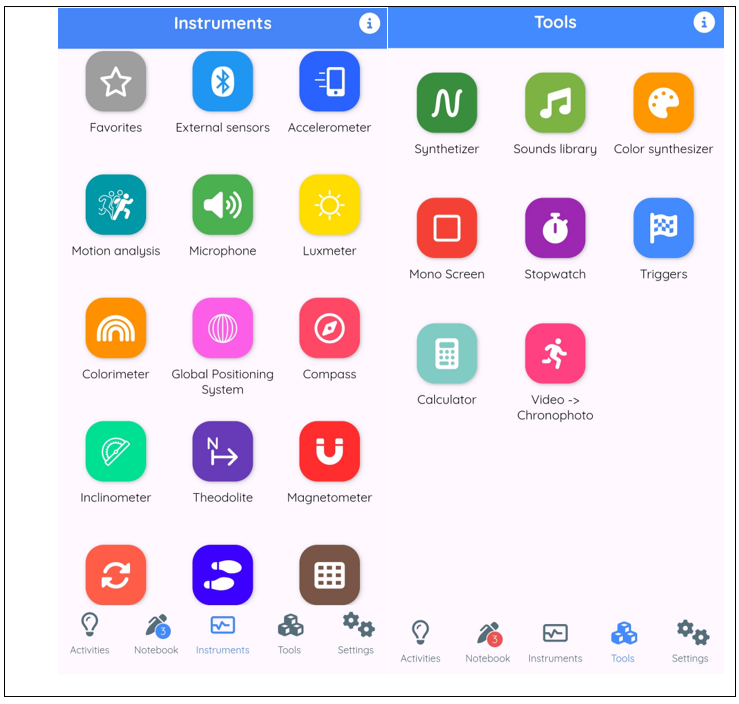
Figure 1. FizziQ application's main screen shows available instruments and tools
Procedure
The implementation process spanned nine weeks. In the first week, the TPACK-21 scale was administered as a pre-test, followed in the second week by an introduction to the 5E learning cycle model and the FizziQ mobile application. Between weeks three and six, PSTs designed lesson plans integrating the FizziQ app within the 5E framework in alignment with current science curriculum learning outcomes. They implemented these lesson plans in middle school science classes where they were serving as preservice teachers during their teaching practicum (Appendix 3). In the seventh week, the TPACK-21 scale was administered again as a post-test. Finally, qualitative data were collected through semi-structured interviews in week eight and a focus group interview in week nine.
Data Analysis TPACK-21 Scale
To examine the suitability of the TPACK-21 scale for factor analysis, the Kaiser-Meyer-Olkin (KMO) measure of sampling adequacy and Bartlett’s test of sphericity were conducted. As shown in Table 1, the KMO value was .642, exceeding the .60 threshold, and Bartlett’s test yielded a significant chi-square value (χ²(703)=1885.03, p<.001), confirming the appropriateness of the data for factor analysis.
Table 1.
KMO and Bartlett’s test results

Exploratory factor analysis revealed a seven factor structure that accounted for 78.63% of the total variance, which is well above the 50% threshold typically considered acceptable for construct validity. The factor loadings met the recommended .45 criterion (Field, 2009; Tabachnick & Fidell, 2013), and the differences across factors were greater than .10, indicating a clear and distinct factor structure (Hair et al., 2019).
Table 2.
Reliability coefficients of TPACK-21
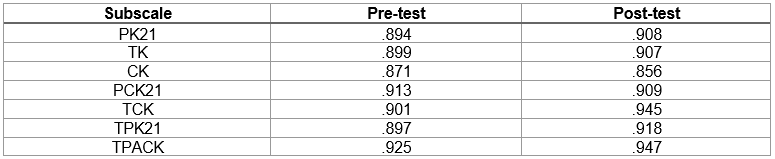
Table 2 shows that the reliability coefficients of the scale’s sub factors ranged from .871 to .925 in the pre-test and from .856 to .947 in the post-test. This results demonstrate that the sub factors are composed of items that reliably measure the same construct. Item total correlation analysis further supported this finding, with all items showing coefficients above .30, demonstrating strong discrimination and confirming that participants interpreted and responded to the items as intended. Overall, these findings confirm that the TPACK-21 scale is both valid and reliable in the context of this study. In the quantitative phase, a paired samples t-test was applied to compare pre and post-test scores on the TPACK-21 scale. In addition to statistical significance, effect sizes were calculated using Cohen’s d to determine the magnitude of the observed differences between pre-test and post-test scores. Effect size interpretation followed Cohen’s (1988) criteria, where 0.20 is considered small, 0.50 medium, and 0.80 large. This test, appropriate for repeated measurements on the same group, assumes normality of the data, which was examined prior to the analysis (Pallant, 2020).
Qualitative Data Analysis
In the analysis of the qualitative data, the responses to the semi structured interview questions were examined through thematic coding and organized into themes, categories, and codes. For the analysis of the focus group data, responses obtained through the questions included in the focus group form were systematically examined. In the first stage, audio recordings of the approximately 60 minute session with PST were transcribed. The transcripts were then analyzed collaboratively by the researcher, a graduate student in science education, and a field expert, resulting in the identification of themes, categories, and codes. To ensure reliability, inter coder agreement was calculated (Miles & Huberman, 1994). In this study, 36 codes were agreed upon and 6 were disputed, yielding an inter coder reliability coefficient of 86%. These procedures ensured that the coding process was both systematic and trustworthy, thereby enhancing the credibility of the qualitative findings.
Findings
Quantitative Results on the TPACK-21 Scale
Table 3 displays the results of the paired-samples t-test conducted to examine differences between pre and post-test scores across the sub-factors of the TPACK-21 scale, providing evidence of changes in PSTs’ TPACK.
Table 3.
t-test results of TPACK-21 sub factors
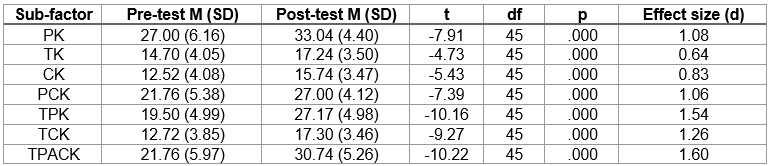
The results of the paired-samples t-test show clear improvements across all sub factors of the TPACK-21 scale. Specifically, mean scores increased from pre to post-test in PK (M = 27.00 to 33.04), TK (M = 14.70 to 17.24), CK (M = 12.52 to 15.74), PCK (M = 21.76 to 27.00), TPK (M = 19.50 to 27.17), TCK (M = 12.72 to 17.30), and overall TPACK (M = 21.76 to 30.74). In all cases, the paired samples t-test revealed statistically significant differences (p<.001). These findings suggest that the intervention was associated with improvements in PSTs’ TPACK levels. However, these improvements need to be interpreted with caution, as the study design does not allow for isolating the specific effect of the intervention. One possible explanation for this improvement is that the integration of FizziQ within the 5E instructional model provided PST with structured opportunities to actively engage in technology supported lesson design. This hands-on and inquiry based experience may have facilitated the meaningful integration of TPACK. In addition, Cohen’s effect size values presented in Table 3 show that the observed differences range from medium to very large, suggesting that the use of the application has a significant practical effect. This suggests that the integration of the FizziQ mobile application not only resulted in statistically significant improvements but also had a strong practical impact on PST’s TPACK. These results should therefore be understood as reflecting a strong association between the intervention context and the observed outcomes, rather than direct causal evidence.
Qualitative Findings on the FizziQ Application
The qualitative findings, obtained from the semi-structured interviews conducted with PST, were grouped into three themes derived from the twelve interview questions. The first theme, informed by seven questions, highlights the perceived advantages and challenges of using FizziQ in lesson planning. The second theme, based on two questions, focuses on the theme’s influence on assessment practices. The third theme, drawn from three questions, explores the contribution to the development of PST’s TPACK.
Advantages and Challenges of Using FizziQ
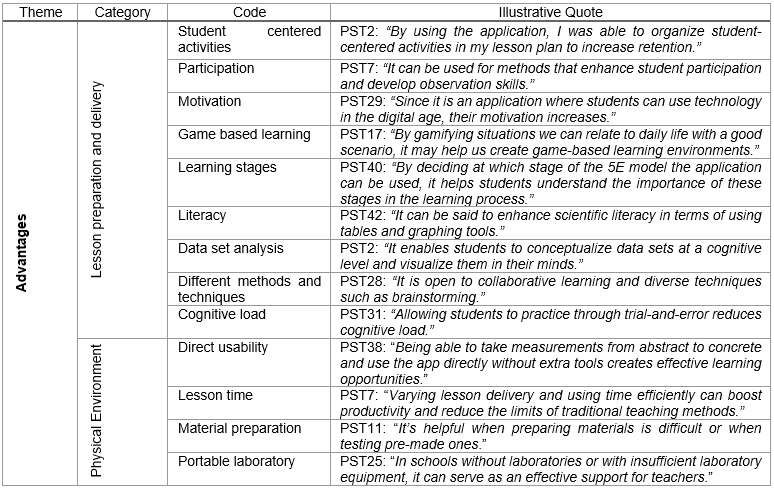
The first theme focuses on PSTs’ perceptions of the advantages and challenges associated with using the FizziQ mobile application during lesson plan preparation. Their responses highlight both the pedagogical benefits and the limitations encountered in practice. Based on the qualitative findings presented in Table 4, two main categories of advantages emerged from the PSTs’ views: lesson preparation and delivery, and physical environment.
Within the first category, PST emphasized that using the FizziQ encouraged more student centered and participatory learning, enhanced motivation, and facilitated game based and inquiry oriented teaching practices. They also reported that FizziQ helped them better understand learning stages, promoted scientific literacy through the interpretation of data in tables and graphs, and supported the integration of various instructional methods and techniques. Furthermore, PSTs noted that FizziQ contributed to lowering cognitive load by enabling students to experiment and learn through practice. The second category, physical environment, focused on the practical benefits of the application. PSTs asserted that FizziQ could be used directly without additional tools, allowed for more efficient lesson time management, and was especially useful when material preparation posed challenges. In addition, they stated that the FizziQ helped create portable, laboratory like environments, particularly in settings with limited resources.
Table 4.
Advantages of using FizziQ
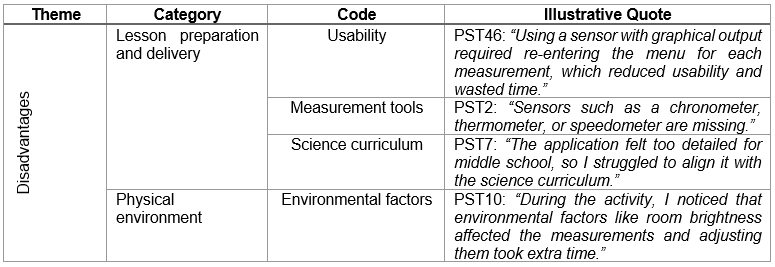
In relation to the disadvantages, two main categories were identified, similar to those in the advantages. Within the first category, PST reported several limitations regarding the use of FizziQ in lesson planning. They mentioned reduced usability, particularly having to repeat measurements that required navigating multiple menus, as well as the limited availability of measurement tools such as stopwatches and thermometers. Additionally, some participants noted difficulties in aligning the application with the middle school science curriculum, as its functions were perceived to be overly detailed for that level. The second category, physical environment, referred to contextual challenges specifically, how environmental conditions, such as room brightness, could interfere with sensor accuracy and require additional adjustments during experiments. These findings are summarized in Table 5.
Table 5.
Disadvantages of using the FizziQ
FizziQ and Assessment Practices
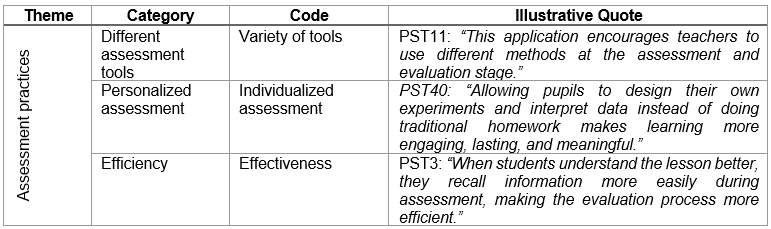
The second theme explores PST’s views on how the use of FizziQ influenced their assessment and evaluation practices. As presented in Table 6, three main categories were identified: variety of tools, individualized assessment, and efficiency. PSTs articulated that the application encourages the use of various assessment methods and supports flexibility in measuring learning outcomes. They also praised that FizziQ offers valuable opportunities for personalized assessment. Through the application, students could design their own experiments, analyze data, and make the process more meaningful and lasting. Furthermore, the application was found to improve assessment efficiency. As pupils understood the lessons better, they could recall information more easily, which made the evaluation process smoother and faster. These results together highlight FizziQ's potential as a flexible tool for facilitating both formative and summative assessment.
Table 6.
Assessment Practices with FizziQ
FizziQ’s Contribution to TPACK
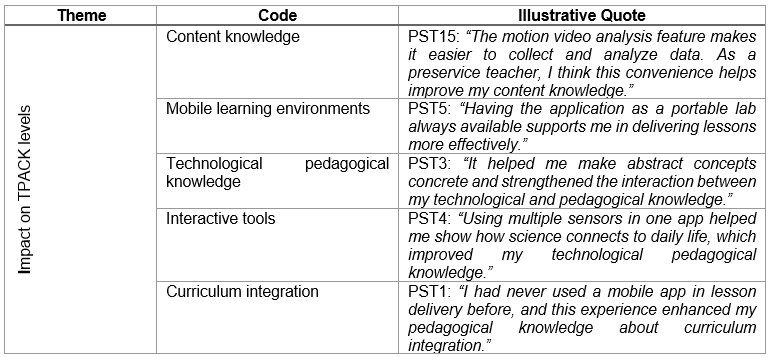
The third theme focuses on the impact of using FizziQ on PST’s TPACK development. As shown in Table 7, the application contributed to five impacts of TPACK: content knowledge, technological pedagogical knowledge, mobile learning environments, interactive tools, and curriculum integration. PSTs reported that features such as motion video analysis enhanced their ability to collect and analyze data, supporting content knowledge development. They also noted that FizziQ’s portability as a mobile laboratory facilitated more effective lesson delivery and provided an accessible environment for technology supported teaching. Furthermore, the use of multiple sensors and real life connections helped make abstract concepts more concrete, thereby strengthening the interaction between TPK. Finally, several participants emphasized that integrating FizziQ into lesson delivery expanded their understanding of curriculum design and implementation, enhancing their pedagogical knowledge.
Table 7.
Effects of FizziQ on PST’s TPACK
Focus Group Findings on FizziQ
Through thematic analysis, three main themes were identified (Figure 2): Teaching learning process, technology integration, and 21st-century skills. These themes represent PSTs’ shared perspectives on how FizziQ supported instructional design, enhanced technology based teaching practices, and contributed to the development of competencies aligned with 21st-century science education.

Figure 2. Focus group interview themes
Teaching Learning Process
Findings from the focus group analysis revealed that the use of FizziQ positively shaped PSTs’ views on the teaching learning process. As shown in Figure 3, participants emphasized that the app supported effective lesson planning and fostered innovative pedagogical design. It was reported to enhance creativity and innovation by encouraging experimentation and the integration of interactive, sensor based, and game like activities. Moreover, FizziQ was seen to connect scientific concepts to everyday life, promote cultural literacy, and motivate teachers to design lessons suitable for both classroom and outdoor settings. Collectively, these findings suggest that the application strengthened PSTs’ ability to plan and implement student centered, technology enhanced science lessons.
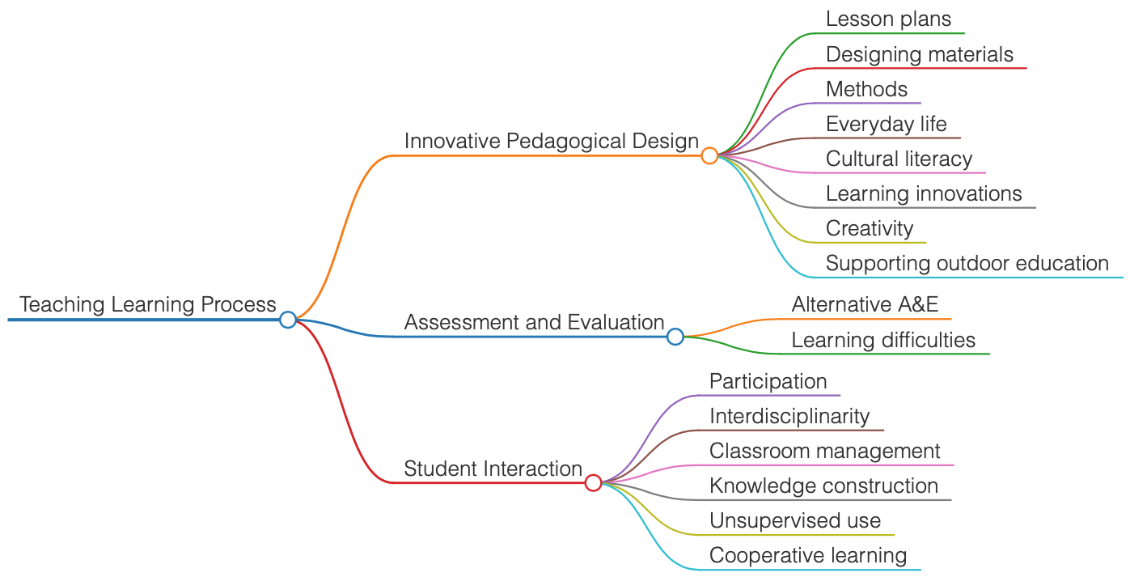
Figure 3. Teaching learning process theme
The second theme, assessment and evaluation, reflects PSTs’ views on how FizziQ contributed to both formative and summative assessment practices. As presented in Figure 3, the app facilitated alternative assessment techniques, enabling users to design diverse tools such as data diagrams, lab reports, and performance based tasks. These methods supported a more authentic evaluation of pupils’ scientific reasoning and inquiry skills. In addition, FizziQ was found to make assessment processes more inclusive by allowing adaptations for pupils with learning difficulties. Overall, the integration of FizziQ was perceived to enhance assessment literacy and promote evidence based, student centered evaluation.
The third theme, student interaction, centers on how the FizziQ application influenced participation, collaboration, and communication in classroom contexts. As illustrated in Figure 3, the app increased engagement, enabling students to interact actively with both peers and scientific content during experiments. The inclusion of interdisciplinary connections such as linking physics to traffic safety made lessons more meaningful and relatable. PST also reported that FizziQ improved classroom management by maintaining pupil attention through hands-on, real time measurements. Moreover, the FizziQ fostered collaborative learning and knowledge construction, encouraging teamwork even among pupils who typically struggled with focus or participation. While some PSTs mentioned minor challenges, such as potential distractions during unsupervised use, the overall perception was that FizziQ effectively promotes interactive, cooperative, and student centered learning environments in science education.
Technology Integration
The theme technology integration examines how PST implemented the FizziQ mobile application within their lesson design and teaching practice. As illustrated in Figure 4, the app enriched their instructional experience by enhancing problem solving, experiential learning, and curriculum alignment with the 5E model. Some noted challenges, such as the effect of environmental brightness on measurement accuracy, led them to develop practical solutions, like repeating experiments under controlled lighting conditions. Additionally, FizziQ was described as a valuable technological tool for promoting scientific literacy, facilitating data visualization, and simulating virtual laboratories. PST emphasized its effectiveness in improving lesson efficiency and helping students understand abstract scientific concepts through hands-on experimentation. Importantly, the app provided meaningful learning opportunities even in schools with limited laboratory resources, enhancing material diversity and accessibility. Overall, these findings suggest that integrating FizziQ strengthened PST’s technological and pedagogical competencies while supporting the creation of inclusive, efficient, and resource aware learning environments in science education.
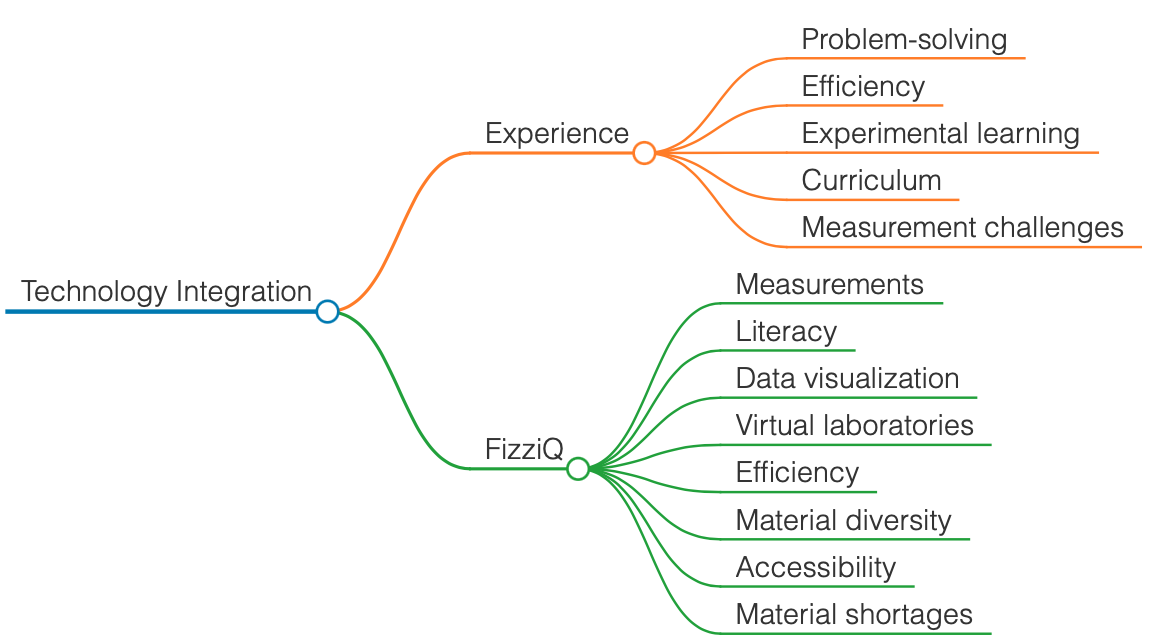
Figure 4. Technology integration theme
21st-Century Skills
The final theme, 21st-century skills, explores how the use of the FizziQ mobile application supported both pedagogical approaches and teacher professional growth in science education. As illustrated in Figure 5, the app encouraged lesson designs suitable for middle school students, emphasizing student centered, long term, and gamified learning experiences. They explained that FizziQ helped bridge abstract and real world concepts through interactive activities and strengthened students’ scientific process skills through data collection and analysis. Regarding teacher development, PST highlighted that integrating FizziQ enhanced their sense of competence, effectiveness, and technological pedagogical knowledge. The app was also viewed as a tool that fostered professional confidence in designing and delivering technology enhanced lessons. Moreover, many noted that its integration helped connect more closely with digital native learners, reducing the generational gap between teachers and pupils. Overall, these findings demonstrate how integration of FizziQ harmonizes with the broader goal of cultivating 21st-century learning competencies in science education while simultaneously bolstering teachers' pedagogical and technological capacities to create more inclusive and efficient learning environments.
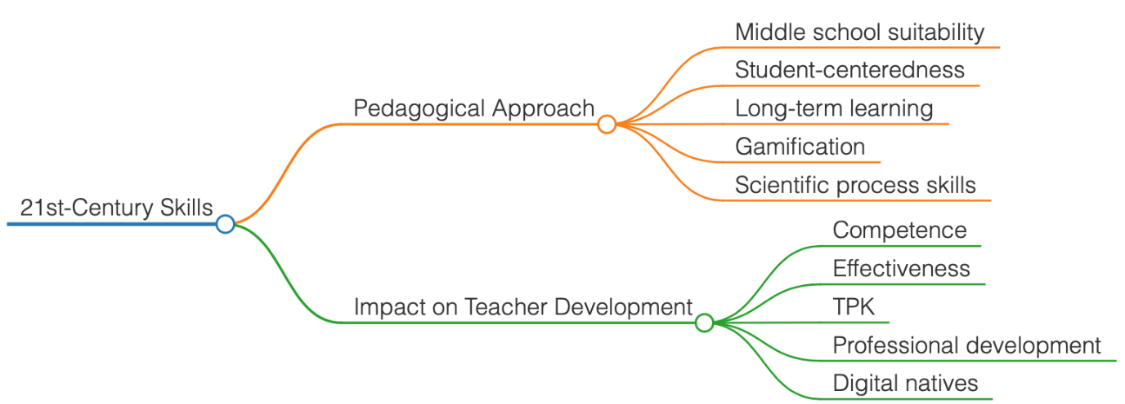
Figure 5. 21st-Century Skills Theme
Discussion and Conclusion
The present study examined how integrating the FizziQ mobile application into PSTs lesson plan design processes affected their TPACK-21. Quantitative results showed a statistically significant increase across all TPACK-21 sub dimensions between pre and post-tests. These findings are consistent with those of Valtonen et al. (2017) and Başaran (2020), both of whom reported strong interrelations among TCK, TPK21, and PCK21 as predictors of overall TPACK-21 performance. Likewise Alemán-Saravia et al. (2023) confirmed the structural validity and reliability of the TPACK-21 framework in culturally distinct contexts, emphasizing its robustness for measuring teachers’ technology integrated competencies worldwide. These results directly address the first research question, indicating that the integration of the FizziQ mobile application into lesson planning significantly enhanced PSTs’ TPACK-21 levels by strengthening their technological, pedagogical, and content knowledge integration. At the same time, it is important to consider that this increase is likely to be influenced by multiple interacting factors beyond the use of the FizziQ application alone. As Ng et al. (2025) have highlighted the using technology alone does not directly improve teaching outcomes, but works through teachers’ PK and PCK. Peñaojas & Palomar (2025) posit that TPACK alone may not fully explain teaching related outcomes, as it works in combination with factors such as self-efficacy and experiential learning. Rotary-Saban & Shonfeld (2025) also suggest that TPACK does not operate on its own, but works through other factors such as teachers’ beliefs. Moreover, the effect sizes observed across all sub-dimensions lend support to the notion that the impact of the smartphone based task may be not only statistically significant but also educationally meaningful.
The qualitative findings further reinforced these quantitative outcomes by revealing three major themes: teaching and learning process, technology integration, and 21st-century skills. Under the first theme, PSTs described FizziQ as a facilitator of creative instructional design, to prepare student centered and inquiry based lessons. Mobile sensors and visualization tools helped connect abstract scientific concepts with real life physical phenomena. This observation is consistent with Başaran (2020), who emphasizes that ICT based pedagogical designs can support contextual learning and student motivation. Similar to the assertions of Aslan et al. (2025), the use of digital tools encouraged PSTs to integrate pedagogical innovations with digital literacy, thereby cultivating reflective teaching practices based on experimentation and collaboration. Similar to the findings highlight by Ateş & Garzón (2022) that teachers’ positive attitudes and perceived usefulness of mobile applications play a critical role in fostering their intention and confidence to integrate such technologies into science teaching. Consistent with the findings of Crompton et al. (2016) and Widowati & Tyas (2024), this study reinforces the growing consensus that mobile inquiry based learning environments effectively bridge theory and practice by fostering inquiry, contextualized learning, and the development of teachers’ TPACK-21 competencies within science education. A possible explanation lies in the affordances of mobile technologies, such as real time data collection and visualization, which support experiential learning and contribute to deeper conceptual understanding. Although previous studies have reported an increase in students’ interest and curiosity (Salhab & Daher, 2023), there are also studies that have observed a similar improvement in learning outcomes in physics education (Hochberg et al., 2018).
Within the technology integration theme, PSTs acknowledged FizziQ’s effectiveness in enhancing lesson efficiency and engagement within the 5E instructional framework. These observations correspond to Alemán-Saravia et al. (2023), who highlighted that validated TPACK-21 constructs are essential for evaluating teachers’ capacity to integrate digital resources into culturally responsive pedagogy. The PSTs in this study also reported developing adaptive strategies to address environmental factors affecting sensor readings, reflecting Mishra & Koehler’s (2006) notion that pedagogical reasoning and contextual decision making are central to pedagogically grounded technology use. However, these findings should be interpreted with caution, as contextual factors such as classroom environment and technological infrastructure may influence the effectiveness of mobile applications in different educational settings. Moreover, FizziQ served as a mobile laboratory, enabling experimentation in schools with limited physical resources, echoing findings from Başaran (2020), Voogt & Roblin (2012) that digital technologies can broaden access to scientific inquiry. In line with Zydney & Warner (2016), the findings suggest that FizziQ supports inquiry-based, technology-integrated, and student-centered learning among preservice teachers. As Oliveira et al. (2019) note, in a technology integrated science classroom, teachers are not simply users of technology. They play a key role in guiding how students engage with it from an epistemological perspective.
The 21st-century skills theme underscored that FizziQ not only strengthened PSTs’ technological and pedagogical capacities but also enhanced creativity, problem solving, collaboration, and communication skills as core competencies for modern education (González-Pérez & Ramírez-Montoya, 2022; Wang, 2022). PST reflected that the app fostered inquiry, critical thinking, and digital fluency among students, thereby also improving their own confidence and reflective practice as future educators. These outcomes parallel those reported by Aslan et al. (2025) and Alemán-Saravia et al. (2023), who argued that digital literacy mediates the relationship between TPACK competence and effective 21st-century teaching. In line with Li (2024), this study highlights that integrating mobile technologies like FizziQ within the TPACK-21 framework fosters preservice teachers’ digital competence and critical thinking in contemporary digital learning environments. These findings directly respond to the second research question, revealing that PSTs perceived FizziQ as an innovative, motivating, and pedagogically valuable tool that enhances lesson design, assessment, and student engagement in science education. These findings also suggest that integrating emerging technologies into teacher education programs can play a critical role in preparing future teachers for digitally enriched and student-centered learning environments.
In conclusion, this study finds that mobile sensor based learning environments, such as FizziQ, can serve as a genuine bridge between theoretical teacher education frameworks and practical classroom applications.
The observed increase in PSTs’ TPACK-21 levels suggests that technology enhanced lesson promotes both conceptual understanding and professional development. Similar points are raised by OECD (2025) and Voogt & Roblin (2012), who emphasize the importance of integrating technology within pedagogically grounded frameworks to prepare teachers for guiding learners in complex, digitally rich environments. The integration of digital and mobile technologies allows teachers to enhance instructional quality and enrich learning processes (OECD, 2025). Most teachers feel confident using digital tools to foster student engagement, personalize instruction, and provide real-time feedback. Threse technological applications not only help teachers develop their digital pedagogical competencies but also foster the design of student-centered learning environments (OECD, 2025). This finding is in line with previous research showing that TPACK-21 is a key factor associated with teachers’ competencies in technology-supported instructional practices and assessment processes (Yilmaz & Isbulan, 2026). But Luik et al. (2024) caution that the relationship between TPACK components and teaching related outcomes may vary depending on context and may not always be direct. Conclusively, the findings of this study contribute to the growing body of research emphasizing the importance of aligning emerging learning technologies with pedagogically grounded frameworks such as TPACK-21 in order to support sustainable and effective teacher development.
Implications and Limitations
This research contributes to the expanding literature validating the pedagogical potential of TPACK-21 aligned digital tools in teacher education. Embedding mobile applications like FizziQ into science methods courses or practicum experiences can help PSTs develop evidence based, inclusive, and inquiry oriented teaching strategies. Future studies could build on these results by conducting longitudinal or cross cultural analyses comparing PSTs’ TPACK-21 development in different educational systems. Additionally, comparative investigations of different mobile applications could further illuminate how tools like FizziQ shape inquiry-based teaching and foster 21st-century competencies in varied learning contexts. Further exploration into artificial intelligence supported mobile laboratories and mixed reality applications could also extend the TPACK-21 framework, offering deeper insights into how digital technologies transform science learning in both formal and informal settings.
This study has several limitations that should be considered when interpreting the results. First, the relatively small and context specific sample of PSTs from a single university in Türkiye limits the generalizability of the findings. Future research could include larger and more diverse cohorts across different institutions and cultural settings to enhance external validity. Second, the short duration of the intervention restricted the examination of long-term effects on PSTs sustained TPACK-21 development. Longitudinal designs would allow researchers to investigate how such competencies evolve over time.
Statements and Declarations
This study was approved by the Ethics Committee of University Ondokuz Mayis, Approval No: 2024-238, Date: 29.03.2024, and all procedures were carried out in accordance with institutional and international ethical standards. The authors declare that no financial support was received for the conduct or publication of this research. The study was conducted independently, without any external funding or sponsorship. AI tools as language editing resources were used solely to improve clarity and grammar. All intellectual content, analysis, and interpretation belong to the authors. This study was conducted as part of the first author’s master’s thesis research, supervised by the second author.
Bibliographic references
Alawadh, S., Ali, H., Almutairi, M., & Alhuzimi, T. E. (2019). Pre-service teachers’ perceptions of their abilities to teach students with special needs by integrating technology in their classrooms. Journal of Education and Practice, 10(35), 84-92. https://doi.org/10.7176/JEP/10-35-12
Albayrak Sarı, A., Canbazoğlu Bilici, S., Baran, E., & Özbay, U. (2016). Investigating the relationship between teachers’ technological pedagogical content knowledge (TPACK) competencies and attitudes towards information and communication technologies. Educational Technology Theory and Practice, 6(1), 1-21. https://doi.org/10.17943/etku.11643
Alemán-Saravia, A. C., Deroncele-Acosta, A., & Robles-Mori, H. (2023). Translation, cultural adaptation and validation of the tpack-21 questionnaire in teachers’ in-service. Revista de Ciencias Sociales, 29(3), 453-469. https://doi.org/10.31876/rcs.v29i3.40730
Alpaslan, M. M., Ulubey, Ö., & Ata, R. (2021). Adaptation of technological pedagogical content knowledge scale into turkish culture within the scope of 21st century skills. Psycho-Educational Research Reviews, 10(1), 77-91. Recuperado de https://www.perrjournal.com/index.php/perrjournal/article/view/93
Aslan, S., Alanoğlu, M., & Karabatak, S. (2025). Enhancing 21st-century teaching competencies: The key role of digital literacy in connecting pre-service teachers’ TPACK. Information Development. https://doi.org/10.1177/02666669251315841
Ateş, H., & Garzón, J. (2022). Drivers of teachers’ intentions to use mobile applications to teach science. Education and Information Technologies, 27(2), 2521-2542. https://doi.org/10.1007/s10639-021-10671-4
Başaran, B. (2020). Investigating science and mathematics teacher candidate's perceptions of TPACK-21 based on 21st century skills. Elementary Education Online, 19(4), 2212-2226. Retrieved from https://ilkogretim-online.org/index.php/pub/article/view/6504
Chai, C. S., Koh, J. H. L., & Tsai, C. C. (2013). A review of technological pedagogical content knowledge. Journal of Educational Technology & Society, 16(2), 31-51. https://www.jstor.org/stable/jeductechsoci.16.2.31
Chazot, C., & Delabre, U. (2025). Using smartphones to perform kinematic analysis in sports with the FizziQ App: Example of the pole vault. The Physics Teacher, 63(9), 791-793. https://doi.org/10.1119/5.0174195
Cohen, S. (1988). Psychosocial models of the role of social support in the etiology of physical disease. Health psychology, 7(3), 269. https://doi.org/10.1037/0278-6133.7.3.269
Creswell, J. W., & Clark, V. L. P. (2016). Designing and conducting mixed methods research. Sage publications.
Crompton, H., Burke, D., Gregory, K. H., & Gräbe, C. (2016). The use of mobile learning in science: a systematic review. Journal of Science Education and Technology, 25(2), 149-160. https://doi.org/10.1007/s10956-015-9597-x
Delabre, U. (2022). Smartphonique: Faites de votre smartphone un labo de physique. Dunod. https://acortar.link/Il7Nmh
Diamah, A., Rahmawati, Y., Paristiowati, M., Fitriani, E., Irwanto, I., Dobson, S., & Sevilla, D. (2022). Evaluating the effectiveness of technological pedagogical content knowledge-based training program in enhancing pre-service teachers’ perceptions of technological pedagogical content knowledge. Frontiers in Education, 7, 897447. https://doi.org/10.3389/feduc.2022.897447
Dzakia, J. R., Sulaeman, N. F., & Subagiyo, L. (2023). Analisis pemahaman guru fisika sma terhadap tpack (technolgical, pedagogical, and content, knowledge) dalam media pembelajaran berbasis teknologi. INKUIRI: Jurnal Pendidikan IPA, 12(3), 160-163. https://doi.org/10.20961/inkuiri.v12i3.79313
Ergun, M., & Uzuner, M. N. (2026). Systematic review of science curriculum concepts within TPACK studies from Türkiye. Discover Education, 5(476), 1-23. https://doi.org/10.1007/s44217-026-01522-w
Ergun, M., & Delabre, U. (2026). The FizziQ ecosystem as a pocket laboratory in physics education. Physics Education, 61(3), 033009.
Field, A. (2009). Discovering statistics using SPSS: Book plus code for E version of text (Vol. 896). London, UK: SAGE Publications Limited.
González-Pérez, L. I., & Ramírez-Montoya, M. S. (2022). Components of education 4.0 In 21st century skills frameworks: Systematic review. Sustainability, 14(3), 1493. https://doi.org/10.3390/su14031493
Gökçe, H., & Nacaroğlu, O. (2026). The effect of the use of artificial intelligence tools in science education on secondary school students’ 21 st century skills competency perceptions and digital literacy. Educ Inf Technol, 31, 1059–1077. https://doi.org/10.1007/s10639-025-13853-6
Guo, P. (2021). Integrated practice effect analysis of teaching design pattern on TPACK. Computer Applications in Engineering Education, 29(2), 385-393. https://doi.org/10.1002/cae.22207
Hair, J. F., Black, W. C., Babin, B. J., & Anderson, R. E. (2019). Multivariate Data Analysis (8th ed.). New York, NY: Pearson.
Hochberg, K., Kuhn, J., & Müller, A. (2018). Using smartphones as experimental tolos - Effects on interest, curiosity, and learning in physics education. Journal of Science Education and Technology, 27(5), 385–403. https://doi.org/10.1007/s10956-018-9731-7
Hu, L., Zhang, W., & Lin, P. (2025). Can the utilization of technology-enhanced learning spaces lead to improved learning outcomes? A meta-analysis based on 39 experimental and quasi-experimental studies. Interactive Learning Environments, 33(4), 3052-3072. https://doi.org/10.1080/10494820.2024.2436943
Karaduman, T., & Akman, B. (2024). A comprehensive review of technological pedagogical content knowledge (TPACK). e-Kafkas Journal of Educational Research, 11(1), 141-159. https://doi.org/10.30900/kafkasegt.1282126
Li, H. (2024). Education challenges in developing digital competence and critical thinking skills in a post-information age. Culture and Education, 36(2), 419-445. https://doi.org/10.1177/113564052412598
Luik, P., Taimalu, M., Naruskov, K., & Kalk, K. (2024). Does knowledge according to the TPACK framework have an impact on student teachers’ beliefs? A path analysis. Education and Information Technologies, 29(17), 23027-23048. https://doi.org/10.1007/s10639-024-12767-z
Kaya Yatar, G. & Ergun, M. (2024). Investigation of factors influencing technological pedagogical content knowledge of prospective science teachers. International Journal of Eurasian Education & Culture, 9(28), 511-537. http://dx.doi.org/10.35826/ijoecc.2851
Miguel-Revilla, D., Martínez-Ferreira, J. M., & Sánchez-Agustí, M. (2020). Assessing the digital competence of educators in social studies: An analysis in initial teacher training using the TPACK-21 model. Australasian Journal of Educational Technology, 36(2), 1-12. https://doi.org/10.14742/ajet.5281
Miles, M. B., & Huberman, A.M. (1994). Qualitative data analysis (2nd edition). Thousand Oaks, CA: Sage.
Mishra, P., & Koehler, M. J. (2006). Technological pedagogical content knowledge: A framework for teacher knowledge. Teachers College Record: The Voice of Scholarship in Education, 108(6), 1017-1054. https://doi.org/10.1111/j.1467-9620.2006.00684.x
Nanola, N., Maftuh, B., Burhanudin, B., Wulida, Y., & Siregar, S. W. (2024). TPACK learning in improving teacher skills in elementary school: a systematic literature review. Mimbar Sekolah Dasar, 11(2), 422-440. https://doi.org/10.53400/mimbar-sd.v11i2.71832
Ng, K., Venckuniene, K., Klavina, A., Labecka, M., Ostaseviciene, V., Pozeriene, J., Strazdina, N., Reklaitiene, D., & Morgulec-Adamowicz, N. (2025). Associations between technology use, knowledge and inclusive physical education teacher-efficacy among European primary school teachers. Physical Culture and Sport. Studies and Research, 108(1), 71-83. https://doi.org/10.2478/pcssr-2025-0013
Peñaojas, J. I., & Palomar, B. C. (2025). A multiple regression analysis on pre-service science teachers’ TPACK, efficacy belief, experiential learning and blended teaching readiness. Discover Education, 4, 418. https://doi.org/10.1007/s44217-025-00846-3
Rotary-Saban, M., & Shonfeld, M. (2025). Examining the Predictors of Teachers’ Self-Efficacy in Digital Science Teaching: the Roles of TPACK, Openness, and School Support. Research in Science Education. https://doi.org/10.1007/s11165-025-10302-9
OECD. (2018). The future of education and skills: Education 2030/2040. Paris, France: OECD Publishing. https://www.oecd.org/education/2030-project/
OECD. (2025). Results from TALIS 2024: The state of teaching. Paris, France: OECD Publishing. https://www.oecd.org/en/publications/results-from-talis-2024_90df6235-en.html
Oliveira, A., Feyzi Behnagh, R., Ni, L., Mohsinah, A. A., Burgess, K. J., & Guo, L. (2019). Emerging technologies as pedagogical tools for teaching and learning science: A literature review. Human Behavior and Emerging Technologies, 1(2), 149-160. https://doi.org/10.1002/hbe2.141
Pallant, J. (2020). SPSS Survival Manual: A step by step guide to data analysis using IBM SPSS (7th ed.). London, UK: Routledge. https://doi.org/10.4324/9781003117452
Salhab, R., & Daher, W. (2023). University students’ engagement in mobile learning. European Journal of Investigation in Health, Psychology and Education, 13(1), 202–216. https://doi.org/10.3390/ejihpe13010016
Tabachnick, B. G., & Fidell, L. S. (2013). Using multivariate statistics. Boston, MA: Pearson.
Teknowijoyo, F., Budiyono, B., Gunarhadi, U., & Sukarmin, A. (2024). Exploring the role of TPACK in promoting inquiry-based learning in 21st-century science learning. In The 3rd International Conference on Humanities Education, Law and Social Sciences (Vol. 2024, pp. 1088-1100). KnE Social Sciences. https://doi.org/10.18502/kss.v9i2.14925
Uğur, Ü. E., & Sungur, S. (2021). Middle school students’ perceptions about twenty-first-century learning practices in science classes: A multidimensional approach. Hacettepe University Journal of Education, 36(1), 186–200. https://doi.org/10.16986/HUJE.2020058877
Ürek, H. (2024). The impact of a mobile phone and mobile application-supported science laboratory on the digital literacy of preservice teachers and their disposition toward using technology in class. Journal of Science Education and Technology, 33(6), 983-997. https://doi.org/10.1007/s10956-024-10138-4
Valtonen, T., Sointu, E., Kukkonen, J., Kontkanen, S., Lambert, M. C., & Mäkitalo-Siegl, K. (2017). TPACK updated to measure pre-service teachers’ twenty-first century skills. Australasian Journal of Educational Technology, 33(3), 15-31. https://doi.org/10.14742/ajet.3518
Voogt, J., & Roblin, N. P. (2012). A comparative analysis of international frameworks for 21st century competences: implications for national curriculum policies. Journal of Curriculum Studies, 44(3), 299-321. https://doi.org/10.1080/00220272.2012.668938
Wang, A. Y. (2022). Understanding levels of technology integration: A TPACK scale for EFL teachers to promote 21st-century learning. Education and Information Technologies, 27(7), 9935-9952. https://doi.org/10.1007/s10639-022-11033-4
Widowati, A., & Tyas, R. A. (2024). Mobile-Based learning in science trends: a systematic review (2015–2023). Cogent Education, 11(1), 2303563. https://doi.org/10.1080/2331186X.2024.2303563
Yilmaz, B., & Isbulan, O. (2026). Examining the relationship between teachers’ technological pedagogical content knowledge (TPACK) and their self-efficacy for online assessment and evaluation within the scope of 21 st century skills. Education and Information Technologies, 1-22. https://doi.org/10.1007/s10639-026-13974-6
Zharylgapova, D. M., Abdikarimov, B. Z., Kaliev, B. K., Almagambetova, A. A., Khodjaev, B. K., & Khujamkulov, A. P. (2025). Meta-Analysis of mobile applications and their impact on student outcomes: enhancing interest and intellectual abilities in physics learning. Eurasia Journal of Mathematics, Science and Technology Education, 21(8), em2674. https://doi.org/10.29333/ejmste/16653
Zydney, J. M., & Warner, Z. (2016). Mobile apps for science learning: review of research. Computers & Education, 94, 1-17. https://doi.org/10.1016/j.compedu.2015.11.001
Appendix 1. Interview Questions
Appendix 2. Focus Group Interview Questions
Appendix 3. Lesson Plan