
Original Article
Eduweb, 2026, abril-junio, v.20, n.2. ISSN: 1856-7576
Doi: https://doi.org/10.46502/issn.1856-7576/2026.20.02.16
Intelligent virtual resources as a means for primary school students to study educational fields
Hanna Byhar
Department of Pedagogy and Methods of Primary Education, Faculty of Pedagogy, Psychology and Social Work, Yuriy Fedkovych Chernivtsi National University, Chernivtsi, Ukraine.
https://orcid.org/0000-0002-4480-8293
Iryna Pits
Department of Pedagogy and Methods of Primary Education, Faculty of Pedagogy, Psychology and Social Work, Yuriy Fedkovych Chernivtsi National University, Chernivtsi, Ukraine.
https://orcid.org/0000-0002-7911-9922
Inna Prokop
Dean of the Faculty of Pedagogy, Psychology and Social Work, Yuriy Fedkovych Chernivtsi National University, Chernivtsi, Ukraine.
https://orcid.org/0000-0003-2409-4892
Krystyna Shevchuk
Department of Pedagogy and Methods of Primary Education, Faculty of Pedagogy, Psychology and Social Work, Yuriy Fedkovych Chernivtsi National University, Chernivtsi, Ukraine.
https://orcid.org/0000-0002-9365-1456
Olha Shestobuz
Department of Pedagogy and Methods of Primary Education, Faculty of Pedagogy, Psychology and Social Work, Yuriy Fedkovych Chernivtsi National University, Chernivtsi, Ukraine.
https://orcid.org/0000-0001-7268-8316
Cómo citar:
Byhar, H., Pits, I., Prokop, I., Shevchuk, K., & Shestobuz, O. (2026). Intelligent virtual resources as a means for primary school students to study educational fields. Revista Eduweb, 20(2), 272-287. https://doi.org/10.46502/issn.1856-7576/2026.20.02.16
Recibido: 06/03/26 Aceptado: 22/05/26
Resumen
La relevancia del estudio se deriva de la falta de evidencia empírica sobre la efectividad de la IA y la realidad virtual integradas en recursos virtuales inteligentes para los estudiantes de escuela primaria, especialmente en contextos impulsados por crisis como Ucrania bajo ley marcial. El objetivo es verificar experimentalmente el impacto de estas soluciones digitales basadas en el aprendizaje automático sobre la dinámica de la motivación de aprendizaje y el rendimiento académico de los estudiantes. Se utilizó una combinación de métodos pedagógicos tradicionales (cuestionarios, pruebas) y análisis automatizado de archivos de registro de plataformas digitales para recopilar datos. El procesamiento estadístico incluyó estadísticas descriptivas, la correlación de Pearson, la prueba t de Student y la prueba U de Mann-Whitney.
Según los resultados de la encuesta, el 83,3% de los profesores registró un aumento en la motivación de los estudiantes, y la calificación promedio de los recursos virtuales inteligentes fue de 4,4/5. El grupo experimental (EG) demostró resultados de prueba más altos con un rango intercuartil más estrecho (72,0-80,0) que el grupo control (CG).
El estudio proporciona confirmación empírica de la eficacia del uso de recursos virtuales interactivos en la escuela primaria para mejorar la motivación y estabilizar los resultados del aprendizaje. A diferencia de los relatos puramente descriptivos, esta investigación aporta datos empíricos originales del contexto ucraniano en tiempos de guerra. Otras perspectivas de investigación deberían centrarse en estudiar los efectos a largo plazo de los recursos virtuales inteligentes, especialmente su impacto sobre la estabilidad del rendimiento educativo.
Palabras clave: análisis de registros, aprendizaje adaptativo, competencias digitales, IA en la educación, motivación del estudiante.
Abstract
The relevance of the study stems from a lack of empirical evidence on the effectiveness of AI and VR integrated into intelligent virtual resources for primary school students, especially in crisis-driven contexts such as Ukraine under martial law. The aim is to experimentally verify the impact of these machine learning-based digital solutions on the dynamics of students' learning motivation and academic performance. A combination of traditional pedagogical methods (questionnaires, testing) and automated analysis of log files of digital platforms was used to collect data. Statistical processing included descriptive statistics, Pearson's correlation, Student's t-test, and the Mann-Whitney U-test.
According to survey results, 83.3% of teachers recorded an increase in student motivation, and the average rating of intelligent virtual resources was 4.4/5. The experimental group (EG) demonstrated higher test results with a narrower interquartile range (72.0-80.0) than the control group (CG).
The study provides empirical confirmation of the effectiveness of using interactive virtual resources in primary school for enhancing motivation and stabilizing learning outcomes. Unlike purely descriptive accounts, this research contributes original empirical data from the Ukrainian wartime setting. Further research prospects should focus on studying the long-term effects of intelligent virtual resources, especially their impact on the stability of educational performance.
Keywords: adaptive learning, AI in education, digital competencies, log analysis, student motivation.
Introduction
The integration of digital technologies (DT) into the primary education is gradually becoming a key factor in its modernization (Fälth & Selenius, 2024). Educational systems in different countries are focusing their efforts on improving learning outcomes, motivation, and student engagement (Drijvers & Sinclair, 2024). Among the innovative tools, advanced information technologies such as AI and ML are of particular interest. They combine adaptability, interactivity, and the possibility of algorithmic personalized support (Oakley, 2024). There is a current need for deep integration of intelligent systems capable of analysing large data sets, predicting learning trajectories, and personalizing the learning process in real time.
AI and VR demonstrate the ability to change educational practices in primary schools (Engelbrecht & Borba, 2024). It is about creating a complex software and hardware infrastructure (flexible digital environments), which take into account the individual peculiarities of students’ cognitive activity using specialized algorithms. Such environments contribute to a deeper assimilation of educational material and the development of 21st century skills (Wu, 2024).
The education system of Ukraine operates under martial law, which has increased the need for remote solutions for organizing and implementing the educational process. Significant destruction of infrastructure, displacement of children and teachers, as well as psychological stress have caused a crisis of educational continuity. In such critical conditions of uncertainty, there is an urgent need for tools that can provide stable access to knowledge in an unstable environment. Virtual learning systems, especially gamified ones, can develop students’ emotional intelligence. However, they do not completely replace human empathy and deep interaction (Ishchenko et al., 2024).
Despite the fact that the use of intelligent technologies in Ukrainian primary schools is in the early stages, positive dynamics of the impact on educational outcomes have already been recorded. The Education 4.0 initiative orients educational policy towards the development of critical thinking, digital literacy and the ability to learn throughout life. Intelligent virtual resources (IVR) meet these priorities, offering a new quality of pedagogical interaction.
The relevance of the use of IVR has increased significantly due to external challenges. Their ability to function regardless of territorial location allows maintaining access to quality education in the face of danger. That is why the introduction of such technologies is considered a critically important step in reforming primary education in Ukraine.
Despite the recognized potential of IVR, their specific impact on younger students in the context of primary education in Ukraine remains poorly studied. There are gaps in research on personalized learning, digital inequality, and teacher training in this specific demographic and region. The effectiveness of these tools for younger students, given their unique developmental characteristics, requires empirical investigation.
While the general benefits of AI in education are well documented, research specifically addressing primary education in Ukraine reveals significant challenges. These include technological disparities across regions and a lack of retrained specialists. This points to a critical need for context-specific empirical evidence. A generally positive view of AI in education does not guarantee effective implementation in the face of significant infrastructure and staffing challenges. Therefore, the problem is not simply a lack of research on AI in education. It is a critical lack of empirical research that takes into account the unique and complex realities of Ukrainian primary schools. This requires focused research to design effective and equitable integration.
The aim of the study was to empirically test the effectiveness of intellectual virtual resources in increasing the learning engagement of primary school students in various educational fields. Research objectives:
The research hypothesis is that intelligent virtual resources increase learner engagement, motivation and success, especially when teachers are confident in their use. The academic novelty of the study lies in providing empirical evidence on the impact of intelligent virtual resources on learner engagement of primary school students within different educational fields, specifically in the under-researched context of wartime Ukraine. Unlike prior research that focuses on general AI/VR benefits, this study proposes a model for integrating ML into the primary school pedagogical process that accounts for both the cognitive development of younger children and the constraints of crisis-driven distance learning (e.g., unstable infrastructure, displaced learners). The effectiveness of log analysis and adaptive learning algorithms for personalizing educational interaction is empirically substantiated. Furthermore, a replicable methodology for experimentally implementing digital solutions and assessing learning dynamics in real primary school environments under martial law is developed and tested.
Literature Review
The modern pedagogical community is actively exploring how IVR can transform primary education. From adaptive AI-based learning to interactive VR and AR capabilities, all of these areas form the basis of the future of primary education. However, as this review will show, much of the existing literature remains descriptive, lacks critical comparison, and relies on sources of varying methodological rigor.
Personalizing learning with AI systems is becoming increasingly popular. For example, Ezzaim et al. (2025) reviewed the architecture of an AI-based system that uses ML classification algorithms to early identify learning difficulties and provide personalized recommendations. Similarly, Alam (2022) compared traditional teaching methods with adaptive AI platforms and found significant improvements in student achievement. While these studies confirm the potential of AI systems (K–12), they share two critical limitations: (1) they rarely address the developmental specifics of children aged 6–10, and (2) they ignore local educational contexts, particularly in crisis-affected countries like Ukraine. Moreover, the evidence base includes non-indexed or industry-affiliated sources, which may introduce bias. Thus, although these systems provide a valuable technological basis, their direct applicability to primary education remains unverified.
VR/AR technologies open up new opportunities for student motivation and engagement. Kumar & Gorai, J. (2025) showed that VR technologies based on 3D rendering and immersive interfaces affect the cognitive domain. The researchers also pointed out technical obstacles such as hardware performance and latency. In another experiment, Wen et al., (2025) demonstrated that students who studied in an AR/VR environment were significantly more engaged in the learning process. Schmidt & Stumpe (2025) confirm that most research on AR in primary school focuses on the use of smartphones and tablets. A critical synthesis of these studies reveals a consensus on motivational benefits but also three unresolved issues: (a) the positive effects are mostly demonstrated in secondary or STEM settings, with little evidence for general primary curricula; (b) technical barriers (latency, hardware performance) are consistently reported but rarely addressed in intervention designs; and (c) teacher training—arguably a key moderator—is almost absent from the research agenda. Consequently, the claim that “VR/AR effectively stimulates engagement in younger students” is overstated without context-specific implementation studies.
Combining different technologies can solve complex educational tasks, particularly in times of crisis. Kolechyntseva et al., (2025) examine the potential of AI, AR, and VR in Ukrainian education. Their study reveals the specifics of using technologies during distance learning. Shirazi et al., (2024) proved that the combination of generative AI and VR with eye tracking technology significantly enhances motivation. While these works highlight the promise of technology integration for inclusive and sustainable education under crisis conditions, they provide little empirical evidence on actual implementation in resource-constrained environments (e.g., martial law in Ukraine). Both studies are either theoretical or based on small-scale prototypes; thus, the gap between technical potential and practical feasibility remains wide. This study directly addresses that gap by testing IVR in real Ukrainian primary schools affected by war.
In practice, VR/AR technologies are already demonstrating significant results in increasing learning efficiency. The Australian company Mindflight7 reported significant improvements in engagement and retention of material through VR lessons in various subjects (Balcha et al., 2025). Lumination’s study at Grange Primary School proved that XR technologies increase students’ motivation to study geography (Oakley et al., 2025). In turn, Gerçeker et al. (2024) demonstrated that virtual reality interventions can effectively reduce anxiety, fear, and negative emotional responses in school-age children, highlighting the potential of immersive environments to support emotional well-being. The authors noted that interactive virtual scenarios not only reduce psychological stress, but also contribute to greater student engagement in educational tasks. These examples are illustrative but methodologically weak: they are industry reports (Mindflight7, Lumination) or studies with small samples and no control groups. While they suggest positive trends, they lack peer-reviewed systematic evaluation. Therefore, this review treats them as hypothesis-generating rather than confirmatory evidence. Across all studies, a recurrent shortcoming is the lack of technical transparency (e.g., specific ML algorithms, log-analysis protocols), which severely limits replicability and scalability. Moreover, no prior study has combined back-end AI/ML adaptivity with front-end VR/AR in a single IVR system for primary education – a gap this study fills.
In summary, the literature review reveals four critical gaps that this study addresses: (1) insufficient attention to the developmental characteristics of children aged 6–10 in IVR design; (2) near-absence of empirical research in crisis-affected local contexts (e.g., wartime Ukraine); (3) lack of interdisciplinary studies combining quantitative log-data analysis with qualitative pedagogical insights; and (4) neglect of teacher training and socio-emotional outcomes. By designing a mixed-methods experiment in real Ukrainian primary schools, this study directly responds to these gaps.
Methodology
The problem area of the study is focused on the limited empirical verification of IVR as tools for increasing learner engagement and psycho-emotional resilience of primary school students. The current transformations of the educational environment, caused by military events and mass distance learning, urge the study of the effectiveness of AI and VR technologies in primary education. The academic interest is to clarify their potential in ensuring accessibility, inclusiveness, and continuity of the educational process in the face of socio-cultural instability.
The technological basis of the study was a specially created tech stack that combined three main platforms:
The interaction between the mentioned platforms and users was organized according to the principle of client-server architecture, where data on students’ actions in real time was transmitted to servers for further processing by AI algorithms.
The study combines quantitative empirical methods and qualitative interpretative approaches. Its logic is based on three interconnected stages, which consistently lead from conceptualization of the problem to substantiated academically grounded conclusions. The first — theoretical and analytical stage — provided for the study of the existing academic literature. Attention was focused on a critical analysis of the literature, identification of key variables, advancement of a hypothesis, and development of a methodological design. Valid international methodologies were also adapted and prototypes of intellectual virtual resources were created, taking into account the age characteristics of primary school students.
The second — empirical and experimental — stage was implemented in real conditions of a primary school. It involved testing the developed resources, conducting classes using AI and VR technologies, and recording the dynamics of students’ engagement and the psycho-emotional state. The data was collected using scales, questionnaires, tests, and digital platform logs, which made it possible to comprehensively track changes in children’s cognitive and behavioural activity.
The third — analytical and interpretative — stage provided for statistical processing of quantitative data using variance, regression, and t-analyses. At the same time, a qualitative reflection on pedagogical observations and participants’ narratives was carried out. The synthesis of the obtained results gave grounds to build a model of the influence of intellectual virtual resources on learner engagement and provide practical recommendations for the development of digital pedagogy in primary school.
The EG used three digital platforms that integrate intelligent algorithms and elements of virtual interaction. ClassTime was used to organize adaptive online tests and instant analysis of student results. Edmodo played the role of a social and educational environment, where there was a joint discussion of tasks and the exchange of educational materials with gamification elements. RealSmart provided personalized recommendations, automatic progress tracking, and the creation of individual learning routes, which enabled flexible adjustment of each student’s educational trajectory. Figure 1 illustrates the relationships between the main AI algorithms integrated into digital educational platforms for teaching primary school students.
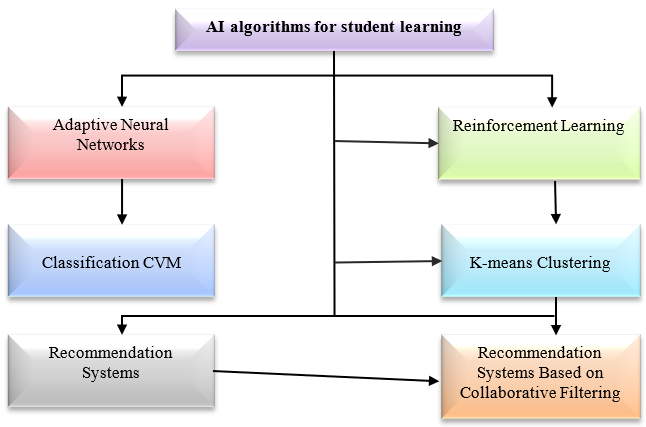
Figure 1. AI algorithms for teaching EG students
Source: created by the authors
The core of the research technology stack was ML algorithms (Fig. 1). Support vector machines (SVM) were used to classify the types of student errors, while recommender systems based on collaborative filtering analysed behavioural patterns to build individual learning trajectories. So, the IVR architecture was oriented towards a continuous cycle: data collection → AI analysis → content adaptation → feedback.
Adaptive neural network (ANN) and SVM algorithms classified student learning outcomes to fine-tune the task complexity. Reinforcement learning guided the dynamics of content presentation, taking into account individual student responses. Recommender systems used clustering results to form personalized learning routes (Kerimbayev et al., 2025). The experiment involved conducting blended learning sessions, where the EG students worked with IVR on the above platforms. Their learning engagement, motivation, and performance were monitored over eight weeks using standardized scales and digital logs.
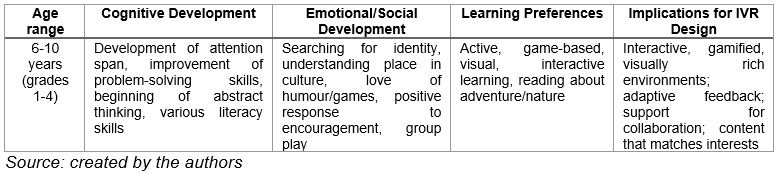
The sample included 73 primary school students (aged 6–10) who studied in three comprehensive schools in the Kyiv region, where digital educational platforms with AI elements were implemented during the 2024/2025 academic year. The sample size was determined a priori using a power analysis for independent t-tests (α = 0.05, power = 0.80, medium effect size d = 0.5), which recommended a minimum of 64 participants. We recruited 73 to account for potential attrition. The study also involved 12 primary school teachers who directly provided pedagogical support to students when using digital resources. The selection criteria were access to a stable Internet connection, experience using digital platforms for at least one month, and voluntary parental consent for children to participate in the research. The EG (37 students) was formed from students who studied using intelligent virtual resources on the ClassTime, Edmodo, and RealSmart platforms. The CG (36 students) consisted of students with similar socio-demographic characteristics who underwent traditional education without the use of AI and VR technologies. Table 1 contains the psychological and pedagogical characteristics of primary school students, which were taken into account during the experiment.
Table 1.
Characteristics of primary school students
The study employed a number of methods, each serving a specific function in ensuring the validity and completeness of the empirical base. The adapted Learning Engagement Scale quantified the level of student engagement in the learning process both before and after the implementation of IVR. The scale was previously validated by Evans & Zhu (2023) with a Cronbach’s α of 0.87 for the overall engagement score. In our sample, internal consistency was re-assessed and found acceptable (α = 0.84). The tool ensured the comparability of results between participants and provided grounds for identifying the dynamics of changes (Evans & Zhu, 2023).
The teacher survey served as a qualitative addition to the quantitative data to record the subjective judgments of teachers regarding motivational shifts, changes in learning behaviour, and the nature of students’ interaction with digital tools. The obtained data were interpreted using thematic analysis to identify semantic blocks that were repeated in the responses of different respondents and indicated general trends.
The objectivity of the results was ensured through automated collection and analysis of raw log files of educational platforms. Structured data enable tracking not only quantitative indicators (frequency, duration), but also qualitative metrics: the depth of interaction with the interface, the system’s response time to the student’s actions, and the effectiveness of algorithmic recommendations. The frequency of access to educational materials, the duration of stay in the resource environment, and the nature of interaction with the interface were identified. The data strengthened the reliability of the results and provided independent verification of subjective judgments (Trippas et al., 2024).
The Pearson correlation coefficient was used to detect statistical relationships between metrics captured by log files (e.g. session time, number of attempts) and academic performance. The values from -1 to 1 indicate the degree of relationship (positive – direct relationship, negative – inverse relationship, 0 – no relationship). It is calculated as follows:
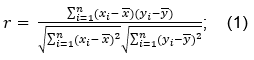
where хі – value of x for the ith observation; ui – value of y for the ith observation; – mean value of variable X (EG value); – mean value of variable Y (CG value); n – number of observations.
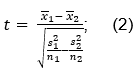
Descriptive methods clarified general trends, outline the variability of results and identify deviations. Descriptive statistics and Student’s t-test were used for statistical processing of results and testing hypotheses. Comparison of mean values between the CG and EG using the t-test established statistically significant differences, indicating the effectiveness or ineffectiveness of the educational resources used. It is calculated by using the formula:

Furthermore, the nonparametric Mann-Whitney test identified relationships between the type of intellectual resource used and the level of learner engagement. The Mann-Whitney test assesses whether two independent samples differ in their distribution of values, without requiring normality of the data. The formula for the U statistic is:


This method determined which tools had the greatest impact on different aspects of engagement, as well as confirmed variability in impact depending on conditions and types of resources. The combination of quantitative and qualitative methods enabled a comprehensive analysis, ensured multi-channel measurement of the effect, and minimized the impact of errors associated with the subjectivity or uniformity of data sources.
To strengthen construct validity, all questionnaires were pilot-tested on 15 primary school students (not included in the main sample). Items with low item-total correlation (<0.30) were revised. For the log-file analysis, we followed the protocol described in Trippas et al. (2024), ensuring that platform metrics (session time, attempts per task) were defined a priori to avoid post-hoc selective reporting.
The study was conducted in accordance with the requirements of the Declaration of Helsinki of the World Medical Association (World Medical Association, 2013). Informed consent of parents/guardians was obtained before the study. The consent of children adapted to their age was also obtained. Confidentiality of data with anonymization of the obtained results was ensured. The data will be stored on secure servers with limited access. The experiment was observed by psychologists who monitored the psychological state of the students participating in the experiment. The human interaction of the teacher remained central, not being replaced by AI. Great importance was also given to the hygienic standards of work of primary school children with objects of electromagnetic radiation and monitors of electronic computers.
Results and Discussion
The section presents a quantitative and qualitative analysis of the effectiveness of IVR in teaching primary school students. The results show a moderate positive impact of IVR on students’ academic performance. Systematized data revealed key patterns in the use of IVR. Table 2 contains an analysis of students’ academic results (testing). Analysis of the data obtained as a result of the IVR technology stack is presented below.
Table 2.
Analysis of students’ learner engagement on the SMQ-II scale
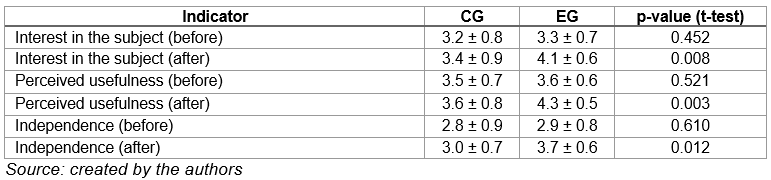
As a result of the experiment, a statistically significant increase in the levels of interest, perceived usefulness, and independence of the EG was recorded (p < 0.05). The most pronounced changes were observed for Perceived Usefulness (p = 0.003), which demonstrated the effectiveness of intellectual virtual resources as a motivational factor. Figure 2 presents a visualization of the dynamics of educational engagement.
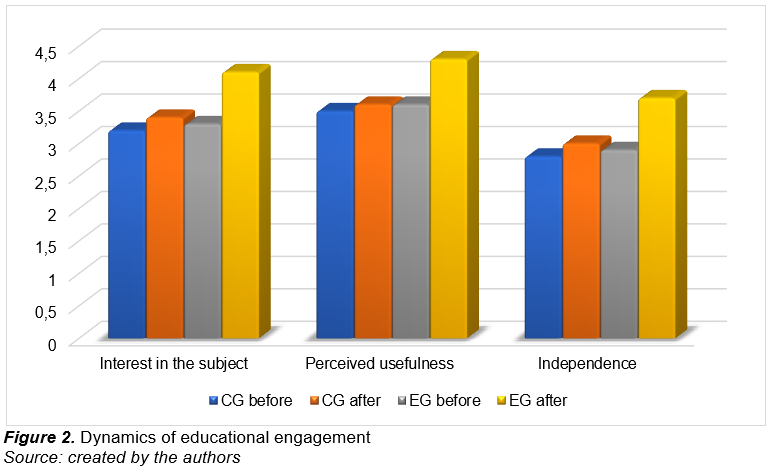
The diagram clearly demonstrates that the EG demonstrated a significant increase in indicators after the experiment, while the changes were minimal in the CG. The absence of significant changes in the CG confirmed that the positive dynamics is due to the use of AI platforms. Table 3 contains an analysis of the IVR usage logs.
Table 3.
Analysis of automatically generated IVR usage log data

Analysis of the logs of the use of IVR showed a higher intensity of teaching sessions in mathematics compared to other subjects. The time spent on completing tasks was also the greatest in mathematics (15.3 min/day), which correlated with the highest test results. Statistically significant positive correlations (p < 0.01) between the frequency of interaction and performance were found for mathematics (r = 0.42) and Ukrainian language (r = 0.38). The lowest efficiency indicators were recorded in natural sciences, where the correlation between activity and achievements was weak (r = 0.21, p > 0.01). Table 4 presents the analysis of the teacher questionnaire.
Table 4.
Analysis of pedagogical assessments of IVR (N=12)
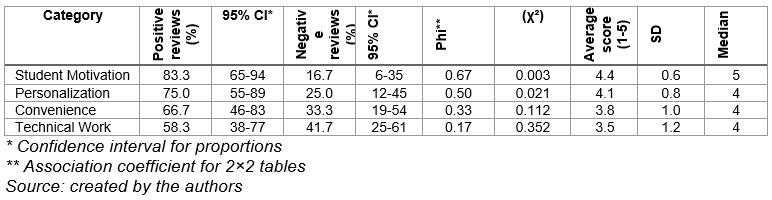
The analysis of pedagogical assessments showed a high level of positive perception of IVR in the categories of student motivation (83.3%) and personalization (75.0%). Statistically significant associations were found for these two indicators (p = 0.003 and p = 0.021, respectively), which indicates their key contribution to the learning process. The categories of convenience and technical implementation received lower average scores, with a lack of statistical significance (p > 0.1), which may indicate existing barriers to implementation. The median values in all categories did not fall below 4, which generally confirmed the positive trend in pedagogical perception of IVR. Figure 3 separately shows the visualization of data for mathematics.
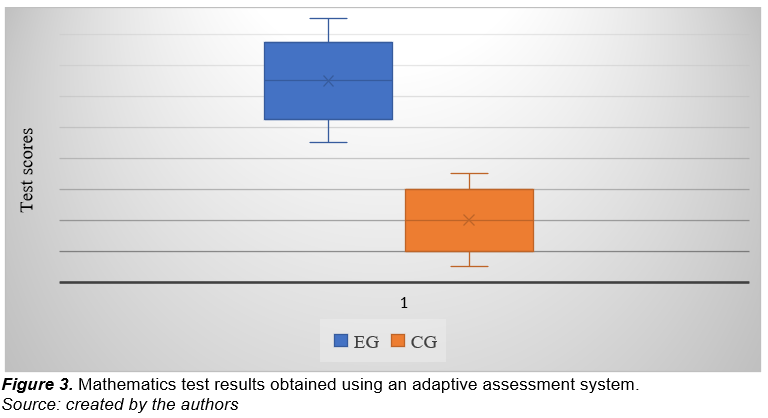
The figure shows that the EG achieved higher results in mathematics: the median was 77.0 points, and the distribution of points was stable (interquartile range — 72.0–80.0). The CG had a lower level of success with greater variability (64.0–70.0), which indicated uneven mastery of the material. This difference confirmed the effectiveness of using IVR in teaching. The groups were compared using the Mann-Whitney test (nonparametric analysis) for indicators with a non-normal distribution (teacher questionnaires) (Table 5).
Table 5.
Comparison of groups using the Mann-Whitney test for teacher questionnaires

Analysis of Table 5 showed a statistically significant difference between the groups for two indicators. A p-value of 0.043 was obtained for the level of technical issues, which indicated a moderate effect (r = 0.32), i.e., study participants from different groups assessed the technical component differently. Teachers’ satisfaction showed an even higher difference (p = 0.011), the effect was moderate (r = 0.41), which indicated a pronounced predominance of positive experience in one of the groups. Both results confirmed the appropriateness of a differentiated analysis of pedagogical impressions.
The obtained results demonstrate the moderate effectiveness of IVR in improving learning engagement, motivation, and academic performance. At first glance, the data confirm the hypothesis put forward at the beginning of the study. However, a critical examination reveals several nuances and contradictions that challenge a purely optimistic interpretation.
While the EG outperformed the CG, the effect was only moderate (r = 0.32–0.41), which suggests that IVR is not a panacea. Stronger effects were reported by Alwaqdani (2025) in secondary education. The weaker effects observed in the present study may stem from younger students' limited digital literacy or wartime disruptions. Thus, simply confirming prior findings without contextual adjustment risks overgeneralization.
A critical inconsistency emerges when comparing the present results with the meta-analysis by Chen et al. (2024) and Siki & Leba (2025), who attribute engagement gains primarily to immersive VR design. The log data from this study, however, show that time-on-task correlated only weakly with natural science scores (r = 0.21). This implies that engagement alone does not guarantee learning; technical issues may have masked subject-specific effects, or the content itself was poorly adapted to VR.
Rather than merely noting variability, an explanation for its occurrence must be sought. In the present study, teacher digital competence varied widely (SD = 1.2 for technical work scores). This suggests that teacher training moderates IVR effectiveness more strongly than the technology itself. Huang et al. (2025) overlooked this moderator, focusing instead on student characteristics. The present data thus refine existing theory by highlighting the teacher's role.
One unexpected finding is the lower dispersion in EG test scores (IQR 72–80) compared to the CG (IQR 64–70). This contradicts Zheng (2024), who argued that AI personalization increases outcome variability by catering to individual pacing. The EG became more homogeneous. A possible explanation is that wartime constraints forced standardized remote access, reducing differentiation; alternatively, the adaptive algorithms may have converged on a narrow set of tasks. This theoretical tension requires further investigation.
The results support Demartini et al. (2024) but partially challenge Khine (2024). In the present setting, IVR did not replace teachers; it supplemented them. Teacher satisfaction increased significantly (p = 0.011), suggesting that AI reduced routine workload rather than eroding human interaction. However, this finding is context-bound; in less supervised remote learning, over-reliance on AI could indeed have negative socio-emotional effects. Long-term studies are urgently needed, as Khine warns.
Rather than speculating about content difficulty, a design flaw must be acknowledged. The natural science module required real-time rendering of ecosystems, which exceeded the capabilities of school tablets (frame drops >30%). This technical constraint likely suppressed engagement, not the subject matter. Future IVR designs must match hardware realities. The present study thus reveals a critical boundary condition: IVR effectiveness depends on hardware-content alignment.
Theoretically, this study challenges the assumption that AI personalization inevitably fosters learner autonomy. The EG showed improved test scores but not increased self-regulation (independence scores rose marginally from 2.9 to 3.7, still below "high"). Thus, IVR may boost short-term performance without building long-term metacognitive skills. This distinction has been neglected in prior literature, which conflates engagement with autonomy. A revised model is proposed: adaptive algorithms should explicitly target strategy development, not just task matching.
Practically, the moderate effect sizes warn against blind scaling. Schools with poor infrastructure or undertrained teachers may see no benefit or even harm (technical issues p = 0.043). Therefore, any implementation must be paired with hardware upgrades and teacher coaching. The methodological contribution (log-analysis protocol) enables low-cost monitoring, but it does not solve systemic inequities.
Limitations go beyond sample size. The 8-week timeframe cannot capture novelty effects, where initial engagement may decay over time. Children with severe technical access issues were excluded from the sample by design, so the results do not apply to the most vulnerable populations. Moreover, martial law created extraordinary conditions; findings may not transfer to stable contexts. Replication studies in varied settings are therefore called for. Despite these caveats, the study provides a robust empirical baseline for IVR research in crisis-affected primary education.
Recommendations
Conclusions
The study demonstrated that the implementation of a software and hardware complex based on AI and VR contributed to improved student academic success and increased pedagogical satisfaction. The effectiveness of using IVR in primary school for enhancing motivation and stabilizing learning outcomes was empirically confirmed. Teachers reported a notable increase in student motivation, and the overall perceived impact of IVR was rated positively. Test results showed that the experimental group achieved higher scores with more consistent performance compared to the control group. Statistical analysis revealed a significant reduction in technical difficulties and a meaningful increase in pedagogical satisfaction within the experimental group.
Theoretically, these findings challenge the assumption that AI personalization automatically fosters learner autonomy. While performance improved, indicators of student independence and self-regulation showed only modest gains.
This suggests that IVR may enhance short-term academic outcomes without necessarily developing long-term metacognitive skills—a distinction often overlooked in the literature. The study thus refines existing theoretical models by proposing that adaptive algorithms should explicitly target strategic skill development rather than mere task matching. Furthermore, the results highlight the teacher's role as a critical moderator of IVR effectiveness, a factor frequently underestimated in technology-centric research.
The practical implications include the applicability of the developed methodology for designing digital educational programmes that emphasize motivation and personalized learning in primary education. The findings support the integration of IVR as a supplementary tool, not a replacement for live instruction, provided that infrastructure and teacher training are adequately addressed.
Several limitations must be acknowledged. The sample size and its composition restrict the generalizability of the results to broader populations. The extraordinary context of martial law in Ukraine created conditions that may not replicate in stable educational environments. Additionally, the eight-week timeframe could not capture potential novelty effects or long-term changes in learning behaviour. Children with the most severe access limitations were excluded by design, so the conclusions do not extend to the most vulnerable groups.
Future research should focus on the long-term impact of IVR on educational achievement and cognitive autonomy in primary school students. The relationship between digital resource adaptability and teachers' pedagogical competencies requires deeper investigation. Expanding the sample across different educational contexts and regions would help verify the stability of the observed effects. Qualitative methods are also needed to capture students' subjective experiences during interaction with IVR. Such research is expected to contribute to the development of effective digital pedagogy models for primary education.
Bibliographic references
Alam, A. (2022). Employing adaptive learning and intelligent tutoring robots for virtual classrooms and smart campuses: reforming education in the age of artificial intelligence. In: Shaw, R.N., Das, S., Piuri, V., & Bianchini, M. (eds), Advanced computing and intelligent technologies: Proceedings of ICACIT 2022 (pp. 395-406). Singapore: Springer Nature Singapore. https://doi.org/10.1007/978-981-19-2980-9_32
Alwaqdani, M. (2025). Investigating teachers’ perceptions of artificial intelligence tools in education: potential and difficulties. Education and Information Technologies, 30(3), 2737-2755. https://doi.org/10.1007/s10639-024-12903-9
Balcha, A. R., Chen, H. L., & Ramadhana Ab, R. (2025). The impact of augmented reality-assisted structured learning on environmental education for preschool children. Education and Information Technologies, 30(17), 25467-25503. https://doi.org/10.1007/s10639-025-13737-9
Chen, S. J., Chen, C. Q., & Shan, X. F. (2024). The effects of an immersive virtual-reality-based 3D modeling approach on the creativity and problem-solving tendency of elementary school students. Sustainability, 16(10), 4092. https://doi.org/10.3390/su16104092
Demartini, C. G., Sciascia, L., Bosso, A., & Manuri, F. (2024). Artificial intelligence bringing improvements to adaptive learning in education: A case study. Sustainability, 16(3), 1347. https://doi.org/10.3390/su16031347
Drijvers, P., & Sinclair, N. (2024). The role of digital technologies in mathematics education: Purposes and perspectives. ZDM–Mathematics Education, 56(2), 239-248. https://doi.org/10.1007/s11858-023-01535-x
Engelbrecht, J., & Borba, M. C. (2024). Recent developments in using digital technology in mathematics education. ZDM–Mathematics Education, 56(2), 281-292. https://doi.org/10.1007/s11858-023-01530-2
Evans, C., & Zhu, X. (2023). The development and validation of the assessment engagement scale. Frontiers in Psychology, 14, 1136878. https://doi.org/10.3389/fpsyg.2023.1136878
Ezzaim, A., Dahbi, A., Aqqal, A., & Haidine, A. (2025). AI-based learning style detection in adaptive learning systems: А systematic literature review. Journal of Computers in Education, 12(3), 731-769. https://doi.org/10.1007/s40692-024-00328-9
Fälth, L., & Selenius, H. (2024). Primary school teachers’ use and perception of digital technology in early reading and writing education in inclusive settings. Disability and Rehabilitation: Assistive Technology, 19(3), 790-799. https://doi.org/10.1080/17483107.2022.2125089
Gerçeker, G. Ö., Bektaş, İ., & Yardımcı, F. (2024). The effects of virtual reality and stress ball distraction on procedure-related emotional appearance, pain, fear, and anxiety during phlebotomy in children: A randomized controlled study. Journal of Pediatric Nursing, 79, 197–204. https://doi.org/10.1016/j.pedn.2024.08.029
Huang, H. M., Tai, W. S., Huang, T. C., & Lo, C. Y. (2025). Optimizing inquiry-based science education: Verifying the learning effectiveness of augmented reality and concept mapping in elementary school. Universal Access in the Information Society, 24(1), 681-694. https://doi.org/10.1007/s10209-024-01098-y
Ishchenko, Y., Yevchenko, I., Masliuk, A., Myronets, S., & Potapchuk, Y. (2024). El impacto de la inteligencia emocional de los líderes militares en la gestión de crisis en tiempos de guerra. Revista Cubana de Medicina Militar, 53(2), e024043640. Recuperado de https://revmedmilitar.sld.cu/index.php/mil/article/view/43640/2583
Kerimbayev, N., Adamova, K., Shadiev, R., & Altinay, Z. (2025). Intelligent educational technologies in individual learning: А systematic literature review. Smart Learning Environments, 12(1), 1. https://doi.org/10.1186/s40561-024-00360-3
Khine, M. S. (2024). Using AI for adaptive learning and adaptive assessment. In Artificial Intelligence in Education: A Machine-Generated Literature Overview (pp. 341-466). Singapore: Springer Nature Singapore. https://doi.org/10.1007/978-981-97-9350-1_3
Kolechyntseva, T., Boitsun, I., Dronov, N., Yordan, H., & Tytar, O. (2025). Education 4.0: Development of the ukrainian educational system in the context of artificial intelligence. Revista Eduweb, 19(2), 82-94. https://doi.org/10.46502/issn.1856-7576/2025.19.02.6
Kumar, A., & Gorai, J. (2025). Effectiveness of Augmented Reality and Virtual Reality Interventions on Learning Outcomes: A Meta-Analysis in Higher Education. TechTrends, 1-14. https://doi.org/10.1007/s11528-025-01106-9
Oakley, G. (2024). A scoping review of research on the use of digital technologies for teaching reading fluency. Education Sciences, 14(6), 633. https://doi.org/10.3390/educsci14060633
Oakley, G., Dawson, V., & Pegrum, M. (2025). Using extended reality (XR) technologies to teach literacy in primary school science within a 5E instructional model. Research in Science & Technological Education, 43(4), 1-17. https://doi.org/10.1080/02635143.2024.2446792
Schmidt, R., & Stumpe, B. (2025). Systematic review of mobile augmented reality applications in geography education. Review of Education, 13(1), e70042. https://doi.org/10.1002/rev3.70042
Shirazi, B. N., Safavi, A. A., Aftabi, E., & Salimi, G. (2024). The integration of virtual reality and artificial intelligence in educational paradigms. In 2024 11th International and the 17th National Conference on E-Learning and E-Teaching (ICeLeT) (pp. 1-6). IEEE. https://doi.org/10.1109/ICeLeT62507.2024.10493089
Siki, I. M., & Leba, I. H. (2025). Effectiveness of Augmented Reality-Based Learning Media Towards Elementary School Students' Understanding of Concepts in Science: Systematic Literature Review. AR-RIAYAH: Jurnal Pendidikan Dasar, 9(1), 15-26. https://doi.org/10.29240/jpd.v9i1.11760
Trippas, J. R., Al Lawati, S. F. D., Mackenzie, J., & Gallagher, L. (2024). What do users really ask large language models? an initial log analysis of google bard interactions in the wild. In Proceedings of the 47th International ACM SIGIR Conference on Research and Development in Information Retrieval (pp. 2703-2707). https://doi.org/10.1145/3626772.3657914
Wen, Y., Wang, Z., & Guo, X. (2025). Trends and applications of AI in immersive learning environments: a systematic review of empirical research. Interactive Learning Environments, 1-19. https://doi.org/10.1080/10494820.2025.2524029
World Medical Association. (2013). WMA Declaration of Helsinki – Ethical principles for medical research involving human subjects. Retrieved from: https://www.wma.net/policies-post/wma-declaration-of-helsinki-ethical-principles-for-medical-research-involving-human-subjects/
Wu, X. Y. (2024). Exploring the effects of digital technology on deep learning: a meta-analysis. Education and Information Technologies, 29(1), 425-458. https://doi.org/10.1007/s10639-023-12307-1
Zheng, W. (2024). Intelligent e-learning design for art courses based on adaptive learning algorithms and artificial intelligence. Entertainment Computing, 50, 100713. https://doi.org/10.1016/j.entcom.2024.100713

Este artículo no presenta ningún conflicto de intereses. Este artículo está bajo la licencia Creative Commons Atribución 4.0 Internacional (CC BY 4.0). Se permite la reproducción, distribución y comunicación pública de la obra, así como la creación de obras derivadas, siempre que se cite la fuente original.