
Original Article
Eduweb, 2026, abril-junio, v.20, n.2. ISSN: 1856-7576
Doi: https://doi.org/10.46502/issn.1856-7576/2026.20.02.23
Fostering inclusion via EdTech: Fostering preservice teachers’ competence through virtual labs, hackathons, and immersive technologies
Tetyana Koycheva
Doctor of Pedagogical Sciences, Full Professor, Professor of the Department of Pedagogy, State Institution “South Ukrainian National Pedagogical University named after K. D. Ushynsky”, Ukraine.
https://orcid.org/0000-0002-5518-4260
Nataliia Hrytsai
Doctor of Pedagogical Sciences, Professor, Head of the Department of Natural Sciences, Rivne State University of Humanities, Ukraine.
https://orcid.org/0000-0002-6800-1160
Svitlana Yakymenko
Doctor of Pedagogical Sciences, Professor of Elementary Education Department, Admiral Makarov National University of Shipbuilding, Ukraine.
https://orcid.org/0000-0003-4230-9586
Valeriia Sukhetska
PhD student, Department of Social Work and Rehabilitation, National University of Life and Environmental Sciences of Ukraine, Ukraine.
https://orcid.org/0009-0006-2804-519X
Lesya Matsenko
Candidate of Pedagogical Sciences, Associate Professor, Associate Professor of the Pedagogy Department, National University of Life and Environment Sciences of Ukraine, Ukraine.
https://orcid.org/0000-0003-2939-4229
Cómo citar:
Koycheva, T., Hrytsai, N., Yakymenko, S., Sukhetska, V., & Matsenko, L. (2026). Fostering inclusion via EdTech: Fostering preservice teachers’ competence through virtual labs, hackathons, and immersive technologies. Revista Eduweb, 20(2), 397-413. https://doi.org/10.46502/issn.1856-7576/2026.20.02.23
Recibido: 30/04/26 Aceptado: 19/06/26
Resumen
El artículo examina el contenido del aprendizaje digital inclusivo e identifica los principios clave para organizar actividades educativas en entornos digitales inclusivos. Se presta especial atención al desarrollo de la competencia digital de los estudiantes para crear condiciones de aprendizaje accesibles para niños con discapacidades. El estudio analiza las plataformas digitales, los servicios en línea, los entornos virtuales, los laboratorios en línea, los hackatones virtuales y las tecnologías de RV/RA utilizadas en la preparación de futuros especialistas para trabajar en educación digital inclusiva. Para evaluar la preparación de los futuros especialistas para trabajar en entornos digitales inclusivos, se realizó un experimento de evaluación. Los resultados demostraron niveles de preparación comparables en los grupos de control y experimental, predominando los niveles bajos y medios. Posteriormente, se implementó un experimento formativo para evaluar la efectividad de las condiciones pedagógicas y el sistema de capacitación propuestos. La fiabilidad de los resultados obtenidos se verificó mediante la prueba χ² de Pearson. Los hallazgos revelaron mejoras sustanciales entre los participantes del grupo experimental. Tras la intervención, el 49,9 % de los estudiantes alcanzó un alto nivel de preparación según el criterio motivacional, el 47,7 % según el criterio de contenido y el 54,2 % según el criterio de actividad. Al mismo tiempo, la proporción de estudiantes con bajo nivel de preparación disminuyó al 9,1%, 8,2% y 7,6%, respectivamente. Estos cambios indican un marcado aumento en la motivación, el conocimiento profesional, las habilidades prácticas y la capacidad de los estudiantes para aplicar tecnologías digitales en entornos educativos inclusivos. En contraste, el grupo de control mostró cambios mínimos y no demostró un progreso comparable. Los resultados confirman la eficacia del sistema pedagógico desarrollado y las condiciones pedagógicas para preparar a futuros especialistas para trabajar en entornos educativos digitalmente inclusivos.
Palabras clave: competencia digital de los estudiantes, entorno digital inclusivo, plataformas digitales, servicios y entornos virtuales, laboratorios en línea, hackatones virtuales, tecnologías de RV/RA.
Abstract
The article examines the content of inclusive digital learning and identifies the key principles for organizing educational activities in digitally inclusive environments. Particular attention is paid to developing students’ digital competence to create accessible learning conditions for children with disabilities. The study analyzes digital platforms, online services, virtual environments, online laboratories, virtual hackathons, and VR/AR technologies used in preparing future specialists for work in inclusive digital education. To assess future specialists’ readiness to work in digitally inclusive environments, an ascertainment experiment was conducted. The results demonstrated comparable readiness levels in the control and experimental groups, with low and average levels predominating. A formative experiment was subsequently implemented to evaluate the effectiveness of the proposed pedagogical conditions and training system. The reliability of the obtained results was verified using Pearson’s χ² test. The findings revealed substantial improvements among participants in the experimental group. Following the intervention, 49.9% of students achieved a high level of readiness according to the motivational criterion, 47.7% according to the content criterion, and 54.2% according to the activity criterion. At the same time, the proportion of students demonstrating low readiness decreased to 9.1%, 8.2%, and 7.6%, respectively. These changes indicate a marked increase in students’ motivation, professional knowledge, practical skills, and ability to apply digital technologies in inclusive educational settings. In contrast, the control group showed only minor changes and did not demonstrate comparable progress. The results confirm the effectiveness of the developed pedagogical system and the pedagogical conditions for preparing future specialists to work in digitally inclusive educational environments.
Keywords: digital competence of students, digital inclusive environment, digital platforms, services and virtual environments, online laboratories, virtual hackathons, VR/AR technologies.
Introduction
The modern education system in the information age of knowledge is crucial for supporting and developing the most valuable asset of society – human capital. The change in educational guidelines in the modern information society must undoubtedly be reflected in the system of professional training of future specialists for work under the conditions of inclusive digital education for students, with a focus on the capabilities of digital technologies. The implementation of the competency approach ensures the formation of knowledge of digital technologies. It is relevant to the formation of readiness in the conditions of inclusive digital education of future specialists. Training is aimed at the formation of a personality in the conditions of inclusive education and the development of future specialists focused on information and communication technologies. The challenges of creating a pedagogically favorable digital environment for the development of each child's cognitive sphere are addressed by special modern pedagogy, which ensures that each individual with special educational needs can follow their optimal developmental trajectory (Chiu et al., 2022).
Digital technologies in inclusive and special education help "construct" learning, expand the possibilities of specialists' means of influence, solve correctional and developmental tasks, and cannot be applied traditionally. Therefore, the problem of training future specialists to work in conditions of inclusive digital education of students in conditions of digitalization of society is becoming more urgent, because innovations in society and higher education, as drivers of technological progress around the world, are given a leading role in ensuring a high-quality educational space and global competitiveness of national economies. At all stages of the cognitive process, digital transformation occurs (Falloon, 2020).
Today, the solution acquires theoretical and practical significance: from the publication of the results obtained and the search for relevant directions. Accordingly, future specialists working in the conditions of inclusive digital education of students are required to have a high level of digital competence, since in their future professional activities, they will have to not only widely use digital tools in the educational process and in scientific research work, but also constantly master new technologies and choose the most effective among them.
The remainder of this article is organized as follows. The next section presents the theoretical foundations of inclusive digital education and reviews contemporary approaches to the development of digital competence among future specialists. The methodology section describes the research design, participants, instruments, and procedures employed in the study. The subsequent section reports the results of the experimental investigation and evaluates the effectiveness of the proposed pedagogical system and pedagogical conditions. These findings are then discussed in relation to existing research on inclusive digital learning and professional training. Finally, the article concludes by summarizing the main findings, outlining the practical implications of the study, and identifying directions for future research.
Literature Review
Recent studies increasingly emphasize the role of digital technologies in promoting inclusive and equitable educational environments. Researchers have demonstrated that digital transformation contributes to the resilience, flexibility, and accessibility of educational systems, particularly in response to contemporary social and educational challenges (Motz et al., 2023). Similarly, the integration of physical and digital learning environments has been shown to enhance student engagement, collaboration, and social participation, creating more inclusive learning experiences in higher education (Akahome, 2026).
A growing body of research highlights digital competence as a key prerequisite for successful inclusive education. Rofiah et al. (2024) found that higher levels of digital literacy among preservice teachers are associated with more positive attitudes toward inclusive educational practices. Likewise, Oyelere et al. (2020) demonstrated that smart learning ecosystems based on digital storytelling, blockchain technologies, and learning analytics can improve accessibility and personalization for learners with diverse educational needs.
Particular attention has been paid to the inclusion of learners with disabilities in digitally mediated educational environments. Mialichi & Costa Castilho Moreira (2025) reported that digital technologies can enhance participation and autonomy among students with autism spectrum disorder; however, institutional and communicative barriers continue to hinder full inclusion. Similar conclusions were reached by Alvarez-Sánchez et al. (2026), who identified infrastructure limitations and insufficient digital skills as significant obstacles to the successful implementation of inclusive digital learning initiatives.
Despite substantial progress in understanding the contribution of digital technologies to inclusive education, existing studies mainly focus on accessibility, digital literacy, learning environments, and technological solutions. Considerably less attention has been devoted to the pedagogical conditions and mechanisms for preparing future professionals to work effectively in inclusive digital learning environments. In particular, insufficient research has examined how professional training can foster the cognitive, motivational, and practical readiness of future specialists to implement inclusive digital education through modern digital technologies.
Therefore, the problem of developing effective pedagogical conditions for preparing future specialists to work in inclusive digital learning environments remains insufficiently investigated and requires further empirical verification.
Research objective: preparation of future specialists for work in conditions of inclusive digital education of students.
Methodology
Research Design and Participants
This study employed a mixed-methods research design integrating theoretical analysis, empirical investigation, and statistical procedures to evaluate the effectiveness of pedagogical conditions for preparing future specialists to work in inclusive digital learning environments.
The research was conducted between 2023 and 2025 and involved 114 undergraduate students enrolled in teacher education and related educational programs. The participants were assigned to an experimental group (EG, n = 56) and a control group (CG, n = 58).
Research Procedure
The study began with an analysis of contemporary research on inclusive digital education, digital competence, and professional preparation for work in digitally enriched educational settings. The findings of this review informed the conceptual framework of the study and the identification of the motivational, content-related, and activity-related dimensions of professional readiness.
To establish baseline equivalence between the groups, an ascertainment assessment was conducted prior to the intervention. The results indicated comparable levels of readiness among participants, with low and average levels predominating.
The experimental intervention was subsequently implemented in the experimental group. The training system incorporated digital platforms, virtual learning environments, online laboratories, virtual hackathons, and virtual and augmented reality (VR/AR) technologies. The intervention was guided by pedagogical conditions aimed at strengthening students’ motivation, expanding their knowledge of digital tools for inclusive education, and developing practical competencies required for professional activity in digitally inclusive learning environments. Participants in the control group continued their studies according to standard instructional practices.
Instruments and Data Analysis
Data were collected through questionnaires, diagnostic assessments, and systematic observations of students’ educational activities. Participants’ readiness was evaluated according to motivational, content-related, and activity-related criteria and classified as high, average, or low.
Descriptive statistics were used to summarize the results, while Pearson’s chi-square (χ²) test was employed to examine differences between the experimental and control groups at the significance level of p < .05. The statistical analysis made it possible to determine whether the observed changes were associated with the implemented pedagogical intervention.
Ethical Considerations
The study adhered to established ethical standards for educational research. Participation was voluntary, and all participants provided informed consent before data collection began. Students were informed about the purpose of the study, the research procedures, and their right to withdraw at any stage without adverse consequences. Confidentiality and anonymity were maintained throughout the research process, and all data were used exclusively for scientific purposes in accordance with applicable data protection requirements.
Results and Discussion
The content of inclusive digital education. The main principles of work in inclusive digital education of students.
Inclusive education differs significantly from traditional education. The peculiarity of inclusive education lies in the search for approaches that take into account all possibilities for working under the conditions of inclusive digital education for students when training future specialists. Given this approach, it is important to train specialists who have modern competencies for working with children with special educational needs, not just a range of skills and knowledge. These modern specialists must be ready to apply individualized digital teaching methods, using technologies and adapting curricula that support the active learning of such children under the conditions of inclusive digital education. Future specialists must have strong motivation, ability, and empathy to create an inclusive digital learning environment that reveals each student's capabilities. The training of such specialists includes practical experience in inclusive classes, and not only their theoretical knowledge (Brudermann et al., 2019).
Education for children with special educational needs in the context of inclusive digital learning can be organized by applying the following basic principles:
The content of students' digital competence for creating a digitally inclusive environment for children with disabilities.
Information in the 21st century has become the most important production resource. In the modern labor market, there is a need for specialists with advanced digital competence and new foundational digital skills that must be developed throughout life.
Digital competence is an integral characteristic of a person that dynamically combines skills, abilities, knowledge, promotes an attitude towards the use of digital technologies for participation in public life, personal development, communication, work, learning in accordance with the sphere of competences (responsibly, creatively, critically, safely, ethically) enables a future specialist to perform complex tasks in a digital environment (Bozkurt & Sharma, 2022). For the development of digital competence in a future specialist, it is important to realize its role in overcoming the challenges of the fourth industrial revolution Industry 4.0, the transformation of societies, and professional growth, which significantly contributes to the student's motivation to gain interactive experience in the classroom, self-improvement, and the formation of transdisciplinary thinking, as this has a positive impact on competitiveness in the labor market. Therefore, the quality of professional training of specialists to work in the conditions of inclusive digital learning of each child depends on their level of professionalism, so the requirements for professional, professional, and digital training of students are constantly increasing due to the high pace of the digital society and the digitalization of the economy (Narvaez Rojas et al., 2021).
Digital platforms, services, virtual environments, online laboratories, virtual hackathons, and virtual and augmented reality (VR/AR) technologies for training future specialists to work in the context of digital, inclusive education and student education.
Traditional forms of scientific training for students often complicate access to research activities and have several limitations. Among the main problems, it is worth highlighting the complexity of individual mentoring, uneven levels of student training, geographical barriers, and limited resources for educational institutions.
Online formats, including digital platforms, remote hackathons, and virtual laboratories, allow, regardless of their place of residence, to involve a wide audience in the educational process, offer modern effective solutions to these problems, provide access to modern hardware and software, and open up opportunities for interactive learning and personalized mentoring (Brevik et al., 2019).
In combination with collective discussion of the results, modern virtual environments create conditions for participants' independent work in the educational process, which contributes to the development of scientific communication and teamwork. The integration of virtual hackathons and online laboratories into the training of young scientists meets the modern requirements of educational digitalization. It opens new opportunities for an early start in scientific activity. Various digital platforms are used to organize virtual hackathons and online laboratories, enabling interactive communication between participants and mentors (Caena & Redecker, 2019).
Such digital platforms include virtual laboratories with integrated simulators, environments for remote modeling and programming, and specialized hackathon platforms that allow for real-time team projects and competitions.
Innovative features of these tools for preparing future professionals to work in an inclusive environment include remote access to software and hardware, project and task management systems, interactive whiteboards for collaboration, and communication tools such as video conferencing, chat, and voice channels. Thanks to these features, researchers (students and pupils) can maintain joint project documents, receive instant feedback from mentors, perform complex tasks and experiments, and coordinate work in teams. Such digital environments, where learning is integrated with practical activities, create an interactive space that fosters analytical skills, critical thinking, and teamwork.
Virtual labs and online hackathons are organized around structured scenarios that combine independent work with mentor coordination. Students receive project topics or tasks, are united in teams, and then work in specialized digital environments where tools for modeling, communication, and data analysis are available. Virtual labs allow students to perform experiments in a safe, digitally inclusive learning environment with the possibility of multiple repetitions of testing different scenarios and procedures, which is impossible in traditional laboratories.
Online hackathons provide a team-intensive format for working on a project in a short time, stimulating collective decision-making, creativity, and problem-solving skills. Compared to traditional scientific educational practices, these formats differ in their scalability, flexibility, ability to involve participants from different countries and regions, and the wide use of digital tools for evaluation and interaction. They combine practical, educational, and research components, creating a digitally inclusive learning environment for students in which participants simultaneously develop teamwork skills, acquire knowledge, and gain first-hand experience performing scientific tasks in the digital space (Yates et al., 2021).
Online platforms, including those for data analysis, modeling, programming, experimental solutions, and prototyping, facilitate the effective development of technical skills. At the same time, they also form soft skills: critical thinking, teamwork, presentation and communication skills, and time management, which are necessary in the modern professional and educational context for successful activity (Oyetade et al., 2022). Therefore, virtual hackathons, online laboratories, digital platforms, services, and virtual environments are effective tools for the early involvement of students in practical and research activities.
VR/AR allows for simulating scientific processes and conducting complex experiments in a virtual safe environment, which allows students and pupils to test different scenarios and conduct multiple attempts, the limitations of which exist in physical laboratories. AI tools provide automatic task selection, personalized learning, and real-time analysis of participants' effectiveness and progress (Van den Beemt et al., 2023).
Experimental verification of the effectiveness of pedagogical conditions for training future specialists to work in conditions of inclusive digital education of students.
The development, research, verification, and adjustment of the effectiveness of the proposed pedagogical conditions for training future specialists to work in inclusive digital educational settings were carried out during 2023-2025. It included the following stages: search, modeling, and experimental.
Digital technologies are developing rapidly nowadays. Therefore, the range of online services available to all specialists is expanding, and their capabilities are evolving. However, the main components of pedagogical conditions remain, aimed at the result and at ensuring the holistic formation of readiness in future specialists to work under the conditions of inclusive digital education for students.
The experimental base included 114 applicants for the degree of "bachelor’s". EG – 56 respondents and CG – 58 respondents.
The content of the ascertaining stage of the pedagogical experiment.
In the context of the research conducted, the structural components of future specialists' readiness to work under the conditions of inclusive digital learning for students were identified: motivational, content, and activity, as they are interconnected.
As a result of the experimental work conducted, we determined a position on the criteria (motivational, content, activity) and indicators of readiness for the phenomenon outlined.
Motivational criterion.
Indicators: motivation to organize the higher education process using digital technologies; the need to use online services in the learning process; students' orientation toward seeking new digital tools; variation in the digital resources used in the learning process.
Content criterion.
Indicators: knowledge of pedagogical digital tools, theoretical awareness of the existence and use in professional activities of digital platforms, services, virtual environments, online laboratories, virtual hackathons, virtual and augmented reality technologies (VR/AR)
Activity criterion.
Indicators: ability to create an inclusive digital learning environment for students; virtual classroom; professional use of digital platforms, services, virtual environments, online laboratories, virtual hackathons, virtual and augmented reality technologies (VR/AR) in the context of digital inclusive learning for students and working with an electronic journal.
The above made it possible to characterize the levels of readiness (high, average, low) of future specialists to work in a digitally inclusive environment.
To determine the level of readiness for the phenomenon described among future specialists, an ascertaining experiment was conducted before the experimental training and involved surveying students on their awareness of how to implement digital technologies in the context of inclusive digital learning for students. Respondents were conditionally combined into experimental EG and control groups (CG). The results of the ascertaining experiment are presented in Table 1.
Table 1.
Results of diagnostics of the levels of readiness of future specialists to work in an inclusive digital environment (ascertaining experiment)

Based on the data in Table 1, the ability to implement students’ knowledge of ways to use digital technologies in the context of inclusive digital learning for students in the CG and EG is at approximately the same level. We observe the predominance of low and average levels.
The probability of the results of the experimental work carried out at the ascertaining stage, and the reliability of the experimental data were determined and confirmed using the Pearson χ² – non-parametric criterion, with the help of which we assessed the reliability and found differences between the two distributions, and also obtained 95% reliability of the probability results. In particular, we tested the null hypothesis H0 that the two (experimental) empirical distributions are identical.
The basic calculation formula of the chi-square criterion looks like this:


The number of degrees of freedom estimates the significance levels for the chi-square test , which we calculated using the formula:



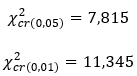
Therefore:

We accept the null hypothesis in the ascertaining section of the experiment that the initial levels of readiness of respondents in the experimental and control groups to work in a digitally inclusive environment do not differ significantly. The results of the experiment showed that at significance levels of 0.01 and 0.05, there were no statistically significant differences in readiness between the groups that participated in the experiment. Therefore, the number of students in the experimental and control groups is equivalent, making it impossible to assess the reliability and validity of the formative experiment's results on the success factor.
We conclude that the following tasks were completed in the ascertaining experiment: the distribution of students into EG and CG was carried out; the components, criteria, indicators, and levels of readiness of future specialists for the outlined phenomenon were substantiated. Diagnostic tools were developed, a cross-sectional (diagnostic) study was conducted, and the data obtained were analyzed and interpreted.
Analysis and results of the formative stage of the pedagogical experiment.
The results of the ascertaining experiment determined the course of the formative experiment. The quantitative composition of the students participating in the experiment remained unchanged.
The formative experiment involved testing the pedagogical conditions for training future specialists to work in a digitally inclusive environment. It was at this stage that the effectiveness of the proposed author's system of training specialists and the pedagogical conditions identified and substantiated by us were clarified.
While the CG students studied according to the standard methodology, the EG students, within the framework of the author's developed system for organizing the educational process, were offered methods with proven effectiveness worldwide and that are most widely used with children with OOP during virtual communication. The most effective and progressive among them were the following: Picture Communication Symbols (PCS), Picture Exchange Communication Symbols (PECS), Multimodal Communication, ARASAAC, Augmentative and Alternative Communication (AAC), and Visual Supports. These programs are organized to present information in an accessible, visually organized way for students, from simple to complex, in the context of inclusive digital learning. They contain sets of symbols that are not simplified.
In the EG, we used the most common virtual platforms for teaching a child with disabilities in an inclusive digital environment:
The outlined programs, when used by EG students, significantly helped children with disabilities in an inclusive digital environment during their educational activities by simplifying the educational process.
Outlining the main ways to prepare future specialists to work in a digitally inclusive learning environment, we reflected on the digital profile of each EG student:
The leading features of the integrity of the professional training of future EG specialists to work in an inclusive environment in the conditions of digitalization of society were as follows:
Outlining modern ways of training future EG specialists to work in conditions of inclusive digital education of students, we proposed the use of advanced technologies for the educational process of students, such as artificial intelligence (AI), virtual and augmented reality (VR/AR), which significantly expanded the educational potential of students in the online format.
Digital platforms for online laboratories and virtual hackathon services, virtual environments, and augmented reality provide a high level of personalization of the educational and research process.
Adaptive learning interfaces and algorithms enabled EG students to tailor tasks to each participant's experience and level of knowledge in the educational process. It was they who allowed education seekers to adapt to individual needs, including gradual or modular task complexity, the provision of additional materials for preparation, and the ability to choose modern digital tools that corresponded to the competencies of an individual participant or the entire team.
In the digital environment, mentoring methods and traditional approaches were combined with innovative digital tools. These included interactive chats, webinars, regular video consultations to resolve issues promptly, forums for discussing problem situations and results, evaluation of intermediate results, and feedback systems. Such support for EG students enabled mentors to track students' progress, provide personalized recommendations, and adjust task complexity, which significantly increased motivation and learning effectiveness.
Participation of EG students in virtual hackathons and online laboratories contributed to the formation of a wide range of competencies. Technical skills (modeling, working with digital tools, data analysis, developing experimental solutions) and soft skills (time management, critical thinking, teamwork, effective communication with colleagues and mentors, presentation skills) are acquired. The effectiveness of online platforms compared to traditional teaching methods is evident in faster mastery of practical skills, greater flexibility, and greater availability of resources.
The introduction of these innovations contributed to the development of students' competencies, stimulated creativity and independence, and opened up new opportunities for self-expression.
We identified the main advantages of using digital technologies in preparing EG students for work in an inclusive digital environment:
During their studies within the experimental professional training system, EG students were introduced to pedagogical conditions that ensure high-quality professional activity among future specialists in an inclusive digital environment.
The first pedagogical condition is the formation of positive motivation among students to organize the process of higher education using digital technologies, with varied digital resources in the learning process.
The second pedagogical condition is updating the content of students' professional training, taking into account the needs of inclusive education of students and mastering knowledge of pedagogical digital tools, theoretical awareness of the existence and use in professional activities of digital platforms, services, virtual environments, online laboratories, virtual hackathons, technologies of virtual and augmented reality (VR/AR).
The third pedagogical condition is the development of digital competence of future specialists in order to be able to create an inclusive digital learning environment for students; a virtual classroom; professional use of digital platforms, services, virtual environments, online laboratories, virtual hackathons, virtual and augmented reality (VR/AR) technologies in the context of digitally inclusive learning for students and working with an electronic journal.
Let us describe the analysis of the results of the formative stage of the experiment – diagnostics of the levels of readiness of future specialists to work in conditions of inclusive digital learning of students according to the selected criteria. The diagnostic tools remained unchanged at the formative stage.
The results of the formative experiment by the motivational criterion are presented in Table 2.
Table 2.
Results of diagnostics of the levels of readiness of future specialists by the motivational criterion to work in conditions of inclusive digital learning of students (formative experiment)

The results of the formative experiment by the content criterion are presented in Table 3.
Table 3.
Results of diagnostics of the levels of readiness of future specialists by the content criterion for work in the conditions of inclusive digital learning of students (formative experiment)

The results of the formative experiment by the activity criterion are presented in Table 4.
Table 4.
Results of diagnostics of the levels of readiness of future specialists by the activity criterion for work in the conditions of inclusive digital learning of students (formative experiment)

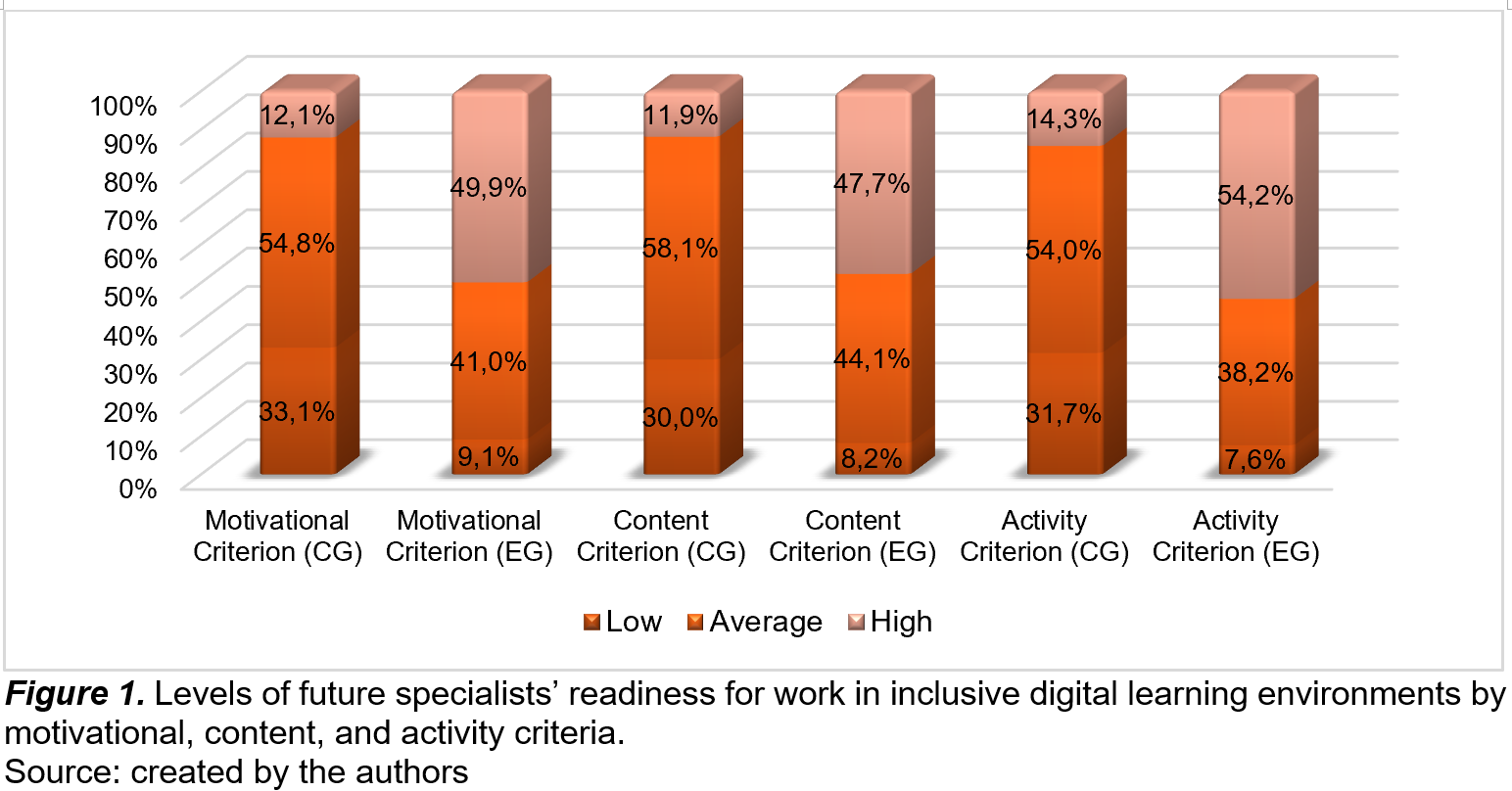
To verify the reliability of the obtained research results during the formative stage of the experiment, a statistical analysis of the experimental data (Pearson's non-parametric χ² criterion) was conducted using statistical processing methods to clarify the statement that the difference in the indicators of the two groups, in the CG and EG, is significant, that is, a consequence of the implementation of pedagogical conditions for preparing future specialists for work in a digital inclusive environment, and not the influence of random factors.
Null hypothesis H0: the control and experimental samples in terms of the level of readiness of future specialists for work in inclusive education are homogeneous according to the studied criterion χ².
Alternative hypothesis H1: the control and experimental samples in terms of the level of readiness of future specialists for work in inclusive education are different according to the studied criterion χ².
Thus, the obtained results (χ²emp > χ²crit) are significant at the 5% level, therefore the Null Hypothesis H0 is rejected and the alternative hypothesis H1 is accepted at a high level of significance: that the level of readiness of future specialists to work in inclusive education among respondents of the experimental and control groups differs significantly, which indicates the effectiveness of the application of the developed system and pedagogical conditions for training future specialists to work in a digitally inclusive environment.
We concluded that the system and pedagogical conditions for training future specialists to work in a digitally inclusive environment that we have substantiated are effective, because in the process of the formative experiment in the EG, we observe positive changes in the value and motivational orientations of future specialists, their personal characteristics, abilities, and professional training. The results of the CG did not increase significantly.
imitations of the Study
Despite the positive results obtained during the formative experiment, several limitations of the study should be acknowledged. First, the research involved 114 undergraduate students enrolled in teacher education and related programs, which may limit the generalizability of the findings to other academic disciplines, institutional contexts, or international educational settings. Although the sample size was sufficient for the statistical procedures employed, broader and more diverse samples would strengthen the external validity of future investigations.
Second, the effectiveness of the proposed pedagogical system was examined under conditions where participants had access to a range of digital resources, including online platforms, virtual environments, online laboratories, and VR/AR technologies. The availability of such technological infrastructure may vary considerably across educational institutions. As noted by Alvarez-Sánchez et al. (2026), differences in technological capacity, access to digital resources, and institutional support can influence the implementation and outcomes of digitally inclusive educational initiatives. Consequently, the effectiveness of similar interventions may depend on the technological readiness of particular educational settings.
In addition, the study focused on short-term changes in students’ readiness to work in digitally inclusive environments.
Conclusions
The study examined the pedagogical foundations of preparing future specialists for professional activity in digitally inclusive educational environments. The findings demonstrate that effective preparation for inclusive digital education requires not only the development of digital competence but also the integration of motivational, cognitive, and practical components of professional readiness.
The research identified and substantiated three pedagogical conditions that support the formation of readiness for work in digitally inclusive settings: the development of positive motivation toward the use of digital technologies in inclusive education, the modernization of professional training content through the integration of contemporary digital tools and resources, and the systematic development of students’ digital competence for designing and managing inclusive learning environments.
The results of the formative experiment confirmed the effectiveness of the proposed pedagogical system. Compared with the control group, students in the experimental group demonstrated substantially higher levels of readiness across all assessed dimensions. The proportion of participants achieving a high level of readiness increased to 49.9% according to the motivational criterion, 47.7% according to the content criterion, and 54.2% according to the activity criterion, while the share of students with low levels decreased considerably. Statistical analysis using Pearson’s χ² test confirmed that the observed differences were not attributable to random variation and reflected the impact of the implemented pedagogical intervention.
The findings contribute to the growing body of research on inclusive digital education by providing empirical evidence that the integration of digital platforms, virtual learning environments, online laboratories, virtual hackathons, and VR/AR technologies can significantly enhance the professional preparation of future specialists. The study also demonstrates the importance of combining technological innovation with carefully designed pedagogical conditions to achieve sustainable educational outcomes.
Future research should investigate the long-term effects of such interventions, examine their applicability across different educational contexts and disciplines, and explore the potential of emerging technologies, particularly artificial intelligence–driven educational tools, to further strengthen inclusive digital learning and professional training.
Bibliographic references
Akahome, J. E. (2026). Designing inclusive learning spaces in higher education: Examining how physical and digital space design (learning commons, makerspaces) fosters community and engagement. Information and Learning Sciences, 1-18. https://doi.org/10.1108/ILS-09-2025-0176
Alvarez-Sánchez, A., Garzón-Espinoza, S. P., Suárez del Villar-Labastida, A., & Casanovas-Cosío, E. (2026). Technology and e-learning as catalysts for inclusive community development in social innovation and entrepreneurship. In M. V. García, J. P. Reyes, C. Núñez, & C. Gordón-Gallegos (Eds.), Proceedings of the International Conference on Computer Science, Electronics and Industrial Engineering (CSEI 2024) (Lecture Notes in Networks and Systems, Vol. 1532). Springer. https://doi.org/10.1007/978-3-031-98890-5_12
Bozkurt, A., & Sharma, R. C. (2022). Digital transformation and the way we (mis)interpret technology. Asian Journal of Distance Education, 17(1). https://asianjde.com/ojs/index.php/AsianJDE/article/view/630
Brevik, L. M., Gudmundsdottir, G. B., Lund, A., & Strømme, T. A. (2019). Transformative agency in teacher education: Fostering professional digital competence. Teaching and Teacher Education, 86, 102875. https://doi.org/10.1016/j.tate.2019.07.005
Brudermann, T., Aschemann, R., Füllsack, M., & Posch, A. (2019). Education for sustainable development 4.0: Lessons learned from the University of Graz, Austria. Sustainability, 11(8), 2347. https://doi.org/10.3390/su11082347
Caena, F., & Redecker, C. (2019). Aligning teacher competence frameworks to 21st century challenges: The case for the European Digital Competence Framework for Educators (DigCompEdu). European Journal of Education, 54(3), 356–369. https://doi.org/10.1111/ejed.12345
Chiu, T. K. F., Sun, J. C.-Y., & Ismailov, M. (2022). Investigating the relationship of technology learning support to digital literacy from the perspective of self-determination theory. Educational Psychology, 42(10), 1263–1282. https://doi.org/10.1080/01443410.2022.2074966
Falloon, G. (2020). From digital literacy to digital competence: The teacher digital competency (TDC) framework. Educational Technology Research and Development, 68(5), 2449–2472. https://doi.org/10.1007/s11423-020-09767-4
McDonagh, A., Camilleri, P., Engen, B. K., & McGarr, O. (2021). Introducing the PEAT model to frame professional digital competence in teacher education. Nordic Journal of Comparative and International Education (NJCIE), 5(4), 5–17. https://doi.org/10.7577/njcie.4226
Mialichi, C., & Costa Castilho Moreira, J. C. (2025). Mídia e inclusão: O impacto do entorno midiático na experiência acadêmica de estudantes autistas no ensino superior. Revista Comunicação Midiática, 20(1), 183–198. https://doi.org/10.5016/wtc2zg08
Motz, R., Porta, M., & Reategui, E. (2023). Building resilient educational systems: The power of digital technologies. In S. Berrezueta (Ed.), Proceedings of the 18th Latin American Conference on Learning Technologies (LACLO 2023) (Lecture Notes in Educational Technology, pp. 379–392). Springer. https://doi.org/10.1007/978-981-99-7353-8_28
Narvaez Rojas, C., Alomia Peñafiel, G. A., Loaiza Buitrago, D. F., & Tavera Romero, C. A. (2021). Society 5.0: A Japanese concept for a superintelligent society. Sustainability, 13(12), 6567. https://doi.org/10.3390/su13126567
Oyelere, S. S., Silveira, I. F., Martins, V. F., Eliseo, M. A., Akyar, Ö. Y., Costas-Jauregui, V., Caussin, B., Motz, R., Suhonen, J., & Tomczyk, Ł. (2020). Digital storytelling and blockchain as pedagogy and technology to support the development of an inclusive smart learning ecosystem. In Á. Rocha, H. Adeli, L. P. Reis, S. Costanzo, I. Orovic, & F. Moreira (Eds.), Trends and innovations in information systems and technologies: WorldCIST 2020 (Advances in Intelligent Systems and Computing, Vol. 1161, pp. 397–408). Springer. https://doi.org/10.1007/978-3-030-45697-9_39
Oyetade, K., Zuva, T., & Harmse, A. (2022). Educational benefits of hackathon: A systematic literature review. World Journal on Educational Technology: Current Issues, 14(6), 1668–1684. https://doi.org/10.18844/wjet.v14i6.7131
Rofiah, K., Ngenge, R. T., Kholidya, C. F., & Ainin, I. K. (2024). Digital literacy and perception of inclusive education of preservice teachers at Indonesian universities. In Ł. Tomczyk (Ed.), New Media Pedagogy: Research Trends, Methodological Challenges, and Successful Implementations (Communications in Computer and Information Science, pp. 24–43). Springer. https://doi.org/10.1007/978-3-031-63235-8_2
Van den Beemt, A., Groothuijsen, S., Özkan, L., & Hendrix, W. (2023). Remote labs in higher engineering education: engaging students with active learning pedagogy. Journal of Computing in Higher Education, 35(2), 320–340. https://doi.org/10.1007/s12528-022-09331-4
Yates, A., Starkey, L., Egerton, B., & Flueggen, F. (2021). High school students’ experience of online learning during Covid-19: The influence of technology and pedagogy. Technology, Pedagogy and Education, 30(1), 59–73. https://doi.org/10.1080/1475939X.2020.1854337

Este artículo no presenta ningún conflicto de intereses. Este artículo está bajo la licencia Creative Commons Atribución 4.0 Internacional (CC BY 4.0). Se permite la reproducción, distribución y comunicación pública de la obra, así como la creación de obras derivadas, siempre que se cite la fuente original.