
Artículo de investigación
Utilización de simulaciones interactivas inmersivas y registros analíticos digitales para mejorar la toma de decisiones y la percepción de la situación de los cadetes
Using interactive immersive simulations and digital analytical records to improve cadets' decision-making and situational awareness
Recibido: · Aceptado: · Publicado:
Cómo citar: Rodikov, V., Heorhiiev, V., Babak, V., Bendina, O., & Matsevko, T. (2026). Utilización de simulaciones interactivas inmersivas y registros analíticos digitales para mejorar la toma de decisiones y la percepción de la situación de los cadetes. Revista Eduweb, 20(3), 188–205. https://doi.org/10.46502/issn.1856-7576/2026.20.03.11
Resumen
La rápida adaptación de los futuros especialistas a las condiciones extremas de la actividad profesional hace relevante la introducción de simulaciones interactivas para el modelado realista de situaciones didácticas orientadas a escenarios. El estudio evalúa la eficacia pedagógica del entrenamiento con simulaciones interactivas en el desarrollo de habilidades de toma de decisiones, conciencia situacional e interacción en equipo entre los cadetes. Para este propósito, se utilizaron los siguientes métodos: búsqueda focalizada, análisis comparativo y evaluación de la eficacia. La verificación empírica basada en una muestra de 64 cadetes mostró una mejora significativa en la dinámica de desarrollo de los indicadores clave de la formación profesional en el grupo experimental. El tiempo integral de finalización de la tarea disminuyó un 54%, la velocidad de reacción cognitiva aumentó un 67%, la precisión de las acciones objetivo (minimización de errores) aumentó un 46%. Este estudio demuestra un novedoso análisis pedagógico integral de las simulaciones interactivas basado en características técnicas y funcionales, así como en el parámetro integral de preparación para el uso. Investigaciones futuras deberían centrarse en ampliar la muestra de participantes para aumentar la fiabilidad estadística de los resultados.
Palabras clave: Simulaciones interactivas; aprendizaje inmersivo; formación de cadetes; aprendizaje basado en escenarios; Skiftech.
Abstract
The rapid adaptation of future specialists to extreme conditions of professional activity highlights the relevance of introducing interactive simulations for realistic modeling of scenario-oriented didactic situations. The study assesses the pedagogical effectiveness of interactive simulation training in developing decision-making, situational awareness, and team interaction skills among cadets. The following methods were used for this purpose: focused search, comparative analysis, and effectiveness assessment. Empirical verification based on a sample of 64 cadets showed a significant improvement in the development dynamics of key indicators of professional training in the experimental group. The integral time of task completion decreased by 54%, the speed of cognitive reaction increased by 67%, and the accuracy of target actions (error minimization) increased by 46%. This study demonstrates a novel comprehensive pedagogical analysis of interactive simulations based on technical and functional characteristics and the integral parameter of readiness. Further research should focus on expanding the sample of participants to increase the statistical reliability of the results, as well as on analyzing a wider range of interactive technologies to determine their effectiveness in various professional scenarios.
Keywords: interactive simulations; immersive learning; cadet training; scenario-based learning; Skiftech.
Introduction
Modern professional activity in high-risk areas is characterized by intensive dynamism, complexity of professional scenarios and the need for rapid adaptation of future specialists to changing conditions. In the context of modern technology-mediated learning, educational frameworks must transcend traditional reproductive methods to effectively address operational environments characterized by high cognitive demand. While conventional didactic approaches often fail to simulate the fluid uncertainty of high-stakes situations or provide scalable metrics for multi-dimensional performance tracking, integrating gamification principles offers a robust pedagogical solution. Leveraging immersive mechanics, structural risk-free scenarios, and goal-oriented feedback loops directly heightens cognitive engagement, emotional regulation, and stress resilience under pressure.
Furthermore, the systematic incorporation of learning analytics within these digital environments allows for the granular, real-time collection and evaluation of behavioral data, transforming raw operational footprints into actionable formative insights. Consequently, a critical problem arises in conceptualizing interactive simulations not merely as isolated tactical tools, but as sophisticated, data-driven learning ecosystems capable of adapting to the intense cognitive load of modern professional fields.
The aim of the study is to assess the pedagogical effectiveness of interactive simulation training in developing decision-making, situational awareness and team interaction skills among cadets. The aim was achieved by completing the following research tasks:
- To identify interactive simulation tools that can be used as digital learning environments in scenario-based professional training of cadets;
- To characterize the pedagogical and assessment potential of the selected simulation systems; to assess the dynamics of learning outcomes of cadets in the control and experimental groups before and after the pedagogical intervention;
To interpret the pedagogical mechanisms of the influence of interactive simulation training on the development of decision-making, situational awareness, and team interaction.The implementation of these tasks is demonstrated in the subsequent parts of the article. Thus, Section 2 focuses on a comprehensive review of the target literature, where the theoretical basis is demonstrated in symbiosis with modern research. The use of simulations and immersive technologies in professional training is actively described. Section 3 provides a description of the materials and methods selected for the study. Section 4 includes not only empirical results, but also their in-depth discussion, contains an analysis of quantitative data and an interpretation of the pedagogical impact of simulations on the target skills of cadets. Finally, the conclusions serve as a logical summary of the main results and a demonstration of promising directions for further research.
Literature Review
Speaking about the modern paradigm of training young specialists for professional activity in difficult and extreme conditions, one should focus on updating didactic methods. The basis of educational transformation should be placed on simulation learning, which acts not only as a separate technical means, but as a holistic pedagogical system (Damianova & Berrezueta-Guzman, 2025). In general, it integrates a whole range of interactive tools into the educational environment: digital models, virtual and augmented reality technologies, adaptive AI algorithms, etc.
The methodological basis of simulation learning today is the concept of experiential learning, when a student must convert theoretical knowledge into practical skills. A realistic scenario allows for the effective implementation of formative assessment mechanisms and the strengthening of situational awareness of students, including in military education. Thus, interactive immersive training of cadets in complex professional skills is a comprehensive pedagogical method based on the use of digital simulations, virtual and augmented reality, adaptive algorithms of artificial intelligence (AI), and laser training systems. This approach provides modeling of critical professional situations in a controlled digital learning environment, as close as possible to real conditions (Baptista et al., 2024). This contributes to the formation of sustainable professional competencies, increasing the overall level of situational awareness and the effectiveness of decision-making by future officers.
Expanding on this technological foundation, Grier (2012) found that VR technologies act as a powerful enhancer of cognitive interest and increase the effectiveness of professional training, contributing to the development of practical skills in conditions of resource optimization. The study proves that regular use of digital space and time helps to activate higher-order cognitive resources, thanks to which the student moves from the stage of passive perception to active modeling.
This perspective is further supported by Bhange et al. (2024), who complement Grier’s findings by examining the impact of AR/VR on the educational process and the quality of decision-making by cadets. Particular attention is paid in their work to the issue of the didactic potential of feedback, which is generated by the simulation environment automatically in response to user actions. Thanks to this, teachers are able to introduce elements of formal assessment directly during the exercise. Complementing the focus on feedback and operational skills within the framework of the competency approach, Estrada et al. (2024) extend the application of educational simulations to the ethical dimension, aiming to form ethical and professional principles of activity of future specialists in conflict zones. As the results of this study show, students demonstrated a high level of acceptance of the analyzed concept, embodying a positive attitude towards immersive technologies as an innovative teaching method.
While the aforementioned authors focus on immersive environments, a parallel stream of research addresses the underlying intelligent infrastructure. In turn, Kurniawan et al. (2025) conducted a systematic review of the literature on the implementation of intelligent learning systems (ILS) in the educational process. The results showed that 81% of the analyzed works focused on the practical application of educational analytics tools to intensify learning, and 23% on the theoretical substantiation of the potential capabilities of this technology. A concrete manifestation of such intelligent systems is demonstrated in the study by Dutt and Chandra (2023), who narrow the focus to implementing AI algorithms within digital didactic tools. The authors describe generative systems as a powerful tool that allows changing the complexity of tasks and adapting them, taking into account the current level of knowledge of each student. This approach allows implementing the didactic principle of individualizing learning for further improvement of educational scenarios and development of adaptability of cadets.
At the same time, the research by Tanwar et al. (2024) broadens this technological spectrum by evaluating a wider range of solutions suitable for organizing scenario-oriented learning, including robotics, artificial intelligence, the Internet of Things (IoT), and quantum computing. Crucially, their evaluation aligns with the core thesis of Grier (2012) and Bhange et al. (2024), as they conclude that AR/VR technologies still possess the greatest pedagogical potential for creating a realistic learning space, developing situational awareness, and practicing students' actions.
Vashisht (2024) arrived at a similar conclusion, validating these findings by demonstrating that VR, AR, and tactile interaction significantly increase the effectiveness of the learning process, improving the perception of educational information, accelerating the assimilation of actions, and forming psychological readiness for performing professional tasks. This work explicitly confirms that these technologies demonstrate a safe and didactically successful learning model through the prism of practical experience (experiential learning). A deeper pedagogical refinement of this model is described in the study by Alim et al. (2026), where it was found that scenario-based learning (SBT) increases the cognitive readiness of students to manage processes at the operational level. This becomes possible due to the use of modeling and educational simulations to develop strategic thinking and team interaction skills.
The practical execution of such scenario-based models is further reinforced by de Freitas et al. (2024), who investigated autonomous agent systems to build dynamic scenarios in simulation learning. Their results demonstrate that automated management of the interaction of environmental elements with given pedagogical scenarios increases the effectiveness of training of managerial personnel and the quality of interaction between different levels of management. Providing a technological parallel to this automated management, Kubola et al. (2024) developed scenario-oriented simulation training, which models complex situational tasks with a high level of realism, taking into account the physics of objects and analytical calculations. Their testing confirmed the high accuracy and convenience of simulation, which allows reducing costs for material and technical support and minimizing environmental risks.
In general, interactive simulations significantly accelerate the development of professional competencies of cadets due to the symbiosis of realistic modeling and a safe, adaptive educational environment. However, their integration into the professional training system requires further study and technological justification. In particular, it is important to study the aspect of combining interactive simulation-based learning with physical training. The issue of reducing the cost, increasing the mobility of systems, and their integration into existing educational processes remains relevant. Further research should assess how these innovative pedagogical technologies ensure the transfer of acquired knowledge to learning outcomes (transfer of learning) in real-world professional environments.
Methods and Materials
Research design
This study used the following sequential iterative quasi-experimental design(Figure 1). It allowed for a systematic assessment of the effectiveness of integrating immersive tools into the educational process.
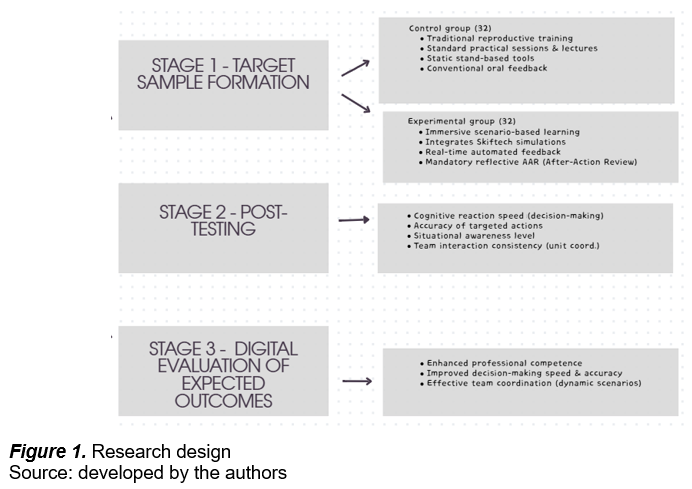
In general, the research procedure was divided into three stages:
1. The first iteration - includes an analytical search for optimal digital solutions for interactive learning. To select the optimal tool, the pedagogical criterion "ready-to-use" was used (readiness for immediate implementation without additional long-term adaptation of the educational environment).
2. The second iteration - creation of a general sample of participants, their division into groups. After that, a four-week educational experiment was introduced, which involved a symbiosis of several methodological approaches.
3. The third iteration - respondents completed a control complex situational task and statistical processing of the obtained data. After that, the experts assessed the dynamics of the development of professional competencies.
Methods
This study was conducted using the following methodology:
1. Focused search: controlled search for information on interactive tools and immersive simulation systems in order to identify modern and relevant solutions.
2. Comparative analysis: comparison of technical characteristics of relevant solutions for interactive tactical modeling with highlighting the advantages and disadvantages of each identified complex.
3. Assessment of effectiveness by the readiness for use parameter: determination of the most effective and balanced solution for interactive tactical training, which has a high coefficient of rapid deployment and immediate application.
4. Empirical assessment of effectiveness: determination of the effectiveness of the application of solutions for generating dynamic scenarios by checking the results of performing control tasks. The assessment is carried out for two groups, which are described in the "Sample" section. The main parameter by which the assessment is carried out is the time of performing the control task by the specified groups of cadets. This parameter is influenced by the following indicators: (cognitive reaction speed, accuracy of targeted actions, level of situational awareness, consistency of team interaction).
Sample
The research sample consists of 64 cadets:
- Military Academy (Odesa) Department of Military Leadership;
- Military Academy (Odesa) Faculty of Training Specialists of the Airborne Assault Forces and Marine Corps;
- National Academy of Land Forces named after Hetman Petro Sahaidachny Institute of Psychological Support of Personnel;
- Kamianets-Podilskyi National University named after Ivan Ohienko, Department of Behavioral Sciences and Military Leadership.
A total of 64 individuals of the basic (identical) level of training participated in the study, who were divided into two groups (the study participants were selected in accordance with the standards of basic training in a proportional number relative to the involved educational institutions). The sample is limited, but sufficient for preliminary empirical testing:
1. Control group (CG) - a group undergoing training according to the traditional approved program, which provided for theoretical classes and classical practical skills development (32 cadets);
2. Experimental group (EG) - a group that mastered similar topics of the curriculum, but with the regular use of interactive immersive simulations (32 people).
Instruments
The study used an interactive tactical modeling complex - Skiftech Tactical Simulation System / Skiftech (Skiftech, n.d.). This system successfully combines software for creating dynamic scenarios and hardware laser components for capturing actions. This allows you to create a safe, but as realistic as possible learning environment.
Training procedure and structure
The main part of the experiment lasted 4 weeks. The training process of the experimental group participants was based on the principles of cyclical experiential learning (according to the Kolb model).
At the beginning, a preliminary briefing (Briefing / Scaffolding) was conducted, within the framework of which the cadets were introduced to the purpose of the lesson, the main theoretical principles and the task of the current scenario. In this case, the teacher played the role of a facilitator, explaining the criteria for the success of the actions.
After that, the cadets moved on to the immersive execution of the scenario (Simulation Immersion), when they directly interacted with the Skiftech digital simulation environment. The scenarios were complicated step by step and dynamically, which was done using algorithms. This required high concentration, rapid analysis of the situation and team interaction from the applicants.
An important stage of the experiment was pedagogical reflection and feedback. Debriefing / After-Action Review (AAR). It was thanks to the objective digital logs of the Skiftech system that the teacher, together with the cadets, carefully analyzed the mistakes made. The applicants independently analyzed the reasons for ineffective decisions, which stimulated the development of critical and strategic thinking. After this, they were given the opportunity to go through the scenario again, taking into account previous experience and corrected errors.
To verify the effectiveness of the selected didactic model, a combined approach to assessing the results of cadets was used. It included automated quantitative data collection (digital logs of the Skiftech system) and qualitative expert analysis. The members of the expert group were 3 independent instructors with over 10 years of teaching experience. For expert assessment, standardized matrices of behavioral indicators using a 5-point Likert scale were used. According to the scale indicators, 1 is an unsatisfactory level, while 5 is an exemplary level).
The effectiveness of the didactic model was measured by the time the cadets completed the control task. This basic criterion was directly influenced by the following operational indicators:
· Cognitive reaction speed – was measured using a combined method. Skiftech digital logs determined the exact time (in milliseconds) from the moment the trigger appeared to the first physical action of the cadet.
· Accuracy of targeted actions – was determined automatically using Skiftech laser components. The percentage of effective shots was determined. Experts expanded these data by assessing the correctness of the technical execution of techniques.
· Level of situational awareness – was assessed by an expert diagnostic method. The commission determined the ability of cadets to navigate in space, predict the development of events, understand the meaning of the situation, etc.
· Consistency of team interaction – was assessed by an expert commission using the method of continuous monitoring of the synchronicity of actions, the speed of role redistribution, mutual insurance, etc.
For statistical analysis of the results, mathematical statistics methods were used including the calculation of mean values (M), standard deviations (SD), and the determination of statistical significance via Student’s t-test (p-value). It allowed to ensure a higher degree of reliability of the conclusions. The structured breakdown of the pre-test and post-test dynamics for both the control (CG) and experimental (EG) groups is detailed in Table 3.
Ethical issues
The study fully complies with international ethical standards and was formally approved by the institutional review board (or ethics committee) of the participating military academy, ensuring alignment with institutional regulations. Since the sample was formed with the participation of cadets, strict confidentiality and data protection protocols were used at all stages of the experiment. All research data were fully anonymized to exclude any personal identifiers. Furthermore, the study did not involve or utilize any classified, restricted, or proprietary military information. The cadets participated on a voluntary basis, and before the start of the experiment, they received detailed oral and written instructions on the purpose, duration, and pedagogical nature of the tasks. Each participant signed a written consent to participate with a guaranteed opportunity to withdraw from the study at any stage. To ensure maximum data protection, the final results are presented exclusively in an aggregated form, preventing the identification of any individual participant or specific training unit.
Results and Discusión
A search of open sources (focused search) identified a number of interactive immersive application tools for developing specialized professional competencies and decision-making skills in cadets within complex, high-stakes operational environments - Table 1.
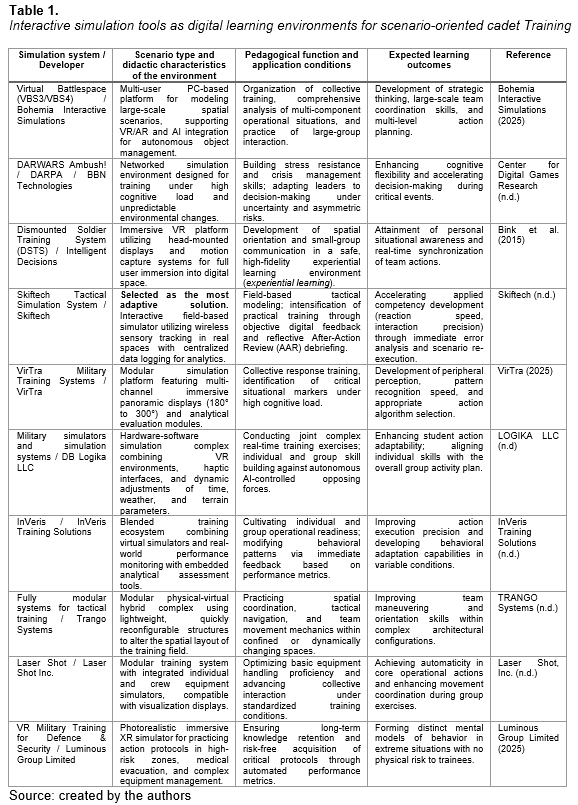
According to the results of the focused search (Table 1), it was found that modern interactive simulators play a key role in the accelerated development of cadets’ tactical and decision-making skills, providing a high level of experiential realism, scenario variability, and adaptability to high-stress professional environments. Virtual platforms such as VBS4, DSTS, Luminous XR and InVeris Training Solutions integrate VR/AR, haptic feedback, motion capture (MoCap) and AI-driven scenarios, which enables trainees to navigate complex operational situations within a risk-free simulated environment. Laser-based systems such as Skiftech Tactical Simulation System and Trango Systems provide realistic field modeling of tactical engagements using authentic standard-issue equipment setups. Furthermore, complex response simulators (VirTra, Laser Shot) and modular training complexes (DB Logika LLC) utilize high-precision ballistic modeling, instant performance feedback, and automated After-Action Review (AAR) systems to optimize training efficiency. The systematic integration of interactive simulations into the specialized higher education framework significantly reduces the time required for professional competency acquisition, minimizes organizational costs, and ensures the rapid adaptability of small units to dynamic real-world settings.
To better understand the practical limitations of these tools, our findings must be contextualized within contemporary pedagogical debates. According to the publication by Joseph et al. (2024), educational progress in the course of traditional learning models may decrease due to the instability of external conditions and their unpredictability. Although the results of our study confirm the effectiveness of simulations in the accelerated development of skills, the lack of adaptation of the complexity of scenarios to the individual trajectory of the seeker may somewhat limit the long-term stability of the formed competencies. To overcome this limitation, our chosen architecture—the Skiftech environment—does not simply set a static task for the cadet, but instead involves him in a continuous cycle of variable scenario-oriented actions. In this case, the interpretation of the pedagogical mechanism is based on the concept of learning through experience (experiential learning — Kolb cycle).
While a basic comparative analysis of the considered propositions is made in Table 1, a more critical pedagogical screening is required to determine the most effective system in terms of the readiness parameter, as observed in Table 2.
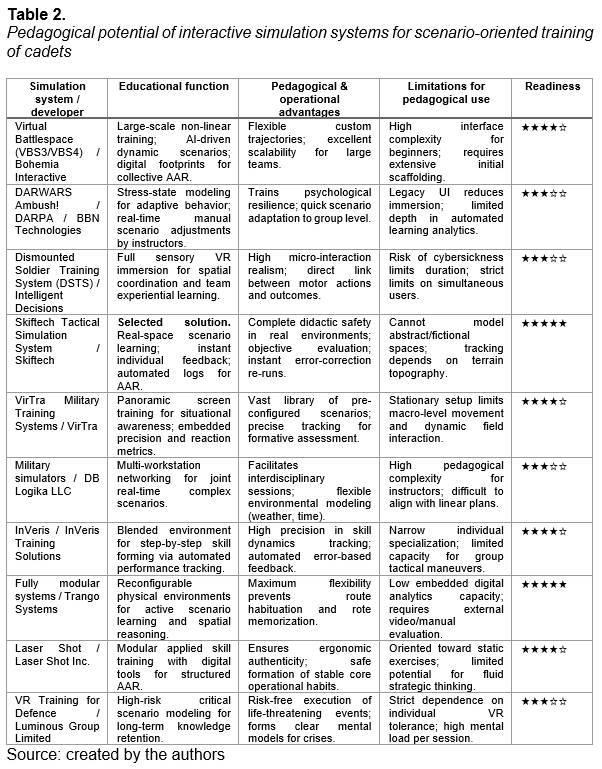
The comparative analysis showed that Virtual Battlespace (VBS3/VBS4), Skiftech Tactical Simulation System, and VirTra Military Training Systems demonstrate the highest educational efficiency for the accelerated development of tactical competencies and decision-making skills. These platforms uniquely combine high contextual fidelity, structural flexibility, and immediate integration capabilities into existing instructional frameworks. Specifically, VBS4 provides sophisticated tactical modeling, collective interaction parameters, and deep scenario analysis utilizing GIS data and AI-driven synthetic entities; however, substantial computational resources and long-term configuration requirements bound its institutional adoption. Taking into account the readiness parameter, the Skiftech Tactical Simulation System is the most prepared for immediate use in cadets’ training, as it does not require complex software modifications, making it the optimal solution for field-based experiential learning.
In accordance with the research design, an empirical test of the thoroughly selected interactive simulation (Skiftech) based on a defined sample of cadets was performed. The results of the study (Figure 2, 3) demonstrated a significant advantage of interactive simulations over traditional combat training methods. The analysis was conducted by comparing the performance of the CG and EG during training, performing the control task, as well as their dynamics at different stages.
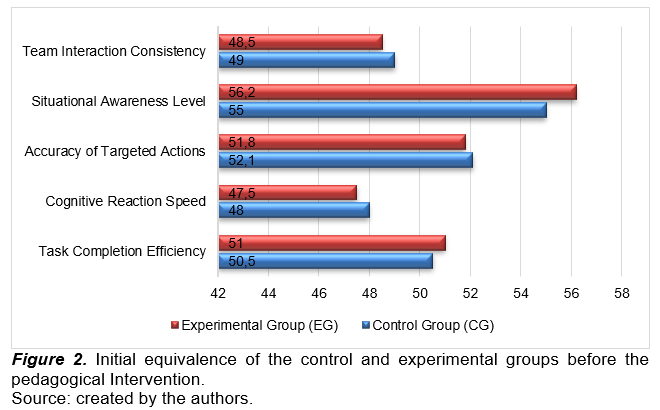
The results of the comparative analysis of the input control indicators showed that both groups were equivalent at the start. All measured parameters (task completion time, cognitive response, situational awareness, team interaction) did not have statistically significant differences at the pre-test stage. Such balance allows us to objectively assess the net pedagogical impact of interactive modeling (in this study, the Skiftech complex) during the final assessment.
However, dynamic environments introduce unique visual and spatial constraints that directly impact these baseline metrics. Yoo and Ji (2025) have shown that AR interfaces improve situational awareness through collective information sharing, but that inconsistency in viewing directions can reduce it. The lack of adaptive visual cues in our current study may limit the speed of spatial analysis of learners in a dynamic learning space. Nevertheless, the pedagogical design of the selected simulator successfully compensated for this: when a student made a mistake while performing a task, the system showed him the consequences of this mistake in a safe-to-fail environment. Thus, the mistake is no longer perceived as an exclusively negative marker, but moves into the category of a dynamic asset, driving the subsequent shift in post-intervention outcomes.
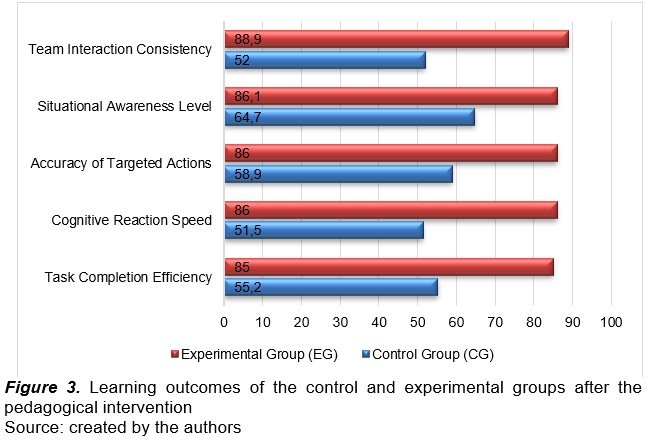
Empirical confirmation of the results of this experimental study reflected a significant difference in the vectors of development of competencies of cadets of the control (CG) and experimental (EG) groups. While the CG (traditional training) showed a slow linear increase (on average, a minimum of 4.7% for all parameters), in the EG (training with simulator integration) an exponential jump of the selected parameters was recorded.
This dramatic divergence between the two groups can be fundamentally explained by the nature of multi-sensory engagement. The authors Raman and Vyakarana (2024) note that the combination of the Internet of Things, virtual reality, and augmented reality (AR) in the educational space provides a highly interactive environment with instant feedback on aiming. The current study extends these findings by illustrating the following mechanism: the synchronization of sensory, tactile, and digital feedback creates an error-tolerant learning space. After detecting an error, the student proceeds to a cyclic repetition of critical phases in a safe environment, which increases the level of behavioral adaptation. This shift indicates that specialized simulation frameworks must evolve towards broader immersive ecosystems. In this context, Cheng et al. (2024) consider the concept of a professional (educational) metaverse as an integrated ecosystem that combines real and virtual spaces to intensify learning. Our study confirms the effectiveness of tactical simulations in the professional training of cadets, but also emphasizes that such systems retain pedagogical validity only if they go beyond the narrow scope of procedural training. To provide a precise mathematical foundation for these observed exponential improvements, the exact statistical breakdown is formalized in Table 3.
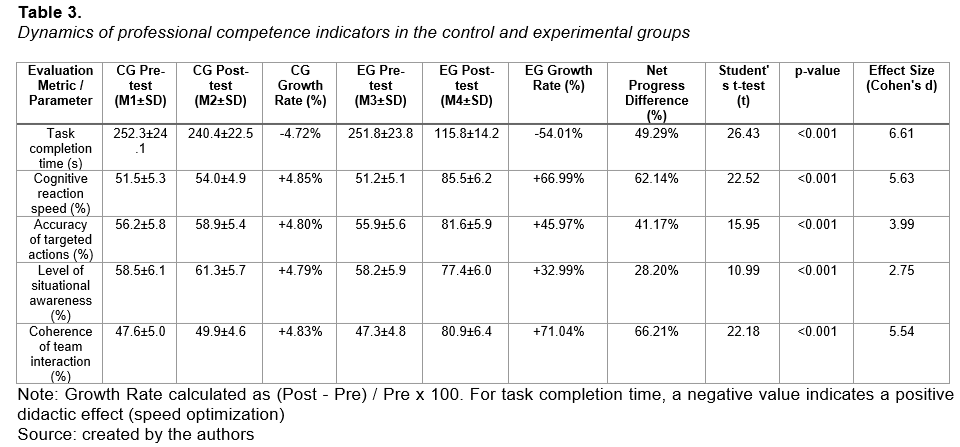
Additionally, a comprehensive analysis of intra-group and inter-group dynamics was conducted (Table 3). The data obtained demonstrate that the most significant didactic progress was found within the “Team Interaction Consistency” metric, where the EG score increased from 47.3% to 80.9%, resulting in a relative increase of 71.04%, while the CG progress stagnated at +4.83%. At the same time, the integration of automated tracking in Skiftech reduced the task completion time for EG group cadets by 54.01% from 251.8 to 115.8 seconds, systematically proving the elimination of the gap between time and competence.
The correlation between minimized completion time and heightened group cohesion suggests that simulation shifts individual capacity into collective synergy. Sudiarno et al. (2024) have demonstrated that narrowly focused VR simulators (in particular, shooting simulators) can replace traditional forms of practical training, providing high accuracy, realism, and adaptation to the virtual environment. Our study demonstrates similar benefits of interactive simulation-based learning not only for isolated practice of individual operations, but also for modeling complex management and command tasks. Skiftech demonstrates that the simulation environment acts as a mirror, reflecting the systemic impact of group decisions, thereby shifting the educational focus from individual psychomotor skills to collective strategic intelligence. This structural shift towards strategic interaction is heavily dependent on cognitive engagement, which is often stimulated by game-like mechanics. Ivanjko et al. (2024) consider gamification as an effective tool for increasing engagement, motivation, and quality of learning through role-playing games, simulations, and strategic scenarios. Our study confirms the value of interactive simulations for improving flexibility of thinking in dynamic environments.
Ultimately, this flexible, gamified approach serves as a bridge for adapting students to high-stress professional ecosystems. Bekesiene and Varžinskas (2024) note that the successful development of professional competencies in JCATS largely depends on basic technological training and strategic thinking. Our study confirms that interactive simulations not only improve practical skills, but can also serve as an effective tool for adapting cadets to work in a technologically rich and informationally complex professional environment.
This baseline technological adaptation finds its ultimate application in close-quarters, collaborative maneuvers. Prasetyo and Rende (2024) investigate the capabilities of VR systems for practicing interaction in a confined space, emphasizing their potential for optimizing team communication and reflection. The results obtained are consistent with the results of this study, in particular, that interactive simulations are able to effectively reproduce multidimensional professional scenarios, providing not only individual learning, but also improving coordination and interpersonal interaction in small groups under conditions of high psychological stress.
Thus, it was found that interactive simulations have high pedagogical effectiveness in the process of accelerated formation of professional competencies of cadets, providing a safe environment for empirical learning, an increased level of situational awareness, and systemic integration of innovative technologies into the educational process of higher education. At the same time, it is necessary to take into account the adaptability of systems, dynamic modeling of situations, and standardized methods of assessing learning outcomes to ensure their long-term effectiveness. As demonstrated by our empirical data, the integration of scenario-oriented simulation training into complex educational systems guarantees a rapid development cycle, transferring acquired habits safely into the future officer's operational repertoire.
So, empirical data confirm that the use of the interactive simulation complex Skiftech Tactical Simulation System provides a significant acceleration and improvement of the development of practical skills of cadets. The use of this technology enables not only to increase the efficiency of the training process, but also to maintain the acquired skills, which confirms the appropriateness of introducing interactive simulators into the educational process.
Transferability of Results and Beyond-Military Applications
The pedagogical efficacy of combining interactive immersive simulations with automated digital analytical records, as demonstrated in this empirical evaluation, extends significantly beyond the boundaries of military cadet training. The core cognitive and behavioral mechanisms optimized within this study—specifically accelerated reaction speeds, enhanced situational awareness, minimized operational error rates, and synchronized team interaction under high stress—are fundamentally transferable to various complex civilian domains characterized by intense cognitive demand and high-stakes decision-making.
Firstly, this data-driven simulation framework holds immense potential for high-complexity medical surgical teams. In acute clinical and surgical environments, where rapid choices directly dictate patient outcomes, immersive VR/AR simulations can realistically replicate rare intraoperative crises, complex anatomical anomalies, or sudden systemic complications. Concurrently, the integration of embedded learning analytics allows for the precise tracking of procedural latency, instrument coordination, and stress-induced friction, enabling surgical units to refine critical non-technical skills like communication and cognitive adaptability without risking patient safety.
Secondly, the model is applicable to rescue and fire services in civil disaster environments. First responders routinely operate under highly volatile, uncertain, and hazardous conditions that directly parallel tactical field scenarios. Utilizing modular physical-virtual hybrids or immersive digital setups allows rescue teams to safely navigate simulated structural collapses, chemical spills, or large-scale civilian evacuations. The application of centralized learning analytics provides objective, empirical data regarding spatial navigation efficiency, real-time hazard identification speed, and group resource coordination, ensuring teams can diagnose and rectify behavioral gaps before operational deployment.
Finally, these findings offer substantial implications for pilot training in commercial aviation. While aviation education has traditionally relied on high-fidelity simulators, the synthesis of advanced learning analytics with highly adaptive, gamified problem-sets can further optimize Crew Resource Management (CRM). By dynamically generating unpredictable multi-system hardware failures or extreme environmental anomalies, these simulations challenge the flight crew's collective situational awareness and strategic thresholds. Rooting the subsequent After-Action Review (AAR) in objective digital logs ensures that reflective debriefings target exact behavioral metrics, establishing a reliable, verified pathway for maintaining public safety and accelerating expert competency acquisition.
Limitations
The empirical component of the study was tested on a relatively small number of participants in the experiment. A relatively small number of solutions for interactive training of cadets were considered.
Recommendations
It is recommended to expand the sample of participants to increase the reliability of the results. It is also advisable to explore a wider range of interactive solutions for training cadets.
Conclusions
Within the framework of the theoretical and analytical stage of the study, 10 modern relevant digital solutions for interactive training of cadets of complex and extreme professions were analyzed and classified in detail. According to the results of a comparative analysis of technical and functional characteristics and an integral criterion of readiness for didactic implementation (ready-to-use), the Skiftech interactive tactical modeling complex was determined as the most adaptive tool for scenario-oriented experiential training in field conditions, which does not require the deployment of complex stationary infrastructure.
Empirical evaluation of the hypothesis regarding the feasibility and effectiveness of integrating immersive simulations into the process of accelerated formation of professional competencies of applicants was implemented on the basis of higher education institutions with a specialized training profile. The total sample size of the quasi-experiment was 64 cadets (control and experimental groups of 32 people, respectively). The pedagogical intervention led to a substantial optimization of tactical performance, manifested in a meaningful reduction of task completion time and a marked acceleration of cognitive reaction speeds under stress. Furthermore, the simulation environment actively minimized operational errors, enhanced spatial analysis, and significantly strengthened team cohesion and synchronized interpersonal communication within units. These insights confirm that interactive simulations serve as a catalyst for transforming theoretical knowledge into stable, automated operational skills.
The scientific novelty of the study lies in developing a comprehensive pedagogical matrix for evaluating immersive systems and establishing the exact formative impact of interactive simulation environments on both the cognitive and practical components of cadets' competencies. Moreover, the study proposes a novel methodology for quantitative and qualitative assessment of trainee performance through the systematic analytics of the simulation’s embedded digital logs.
The practical significance of the results consists in providing a verified technological choice (the Skiftech system) for optimizing practical training at training grounds and introducing a structured, reflection-based training procedure (from preliminary briefing to post-activity After-Action Review). The formulated methodological recommendations can be directly used by academic administration and instructors to modernize educational programs, update discipline syllabi, and implement automated formative assessment tools.