
Artículo de investigación
Desarrollo de la competencia inclusiva entre estudiantes de maestría mediante una intervención pedagógica con apoyo digital
Development of Inclusive competence among master’s students through a digital-supported pedagogical intervention
Recibido: · Aceptado: · Publicado:
Cómo citar: Matsiuk, Z., Serdiuk, Z., Marieieva, T., Martyniuk, T., & Symchukevych, Y. (2026). Development of Inclusive competence among master’s students through a digital-supported pedagogical intervention. Revista Eduweb, 20(3), 318–343. https://doi.org/10.46502/issn.1856-7576/2026.20.03.18
Resumen
El estudio tuvo como objetivo desarrollar y evaluar experimentalmente una intervención pedagógica con apoyo digital para desarrollar la competencia inclusiva de los estudiantes durante su formación profesional. Se realizó un estudio pedagógico cuasiexperimental entre 2023 y 2025 con 174 estudiantes de maestría, incluyendo un grupo experimental (GE, n = 84) y un grupo de control (GC, n = 90). La competencia inclusiva de los estudiantes se evaluó según cuatro criterios: motivacional, cognitivo, de actividad y reflexivo, con tres niveles de formación (bajo, medio y alto). Durante la etapa formativa, el grupo experimental participó en un programa de formación inclusiva con apoyo digital que integró entornos de aprendizaje digital, herramientas digitales interactivas y adaptativas, recursos digitales especializados, tareas prácticas, casos profesionales, sesiones de capacitación, seminarios, clases magistrales, mentorías y actividades reflexivas. El grupo de control continuó su formación profesional regular sin la intervención específica. Los cambios en la distribución de los niveles de competencia se analizaron utilizando el criterio de chi-cuadrado de Pearson (χ²). Los resultados demostraron cambios positivos en el grupo experimental en los cuatro criterios. La proporción de estudiantes con un alto nivel cognitivo aumentó del 20,24 % en la etapa inicial al 38,10 % en la etapa de control, mientras que el nivel reflexivo alto aumentó del 21,43 % al 34,52 %. El grupo experimental también mostró una reducción en la proporción de estudiantes con un nivel bajo, particularmente en el criterio cognitivo, donde disminuyó del 42,86 % al 7,14 %. Estos hallazgos indican cambios positivos en la competencia inclusiva de los estudiantes tras la implementación de la intervención pedagógica con apoyo digital.
Palabras clave: entorno educativo inclusivo; instituciones educativas; recursos web; digitalización de la educación; formación de competencias inclusivas en los estudiantes.
Abstract
The study aimed to develop and experimentally evaluate a digital-supported pedagogical intervention for developing students’ inclusive competence during professional training. A quasi-experimental pedagogical study was conducted from 2023 to 2025 with 174 master’s students, including an experimental group (EG, n = 84) and a control group (CG, n = 90). Students’ inclusive competence was assessed according to four criteria: motivational, cognitive, activity, and reflective, with three levels of formation (low, average, and high). During the formative stage, the experimental group participated in a digital-supported inclusive training program that integrated digital learning environments, interactive and adaptive digital tools, specialized digital resources, practical tasks, professional cases, training sessions, seminars, master classes, mentoring, and reflective activities. The control group continued regular professional training without the targeted intervention. Changes in the distributions of competence levels were analyzed using Pearson’s chi-square (χ²) criterion. The results demonstrated positive changes in the experimental group across all four criteria. The proportion of students with a high cognitive level increased from 20.24% at the ascertaining stage to 38.10% at the control stage, while the high reflective level increased from 21.43% to 34.52%. The experimental group also demonstrated a reduction in the proportion of students at the low level, particularly for the cognitive criterion, where it decreased from 42.86% to 7.14%. These findings indicate positive changes in students’ inclusive competence following implementation of the digital-supported pedagogical intervention.
Keywords: inclusive educational environment; educational institutions; web resources; digitalization of education; formation of inclusive competence in students.
Introduction
Inclusive education requires higher education institutions to prepare future professionals who can respond effectively to the diverse educational needs of learners, including children with special educational needs (SEN). The quality of such preparation depends not only on students’ acquisition of professional and pedagogical knowledge but also on their readiness to create accessible and supportive learning environments, interact with learners and other participants in the educational process, apply appropriate educational strategies, and critically evaluate their own professional practice. Consequently, the preparation of master’s students for professional activity in inclusive educational environments has become an important component of contemporary professional education. The need for such preparation is associated with the ability of specialists to organize educational processes according to the principles of accessibility, equality, individualization, and participation.
Inclusive professional preparation is increasingly associated with tolerance, cooperation, individualized support, and innovative approaches to educational interaction. In an inclusive environment, professionals may perform multiple functions, including supporting individual educational trajectories, facilitating interaction, coordinating learning activities, and providing individualized assistance to learners. However, the acquisition of separate professional functions does not necessarily indicate that students have developed an integrated capacity to act effectively in inclusive situations. Professional readiness for inclusive practice requires the combination of appropriate attitudes and values, relevant knowledge, practical skills, and the ability to reflect on professional decisions and outcomes. Previous research has emphasized the importance of methodological, psychological, pedagogical, and professional knowledge, positive attitudes toward learners with SEN, readiness for professional interaction, and the ability to use innovative educational and digital technologies in inclusive settings (Brandon & Charlton, 2011; Čagran & Schmidt, 2011; de Boer et al., 2011; Torop et al., 2023).
At the same time, contemporary professional preparation is taking place under conditions of increasing digitalization of education. Digital technologies can provide additional opportunities to organize inclusive learning and prepare master’s students for professional activity in inclusive educational environments. Digital learning environments can facilitate access to educational materials and support blended and distance learning, while interactive and adaptive tools can provide opportunities for practice, feedback, and individualized learning. Specialized digital resources, including assistive and augmentative and alternative communication technologies, screen readers, voice-recording tools, and other software, can help students become familiar with technological means that support access to learning for individuals with SEN (Shi et al., 2025). Integrating digital and traditional educational approaches can also create opportunities for case analysis, simulations of professional situations, collaborative learning, training, workshops, and reflective activities. Thus, digitalization should not be understood merely as introducing technological tools into teaching; rather, its educational value depends on how digital resources are integrated into professional tasks and used to develop specific professional competencies.
The literature also emphasizes the importance of combining digital learning environments with active and collaborative forms of professional preparation. Online platforms can support access to instructional content and communication, whereas case-based learning, role-playing, practical training, workshops, and reflective activities can provide opportunities to apply professional knowledge and analyze complex situations in inclusive education (Balchin & Bouzaki, 2022). The development of flexibility and collaboration with colleagues, learners, and parents is also considered important for professional activity in inclusive environments (Attachoo & Imsa-Ard, 2024). Professional training in higher education, therefore, represents an important context in which students acquire knowledge, develop professional orientations, gain initial practical experience, and build readiness for inclusive interaction (Zarceño García de Soriano et al., 2024).
Nevertheless, the existing literature and professional-training approaches do not fully explain how digital technologies can be incorporated into a structured pedagogical intervention aimed specifically at the multidimensional development of inclusive competence. A particular difficulty is that inclusive competence cannot be reduced to technological proficiency or knowledge of inclusive education alone. Effective preparation requires the simultaneous development of students’ motivation and professional orientations, their knowledge and understanding, their ability to apply knowledge in practical situations, and their capacity for professional reflection. Therefore, a pedagogical intervention should address these dimensions in an integrated manner rather than treating digital competence and inclusive competence as separate educational outcomes.
In the present study, inclusive competence is conceptualized through four interrelated dimensions: motivational, cognitive, activity, and reflective. The motivational dimension concerns students’ professional orientations, willingness to work in an inclusive environment, commitment to creating barrier-free learning conditions, and motivation for professional development. The cognitive dimension concerns knowledge and understanding of inclusive education, relevant digital technologies, and specialized resources. The activity dimension concerns students’ ability to apply acquired knowledge, pedagogical methods, and digital tools to practical professional situations in an inclusive educational environment. The reflective dimension concerns the ability to analyze one’s own professional actions and learning experiences, identify difficulties, evaluate the results of professional activity, and determine directions for further development. This conceptualization corresponds directly to the assessment framework subsequently used in the empirical part of the study. The four criteria were operationalized through specific indicators and assessed at low, average, and high levels.
The initial diagnostic results obtained in the present study indicate that the participating master’s students demonstrated considerable room for development across these dimensions. At the ascertaining stage, the experimental group included substantial proportions of students at the low level: 32.14% according to the motivational criterion, 42.86% according to the cognitive criterion, 35.71% according to the activity criterion, and 47.62% according to the reflective criterion. At the same time, the high level was demonstrated by only 28.57% of students for the motivational criterion, 20.24% for the cognitive criterion, 23.81% for the activity criterion, and 21.43% for the reflective criterion. These baseline findings indicate that the challenge addressed in the study concerned not only the acquisition of knowledge about inclusive education but also the development of professional motivation, practical application, and reflective capacity.
A digitally supported pedagogical intervention may provide an appropriate means of addressing these interconnected dimensions when digital resources are incorporated into meaningful professional-learning activities. In particular, digital learning environments can support access to instructional materials and independent learning, interactive tools can provide opportunities for practice and feedback, and adaptive and specialized resources can expose students to technological solutions relevant to learners with SEN. Practical digital tasks and professional cases can support the activity dimension by requiring students to apply knowledge to realistic inclusive-education situations. Collaborative online activities can support communication and professional interaction, while digital assessment and reflective activities can provide opportunities for students to evaluate their own learning and professional decisions. Accordingly, the potential contribution of digitalization lies not in the number of platforms or applications used, but in their purposeful integration into pedagogical activities directed toward specific dimensions of inclusive competence.
This consideration also identifies the research gap addressed by the present study. Although previous research has examined professional readiness for inclusive education, digital learning, specialized technologies, and innovative approaches to professional preparation, there is insufficient empirical evidence on a structured digital-supported pedagogical intervention that simultaneously targets the motivational, cognitive, activity, and reflective dimensions of inclusive competence among master’s students. The present study therefore focuses not simply on the use of digital technologies in professional education, but on their purposeful integration into a pedagogical intervention designed to develop a multidimensional form of inclusive competence.
Accordingly, the study aimed to develop and experimentally evaluate a digital-supported pedagogical intervention for developing students’ inclusive competence during professional training. To achieve this aim, the study examined changes in students’ inclusive competence according to the motivational, cognitive, activity, and reflective criteria and compared the distributions of competence levels between the experimental and control groups following the formative intervention.
Literature Review
Inclusive competence as a multidimensional construct
Inclusive competence is increasingly understood as a multidimensional characteristic of professional readiness to work with learners with diverse educational needs. It cannot be reduced to knowledge of inclusive education or to a general positive attitude toward learners with special educational needs (SEN). Professional preparation for inclusive practice requires the integration of professional knowledge, value orientations, practical abilities, interpersonal readiness, and the capacity to evaluate and improve professional actions. This broader understanding is reflected in research examining teachers’ preparedness, attitudes, professional knowledge, and competencies for inclusive education.
Brandon and Charlton (2011) emphasize the importance of developing an inclusive learning and teaching community of practice, highlighting the need for professionals to possess knowledge and skills that support inclusive educational interaction.
De Boer et al. (2011), in their review of teachers’ attitudes toward inclusive education, demonstrate the importance of attitudes as an essential component of readiness for inclusive practice. Čagran and Schmidt (2011) similarly conceptualize readiness to work with learners with SEN through personal, psychological, and professional dimensions, including knowledge of special pedagogy and psychology, information readiness, professional interaction, and consideration of learners’ individual characteristics. Torop et al. (2023) further emphasize emotional acceptance, satisfaction with professional activity, and readiness to involve learners with developmental disabilities in educational activities.
Taken together, these studies suggest that inclusive professional competence encompasses several mutually related domains. Knowledge provides the cognitive basis for professional decisions; attitudes and values determine the orientation toward inclusive practice; practical abilities enable the application of knowledge in educational situations; and reflection allows professionals to evaluate their actions and identify directions for further development. On this basis, the present study operationalizes inclusive competence through four interrelated criteria: motivational, cognitive, activity, and reflective.
Motivational dimension of inclusive competence
The motivational dimension refers to the professional orientations, values, attitudes, and willingness that support inclusive educational practice. A professional may possess knowledge about inclusive education but remain insufficiently prepared for inclusive practice if this knowledge is not accompanied by acceptance of learner diversity, willingness to create accessible learning conditions, and motivation for professional development.
The literature reviewed in the manuscript provides several grounds for considering motivation and attitudes as an essential part of inclusive competence.De Boer et al. (2011) specifically address teachers’ attitudes toward inclusive education, while Čagran and Schmidt (2011) relate professional readiness to personal and psychological dimensions. Torop et al. (2023) emphasize emotional acceptance of learners with different developmental characteristics and readiness to involve them in educational activities. These findings support the interpretation of the motivational dimension as more than a general interest in inclusive education: it concerns students’ willingness to assume responsibility for inclusive professional activity and to develop their competence further.
In the present study, the motivational criterion therefore includes students’ motivation to create a barrier-free learning environment, willingness to use digital technologies in professional activity, orientation toward inclusive professional preparation, and motivation for professional self-development. This operationalization connects the literature on attitudes and professional readiness with the motivational component measured in the experiment.
Cognitive dimension of inclusive competence
The cognitive dimension represents the knowledge base required for understanding and organizing inclusive educational processes. Inclusive practice requires knowledge of learners’ individual characteristics, inclusive pedagogy, special education and psychology, appropriate educational strategies, and technologies that can support participation and access to learning.
Brandon and Charlton (2011) emphasize the importance of appropriate methodological, psychological, pedagogical, and subject knowledge for work in inclusive educational environments. Čagran and Schmidt (2011) similarly identify knowledge of special pedagogy and psychology, individual differences, and information readiness among the components of professional readiness for working with learners with SEN. Sobchenko et al. (2021) also focus on the preparation of future teachers to organize educational processes under conditions of inclusion, emphasizing the need to incorporate appropriate approaches into professional training.
The cognitive dimension is also increasingly connected with digital knowledge. Students preparing for inclusive professional activity need to understand not only inclusive pedagogical principles but also the potential and limitations of digital resources that can facilitate access to educational materials and communication.Shi et al. (2025) emphasize the role of specialized software, voice recorders, screen readers, and other technologies that support learners with special needs and facilitate access to educational materials. Thus, digital knowledge can be considered part of the contemporary cognitive basis of inclusive competence when it is directly related to professional tasks.
In the present study, the cognitive criterion consequently covers knowledge of information and communication tools, digital technologies, specialized software, and the principles of organizing professional preparation for inclusive education.
Activity dimension of inclusive competence
The activity dimension concerns the transition from knowing about inclusion to being able to implement inclusive approaches in professional situations. Knowledge and positive attitudes alone do not ensure effective practice; students must be able to select appropriate methods, organize accessible learning conditions, use relevant technologies, communicate with participants in the educational process, and solve professional problems.
Attachoo and Imsa-Ard (2024) emphasize flexibility, collaboration with colleagues, learners, and parents, and the ability to combine group and individual forms of work as important aspects of professional readiness for inclusive environments. The literature reviewed in the manuscript also identifies practical and active forms of preparation, including case-based learning, role-playing, training, workshops, projects, and pedagogical practice in inclusive educational settings. These approaches provide opportunities for students to transfer theoretical knowledge into professional action.
Digital technologies can strengthen this practical dimension when they are used as tools for solving professional tasks rather than merely as objects of technological instruction. Interactive and adaptive resources can provide opportunities for practice and feedback, while specialized technologies can allow students to model or analyze situations involving learners with SEN. Balchin and Bouzaki (2022) discuss the use of instructional technologies to respond to individual learner differences, supporting the relevance of digitally mediated activities for differentiated and inclusive learning.
Accordingly, the activity criterion in the present study focuses on students’ ability to use digital technologies to solve professional tasks, create barrier-free learning conditions, apply digital resources in inclusive educational settings, and interpret information for professionally appropriate decisions.
Reflective dimension of inclusive competence
The reflective dimension represents the ability to evaluate one’s own professional actions, identify difficulties, interpret learning outcomes, and determine directions for further professional development. Reflection is particularly important in inclusive education because professional decisions must respond to individual learner characteristics and may require continuous adjustment of pedagogical strategies.
The literature already included in the manuscript provides a basis for connecting reflection with inclusive professional preparation. De Boer et al. (2011), as discussed in the manuscript, emphasize the importance of value-semantic development and reflection on morally significant situations in teacher preparation. The existing literature review also identifies reflective practices, coaching, and supervision among approaches that can be incorporated into professional preparation for inclusive environments.
Digital learning environments can create additional opportunities for reflection through self-assessment, feedback, analysis of professional cases, documentation of learning progress, and collaborative discussion. However, the educational value of these technologies depends on how they are integrated into pedagogical tasks. Digitalization should therefore be considered a means of supporting reflective professional learning rather than an independent indicator of reflective competence.
In the present study, the reflective criterion concerns students’ ability to analyze the results of their professional activity using digital technologies, evaluate their readiness to create inclusive learning conditions, assess their use of digital technologies in inclusive practice, and identify directions for further development of inclusive competence.
Digital-supported development of inclusive competence
The four dimensions are interrelated and should not be treated as isolated outcomes. Motivation creates the orientation toward inclusive professional activity; cognitive competence provides the knowledge base; activity competence enables the application of knowledge in professional situations; and reflection allows students to evaluate and improve their practice. A pedagogical intervention aimed at developing inclusive competence should therefore provide learning experiences that address these dimensions in combination.
The literature indicates several ways in which digital technologies can support such an integrated approach. Online and blended learning environments can provide access to educational materials and facilitate flexible learning. Specialized technologies can support accessibility and familiarize students with resources relevant to learners with SEN. Interactive tools can provide opportunities for practice and feedback, while case-based activities, role-playing, training, workshops, collaborative projects, and reflective practices can connect theoretical knowledge with professional action.
Zarceño García de Soriano et al. (2024) specifically address digital teaching competence and educational inclusion in higher education, while Shi et al. (2025) examine digital pedagogy for inclusive education and its relationship with teacher competence and self-efficacy. These studies support the relevance of digital pedagogy to inclusive professional preparation, but they do not by themselves establish the four-component model used in the present study. The present research therefore combines the established literature on attitudes, knowledge, professional readiness, practical competence, reflection, and digital pedagogy into an empirical framework for examining changes in students’ inclusive competence.
Research gap
The reviewed literature demonstrates that inclusive professional preparation involves attitudes and values, knowledge, practical readiness, and reflective development, while recent research also highlights the growing role of digital technologies in inclusive education and professional learning. However, these strands of research are rarely integrated into a single empirical framework in which inclusive competence is operationalized simultaneously through motivational, cognitive, activity, and reflective criteria and evaluated before and after a structured digital-supported pedagogical intervention.
This gap provides the rationale for the present study. Rather than examining the use of individual digital platforms or digital competence as an independent outcome, the study investigates whether a structured digital-supported pedagogical intervention can contribute to positive changes in the four dimensions of students’ inclusive competence during professional training.
Methodology
Research Design
The study employed a quasi-experimental research design to investigate the effectiveness of a system of professional training, innovative digital approaches, and pedagogical conditions aimed at developing students' inclusive competence and preparing master’s students for professional activity in inclusive educational environments.
The study was based on the assumption that the purposeful implementation of a developed training system, innovative digital approaches, and substantiated pedagogical conditions into the professional training process would contribute to the development of students' inclusive competence.
The pedagogical experiment was conducted from 2023 to 2025 and consisted of three consecutive stages: ascertaining, formative, and control.
Participants
The study employed a quasi-experimental design and was conducted from 2023 to 2025 with 174 students enrolled at the second (master’s) level of higher education. The participants were divided into an experimental group (EG; n = 84) and a control group (CG; n = 90). The groups corresponded to intact academic groups within the existing organization of the educational process rather than being formed through individual randomization.
At the beginning of the study, the experimental and control groups were considered comparable with respect to the characteristics available within the existing educational organization. In forming the groups, the researchers took into account the quantitative composition of academic groups, students’ educational achievement, level of digital skills, characteristics of professional training, and similarity of the educational conditions. These characteristics were considered at the group-formation stage to avoid substantial initial differences between the groups. The groups were not individually randomized because their formation was based on existing academic-group structures. Therefore, the study is interpreted as quasi-experimental rather than randomized controlled research.
The term “maximum homogeneity” used in the earlier version of the manuscript should not be interpreted as evidence of statistical matching or random allocation. It refers to the effort to maintain comparable educational and organizational conditions between the experimental and control groups. Because the manuscript does not contain separate baseline numerical measures for each of the characteristics used during group formation, no claim is made that the groups were statistically matched on these variables.
The participants were 174 master’s students enrolled in education-, psychology-, and social-work-related programmes at three Ukrainian higher education institutions: Bohdan Khmelnytskyi National University at Cherkasy, Oleksandr Dovzhenko Hlukhiv National Pedagogical University, and Lesya Ukrainka Volyn National University.
Assessment Criteria
The level of students’ inclusive competence was assessed according to four theoretically differentiated and empirically non-overlapping criteria: motivational, cognitive, activity, and reflective. The criteria were distinguished according to the primary function represented by each construct: motivational – dispositions and professional orientations; cognitive – knowledge and understanding; activity – practical application; and reflective – analysis, self-evaluation, and self-regulation. Digital technologies were treated as contextual and instrumental resources rather than as independent indicators of all four criteria. Thus, the same technological skill was not counted simultaneously as evidence of different dimensions.
The motivational criterion reflected students’ dispositions, values, attitudes, and professional orientations toward inclusive education and future professional activity in an inclusive environment. Its indicators included: (1) willingness to create a barrier-free and supportive learning environment; (2) positive value-based attitudes toward the inclusion of learners with special educational needs; (3) willingness to engage in professional activity in inclusive settings; and (4) orientation toward professional responsibility for supporting learners with diverse educational needs. These indicators characterize why students are willing to engage in inclusive professional activity rather than what they know or how they perform particular professional tasks.
The cognitive criterion reflected students’ knowledge and understanding of inclusive education and the principles underlying professional activity in an inclusive environment. Its indicators included: (1) knowledge of the principles and concepts of inclusive education; (2) understanding of the psychological and pedagogical characteristics of learners with special educational needs; (3) knowledge of appropriate pedagogical approaches and methods for organizing inclusive learning; and (4) knowledge of digital and specialized technologies relevant to inclusive education. The cognitive criterion therefore measured what students knew and understood, rather than their motivation to use this knowledge or their ability to apply it in practice.
The activity criterion reflected students’ ability to translate knowledge into practical professional action. Its indicators included: (1) ability to apply inclusive pedagogical methods in practical situations; (2) ability to organize barrier-free and supportive learning conditions; (3) ability to select and appropriately use digital and specialized resources to solve specific professional tasks; and (4) ability to make professionally appropriate decisions when responding to practical situations involving learners with special educational needs. Digital technologies were therefore included in this criterion only insofar as students demonstrated their practical application in professional tasks.
The reflective criterion reflected students’ ability to analyze, evaluate, and regulate their own professional activity and learning. Its indicators included: (1) ability to analyze the results of one’s own professional actions; (2) ability to identify difficulties and limitations in one’s own practice; (3) ability to evaluate the appropriateness and effectiveness of selected professional approaches; and (4) ability to determine specific directions for further professional development and self-regulation. Digital tools could be used as means of supporting reflection, such as through self-assessment, feedback, or analysis of professional cases, but the criterion measured the reflective process itself, rather than the use of technology.
The four criteria were interpreted as complementary but conceptually distinct dimensions of inclusive competence. The motivational criterion addressed students’ professional dispositions and orientations; the cognitive criterion addressed knowledge and understanding; the activity criterion addressed the practical application of knowledge and methods; and the reflective criterion addressed analysis, self-evaluation, and self-regulation. This distinction provided the basis for assessing changes in the four dimensions at the ascertaining and control stages of the pedagogical experiment.
Based on these criteria and their indicators, three levels of inclusive competence formation were distinguished: low, average, and high. The levels reflected the degree to which the respective motivational orientations, cognitive knowledge, practical abilities, and reflective processes had been developed.
The digital-supported intervention was designed to address the four dimensions through differentiated learning activities. Knowledge-oriented activities targeted the cognitive dimension; practical professional tasks supported the activity dimension; value-oriented and professionally contextualized activities addressed the motivational dimension; and self-assessment, feedback, case analysis, and professional reflection addressed the reflective dimension. Digital technologies functioned as instructional and professional resources whose role differed according to the learning task rather than constituting a separate indicator across all four criteria.
Experimental Procedure
The pedagogical experiment was conducted from 2023 to 2025 and comprised three consecutive stages: ascertaining, formative, and control. The experimental procedure was designed to examine changes in students’ inclusive competence following the implementation of a structured digital-supported inclusive professional training programme. Inclusive competence was assessed according to four conceptually differentiated criteria: motivational, cognitive, activity, and reflective.
At the ascertaining stage, the initial level of students’ inclusive competence was established using the diagnostic procedures described in the Assessment Framework. The same diagnostic framework was subsequently used at the control stage to enable comparison of the distributions of competence levels before and after the formative intervention. At this stage, the experimental group (EG; n = 84) and control group (CG; n = 90) were identified within the existing organization of the educational process. Individual randomization was not used; therefore, the study was treated as quasi-experimental.
The formative stage constituted the intervention phase. It was implemented only in the experimental group and was integrated into students’ regular professional training. The intervention was designed as a digital-supported inclusive professional training programme rather than as separate instruction in the use of digital platforms. Its central principle was the purposeful integration of selected digital resources into professional learning tasks related to inclusive education. The control group continued its regular professional training without the targeted implementation of this programme.
The formative intervention combined theoretical preparation, practical professional tasks, interactive learning, case analysis, master classes, training sessions, seminars, blended and distance-learning activities, mentoring, and reflective tasks. These activities were organized around authentic or professionally oriented problems of inclusive education. Students were expected not only to acquire information about inclusive education but also to analyse professional situations, select appropriate pedagogical approaches and digital resources, complete practical assignments, discuss possible solutions, and reflect on their own learning and professional decisions.
The digital component was deliberately limited to resources that served identifiable pedagogical functions within these activities. Moodle and Google Classroom were used as learning environments for access to instructional materials, methodological resources, assignments, and feedback. LearningApps was used for interactive exercises and practice. Quizizz and Kahoot were used for formative assessment and consolidation of learning content, while Mentimeter supported interactive responses and discussion during learning activities. Canva, Prezi, and ThingLink were used for the development and presentation of digital educational materials. Notion and Trello were used to organize and monitor individual and collaborative professional tasks. In addition, students were introduced to augmentative and alternative communication (AAC) programmes, adaptive learning resources, sensory games, and specialized software relevant to supporting learners with special educational needs.
The pedagogical function of the digital resources differed according to the learning task. Learning environments primarily supported access to knowledge and independent learning; interactive tools supported practice and formative feedback; digital authoring tools supported the development of professional educational materials; organizational tools supported planning and self-regulation; and specialized resources provided opportunities to examine technological solutions relevant to learners with special educational needs. Thus, digital technologies were treated as instructional and professional resources rather than as independent outcomes of the intervention.
The intervention was aligned with the four assessed dimensions of inclusive competence. Cognitive-oriented activities focused on the acquisition and consolidation of knowledge about inclusive education, learners with special educational needs, inclusive pedagogical approaches, and relevant digital and specialized technologies. Activity-oriented tasks required students to apply this knowledge to professional cases, develop inclusive educational materials, select appropriate digital resources, and solve practical problems. Motivational activities addressed students’ professional orientations, attitudes toward inclusion, willingness to work in inclusive environments, and understanding of professional responsibility. Reflective activities involved self-assessment, analysis of completed professional tasks, discussion of difficulties, feedback, and identification of directions for further professional development.
The correspondence between the digital resources, learning activities, and assessed dimensions is presented in Table 1.
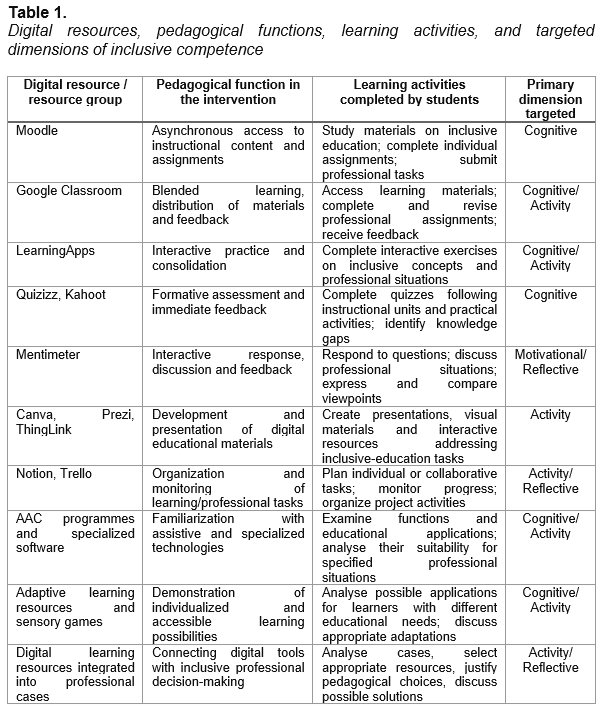
The intervention therefore followed a task-oriented rather than platform-oriented approach. Students did not receive training simply in how to operate a particular application. Instead, they encountered an inclusive-education problem or professional task and used an appropriate digital resource as part of its solution. For example, learning-environment resources were used to study theoretical and methodological content; interactive applications were used to practise and consolidate concepts; digital authoring tools were used to create materials for inclusive learning; and specialized resources were examined in relation to the educational needs of learners requiring additional or alternative forms of support.
The intervention also incorporated mentoring and participation in professional communities, during which students analysed complex professional cases, exchanged experiences, discussed possible solutions, and considered contemporary digital approaches to inclusive education. The existing manuscript identifies master classes, training sessions, seminars, blended and distance-learning activities, mentoring, and professional case analysis as components of the experimental training. These activities were retained as intervention components because they are described as part of the training actually provided to the experimental group, whereas broader recommendations concerning international internships, additional qualifications, orthopsychopedagogy, autology, and rehabilitation were not treated as components of the evaluated intervention.
The distinction between intervention activities and general recommendations was maintained to ensure that the treatment evaluated in the experiment could be clearly identified. In particular, international internships and additional qualifications were not considered intervention components because the available study description does not document their implementation, duration, or completion by the participants.
The control group continued its regular professional preparation under the educational conditions established by the participating institutions. Students in the control group did not receive the targeted combination of inclusive professional training activities and digital-supported tasks implemented in the experimental group.
At the control stage, participants were reassessed using the same criteria, indicators, and diagnostic procedures applied at the ascertaining stage. The resulting distributions of low, average, and high levels were compared between the experimental and control groups. This procedure enabled examination of changes in the motivational, cognitive, activity, and reflective dimensions of inclusive competence following the formative intervention.
Data Analysis
The collected data were analyzed using descriptive and inferential statistical procedures. Descriptive analysis was used to summarize the distribution of students across the low, average, and high levels of inclusive competence for the motivational, cognitive, activity, and reflective criteria at the ascertaining and control stages.
At the ascertaining stage, Pearson’s chi-square test of independence was used to examine whether the experimental and control groups differed in the distribution of competence levels before the intervention. At the control stage, the same test was used to compare the distributions of competence levels between the experimental and control groups after completion of the formative intervention. For these between-group comparisons, the observations were independent because the experimental and control groups consisted of different students.
Because the same participants were assessed at the ascertaining and control stages, the pretest–posttest observations within each group were treated as dependent. Accordingly, the observed changes in the experimental group between the two stages were interpreted descriptively and were not tested using a Pearson chi-square test of independence. The statistical significance of intervention-related between-group differences was evaluated at α = .05.
For each statistically significant between-group comparison, Cramer’s V was calculated to quantify the magnitude of the association between group membership and competence level. The null hypothesis (H₀) stated that the distribution of competence levels did not differ between the experimental and control groups at the corresponding assessment stage. The alternative hypothesis (H₁) stated that the distributions differed significantly between the groups.
The results were interpreted in conjunction with the baseline comparisons and the descriptive changes observed between the ascertaining and control stages. Given the quasi-experimental design and the absence of individual randomization, statistically significant between-group differences were interpreted as evidence consistent with an intervention-related effect rather than as definitive causal proof.
Ethical Considerations
The study was conducted in accordance with the ethical principles applicable to educational research. Participation in the study was voluntary, and all participants were informed about the purpose, procedures, and stages of the research before taking part in the experiment. Informed consent was obtained from the participants. The anonymity and confidentiality of the participants were maintained throughout the research process, and the collected data were used exclusively for scientific purposes. Participants were informed of their right to withdraw from the study at any stage without any negative consequences.
Results and Discussion
Substantiation of the content of the concepts of "Inclusion" and "Inclusive educational environment of an educational institution". The purpose of an inclusive educational environment. The essence of preparation for work in an inclusive educational environment and the formation of professional qualities in master’s students preparing for professional activity in inclusive educational environments.
Inclusion is a contemporary educational challenge associated with the need to provide children with special educational needs with equal access to quality education in a supportive environment. This requires highly qualified specialists with strong professional competencies, positive motivational orientations, and a humane, individualized approach (Ahsan et al., 2013).
We define an inclusive educational environment as a system of conditions, resources, methods, and approaches that ensures equal access to quality education regardless of students’ abilities or individual characteristics. It includes adaptation of the educational process through differentiated and digital technologies, barrier-free physical, social, and communication access, pedagogical support, development of tolerance, and cooperation with parents (Vantieghem et al., 2023).
Preparing master’s students for professional activity in inclusive educational environments requires digital and innovative approaches that develop professional competencies, emotional intelligence, creative thinking, and the ability to adapt instruction to individual needs (Altınpulluk & Kesım, 2021). It also involves developing respect for each child, professional responsibility, awareness of individual developmental needs, the ability to implement corrective measures, and comprehensive knowledge of inclusive education (Tzafilkou et al., 2023).
The main models of organizing education for children in an inclusive environment. Cooperation in this area with state institutions and public organizations. Involvement in the informal education of master’s students preparing for professional activity in inclusive educational environments, including online courses and digital learning opportunities.
Three main approaches have been identified in the organization of education for learners with special educational needs: one-track, two-track, and multi-track. In the one-track approach, most learners with special educational needs are educated within mainstream educational settings. The two-track approach is characterized by two separate systems, with mainstream education operating alongside specialized educational provision. The multi-track approach combines elements of mainstream and specialized provision, allowing different educational arrangements according to learners’ needs and the organization of the national education system (Brussino, 2020).
Effective inclusive education also requires multidisciplinary psychological and pedagogical support involving teachers, teacher assistants, psychologists, speech therapists, social educators, and other specialists. Therefore, master’s students should develop teamwork skills, including joint planning, coordination of decisions, and distribution of responsibilities, which contribute to comprehensive support for children with special educational needs (Altemueller & Lindquist, 2017).
Professional preparation should also incorporate informal and digital learning. Students need experience with online learning platforms, synchronous and asynchronous communication, and digital tools for interaction with students and parents (Montenegro-Rueda & Fernández-Batanero, 2022). Assistive technologies, including screen readers, voice recorders, and specialized software, are particularly important for ensuring accessibility to educational materials (Shi et al., 2025).
A combination of digital and traditional approaches–including Moodle and Google Classroom, VR/AR, online courses, case studies, role-playing, practical training, workshops, collaborative projects, reflective practices, and volunteer activities–can support the development of practical skills for inclusive education (Balchin & Bouzaki, 2022). At the same time, effective work in an inclusive environment requires flexibility, collaboration, and the ability to combine individual and group forms of learning (Attachoo & Imsa-Ard, 2024).
Thus, professional training in higher education is a key factor in developing inclusive competence by integrating professional knowledge, motivational orientations, and practical experience. Its systematic and coherent organization creates conditions for the professional development of master’s students and their readiness for professional activity in inclusive educational environments (Zarceño García de Soriano et al., 2024).
Experimental verification of the developed system, innovative digital approaches, developed pedagogical conditions for the formation of inclusive competence in students, their professional skills, and effective work in a modern inclusive environment.
To ensure the reliability of the results and the objectivity of the pedagogical experiment, an experimental group (EG) and a control group (CG) were formed at the ascertaining stage of the experiment, taking into account the quantitative composition of academic groups among applicants for the second (master's) level of higher education. EG – 84 people and CG – 90 people.
The experimental and control groups were formed from existing academic groups with the aim of maintaining comparable educational and organizational conditions. The researchers considered students’ educational achievement, digital skills, characteristics of professional training, and the organization of the educational process when establishing the groups.
The features of the actual filling of academic groups explain the slight difference in the quantitative composition of the research groups in different years, as well as the need to maintain integrity in the formed educational teams. This approach allowed us to ensure the conditions for experimenting and avoid disruption of the organization of the educational process in higher education.
The groups were formed from existing academic groups under comparable organizational and pedagogical conditions. Because individual randomization was not used, the study was treated as quasi-experimental, and the findings are interpreted with consideration of this design limitation.
Each level of inclusive competence was characterized by the degree of development of the motivational, cognitive, activity, and reflective dimensions.
During the formative stage, the experimental group participated in the digital-supported inclusive training program developed for the study. The intervention was integrated into students’ professional training and was implemented through blended and distance-learning activities, interactive digital tasks, practical cases, training sessions, seminars, master classes, mentoring, and professional case discussions.
The intervention incorporated digital learning environments, interactive and adaptive digital resources, augmentative and alternative communication software, sensory games, and specialized software relevant to inclusive education. These resources were not used as independent technological activities; rather, they were embedded in professional learning tasks designed to develop students’ knowledge, motivation, practical skills, and reflective abilities related to inclusive education.
The intervention was explicitly aligned with the four assessment dimensions. Activities targeting the motivational dimension focused on students’ attitudes, values, and willingness to work in inclusive environments. Activities targeting the cognitive dimension developed knowledge of inclusive education, digital technologies, and specialized resources. Practical assignments addressed the activity dimension by requiring students to apply inclusive methods and digital tools to professional situations. Reflective activities required students to analyze their decisions, evaluate their learning experience, and identify areas for professional improvement.
The control group continued its regular professional training and did not receive the targeted digital-supported intervention. At the control stage, both groups were assessed using the same criteria and diagnostic procedures as at the ascertaining stage.
Repeated diagnostics of the levels of formation of inclusive competence of students was carried out at the control stage of the experiment, the analysis of the obtained empirical data was carried out, their processing was carried out in accordance with the identified criteria and specified indicators; the results of the experimental group and the control group were compared, the dynamics of changes in the indicators of inclusive competence of students were analyzed, and the effectiveness of the system and pedagogical conditions implemented in the process of experimental work was assessed.
Results of the ascertaining stage of the experiment.
Master’s students completed the questionnaires in their respective academic groups. This process allowed for a more detailed analysis of the level of formation of inclusive competence in students, their professional skills, and effective work in a modern inclusive environment during professional training.
We summarized the data at the ascertaining stage of the study on the distribution of students by different levels and criteria of formation of inclusive competence by motivational, cognitive, activity, and reflective criteria, which are presented in Table 2.
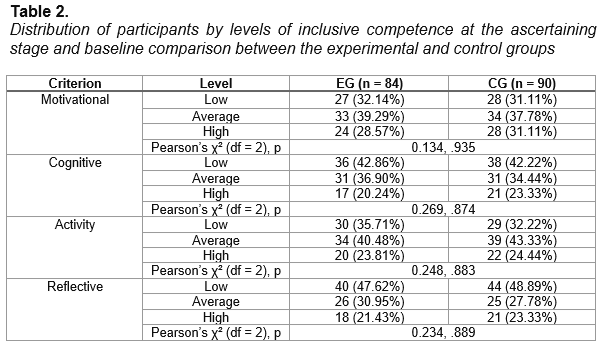
Baseline comparability of the experimental and control groups. Table 1 presents the distribution of students across the low, average, and high levels of inclusive competence at the ascertaining stage. The distributions were relatively similar across the four criteria. For example, the proportion of students with a low cognitive level was 42.86% in the experimental group and 42.22% in the control group, while the corresponding proportions for the reflective criterion were 47.62% and 48.89%, respectively.
Pearson’s chi-square tests confirmed that there were no statistically significant baseline differences between the experimental and control groups. For the motivational criterion, χ²(2) = 0.134, p = .935; for the cognitive criterion, χ²(2) = 0.269, p = .874; for the activity criterion, χ²(2) = 0.248, p = .883; and for the reflective criterion, χ²(2) = 0.234, p = .889. Thus, the distributions of students across the three competence levels did not differ significantly between the groups before the formative intervention. These findings provide empirical support for the baseline comparability of the groups and establish an appropriate basis for subsequent analysis of changes following the intervention.
The results of the ascertaining stage revealed a predominance of low and average levels of inclusive competence across the motivational, cognitive, activity, and reflective criteria, indicating the need for a comprehensive approach to improving students’ professional preparation. Accordingly, the developed training system incorporated innovative digital approaches and pedagogical conditions aimed at strengthening inclusive competence and professional skills.
The preparation of students in the experimental group (EG) included theoretical and practice-oriented training, additional qualifications, master classes, seminars, blended and distance learning, mentoring, and participation in professional communities. Particular attention was given to digital technologies, including augmentative and alternative communication tools, adaptive learning platforms, sensory games, and specialized software. These resources were combined with emotional-intelligence development, Universal Design for Learning, art therapy, project-based and differentiated learning to support the individualization of professional training.
The training system also emphasized practical experience, analysis of professional cases, exchange of experience, and discussion of contemporary digital methods. Thus, preparation for inclusive education was organized as a multidimensional process integrating theoretical knowledge, practical skills, digital competence, and inclusive professional values.
The organization of an inclusive educational environment was guided by the principles of educational accessibility, individual planning and reasonable accommodation, adaptation of curricula and teaching methods, and additional support according to children’s educational needs. It also emphasized equality, justice, respect for individual differences, continuous improvement of educational practices, humanization, safety, empathy, and acceptance of each child as an individual.
Overall, the findings of the ascertaining stage demonstrated the need to strengthen the professional preparation of master’s students for professional activity in inclusive educational environments through an integrated combination of theoretical, practical, digital, and reflective approaches.
During the pedagogical interaction, EG students developed an understanding of the educational difficulties faced by children with special educational needs and learned to design appropriate psycho-pedagogical support strategies. Their training focused on understanding the psychological and pedagogical characteristics of such children, preventing conflicts, creating a supportive inclusive environment, developing positive attitudes toward inclusion, and ensuring the active participation of children with special educational needs in the educational process.
The formation of inclusive competence was supported by specific pedagogical conditions, including the creation of a barrier-free educational environment, adaptation of curricula and teaching methods, special courses and professional modules, international internships, master classes, training sessions, seminars, and blended and distance learning. Particular attention was given to digital tools, including augmentative and alternative communication programs, adaptive learning platforms, sensory games, and specialized software for correctional and speech therapy activities.
Thus, the developed training system combined theoretical preparation, practical activities, digital tools, and pedagogical support to strengthen students’ inclusive competence and professional readiness. The content of the experimental intervention was determined based on the results of the ascertaining stage.
Analysis of the research results.
At the final stage of the experiment, the effectiveness of the system and the pedagogical conditions developed by us and implemented for the formation of the respondents' inclusive competence were assessed, as well as the levels of its formation after the completion of the formative stage of the study. A repeated diagnosis was carried out within this stage using the developed toolkit, which consisted of levels, criteria, and indicators that were used at the ascertaining stage of the study. This research scheme provided the opportunity to track changes over time, conduct a comparative analysis, and objectively assess the effectiveness of the system and the developed pedagogical conditions implemented in the research process.
According to the previously defined four criteria, the assessment was carried out at three levels (high, average, low).
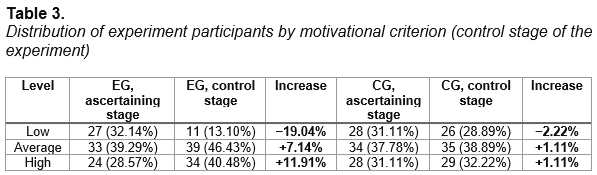
In Table 3, we present generalized data on the distribution of respondents by motivational criterion.
In Table 4, we present generalized data on the distribution of respondents by cognitive criterion.
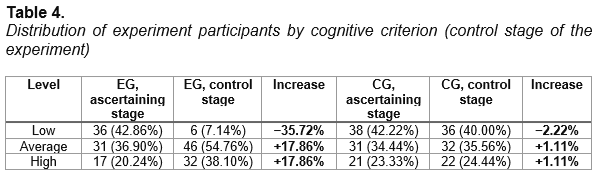
Table 5 presents summarized data on the distribution of respondents by activity criterion.
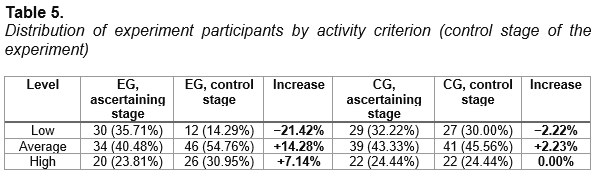
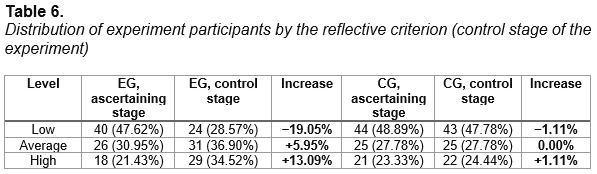
Table 6 presents summarized data on the distribution of respondents by the reflective criterion.
The control stage of the experiment demonstrated a substantial increase in the proportion of students with a high level of inclusive competence in the experimental group across all four criteria, whereas only minor changes were observed in the control group. The comparative dynamics of the high-level indicators according to the motivational, cognitive, activity, and reflective criteria are presented in Figure 1.
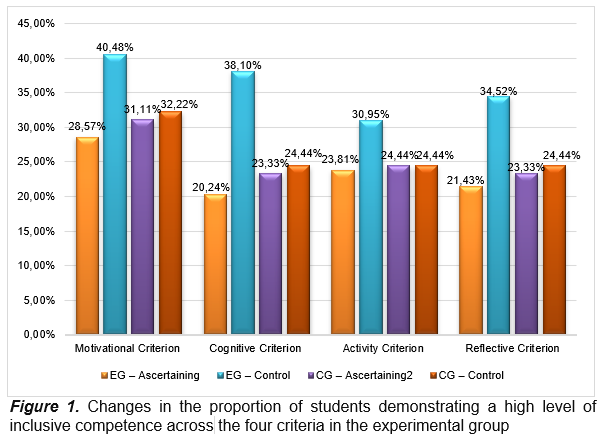
Figure 1 illustrates the changes in the proportion of students demonstrating a high level of inclusive competence across the four assessed criteria in the experimental group. The figure shows an increase in the high-level category for all four dimensions: from 28.57% to 40.48% for the motivational criterion, from 20.24% to 38.10% for the cognitive criterion, from 23.81% to 30.95% for the activity criterion, and from 21.43% to 34.52% for the reflective criterion.
The results presented in Tables 3–6 demonstrate a differentiated pattern of changes in the four dimensions of students’ inclusive competence rather than a uniform improvement across all criteria. Although a general reduction in the proportion of students at the low level and an increase in the average and high levels were observed in the experimental group, the magnitude and distribution of these changes varied considerably across the four criteria.
The most pronounced changes were observed for the cognitive criterion (Table 4). The proportion of students at the low level decreased from 42.86% at the ascertaining stage to 7.14% at the control stage, representing a reduction of 35.72 percentage points. At the same time, the proportion of students at the high level increased from 20.24% to 38.10%, while the average level increased from 36.90% to 54.76%. Thus, the cognitive dimension demonstrated the strongest overall redistribution away from the low level. This pattern is consistent with the intervention components that provided students with structured access to instructional materials, interactive learning activities, formative assessment, and professional content concerning inclusive education and relevant digital and specialized technologies.
The activity criterion showed a different pattern (Table 5). The proportion of students at the low level decreased from 35.71% to 14.29%, while the average level increased from 40.48% to 54.76%. The increase in the high-level category was comparatively smaller, from 23.81% to 30.95%. Therefore, the principal shift for the activity criterion occurred from the low to the average level rather than from the low to the high level. This pattern may be associated with the practical orientation of the intervention, including professional cases, interactive tasks, development of digital educational materials, and activities requiring students to apply inclusive methods and select appropriate digital resources. The results suggest that practical application developed substantially, but a larger proportion of students remained at the average level than at the high level.
The motivational criterion demonstrated another pattern of change (Table 3). The proportion of students at the low level decreased from 32.14% to 13.10%, whereas the proportion at the high level increased from 28.57% to 40.48%. The average level also increased, from 39.29% to 46.43%. These changes indicate a substantial positive shift in students’ professional orientations toward inclusive education, although the magnitude of the change was smaller than that observed for the cognitive criterion. This pattern is consistent with intervention activities that emphasized the value and professional importance of inclusive education, discussion of professional situations, mentoring, and students’ involvement in tasks concerning responsibility for creating supportive educational environments.
The reflective criterion also demonstrated positive but distinct changes (Table 6). The proportion of students at the low level decreased from 47.62% to 30.95%, while the high-level category increased from 21.43% to 34.52%. The average level increased from 30.95% to 34.52%. Compared with the cognitive criterion, the reduction in the low-level category was less pronounced, indicating that reflective development was more gradual. This pattern can be related to the intervention’s reflective activities, including self-assessment, feedback, analysis of professional cases and completed tasks, identification of difficulties, and consideration of further professional development. Such activities require students not merely to acquire knowledge but to analyse and regulate their own professional actions, which may explain the comparatively more moderate shift in the distribution.
Taken together, the findings indicate that the intervention was associated with different patterns of development across the four dimensions of inclusive competence. Cognitive development showed the most pronounced redistribution toward higher levels; activity development was characterized primarily by movement toward the average level; motivational development demonstrated a notable increase in the high-level category; and reflective development showed a positive but comparatively more gradual shift. Therefore, the results should not be interpreted as evidence that all dimensions developed to the same extent. Rather, the differentiated patterns correspond to the different functions of the intervention activities and to the distinct nature of the four dimensions assessed.
These descriptive changes provide an indication of different patterns of development but do not, by themselves, establish the statistical significance of the observed differences. Therefore, the subsequent analysis examined the distributions of competence levels statistically using Pearson’s chi-square test and reported the corresponding χ² values, degrees of freedom, p-values, and effect sizes.
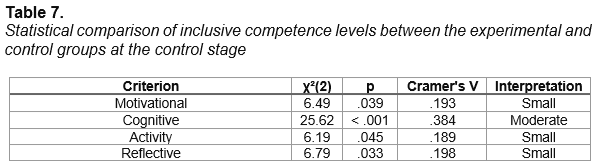
Table 7 presents the results of the Pearson chi-square tests comparing the distributions of inclusive competence levels between the experimental and control groups at the control stage. Statistically significant differences were observed for all four criteria. For the motivational criterion, the difference was statistically significant, χ²(2) = 6.49, p = .039, with a small effect size (Cramer’s V = .193). The cognitive criterion demonstrated the largest between-group difference, χ²(2) = 25.62, p < .001, with a moderate effect size (Cramer’s V = .384). Significant differences were also observed for the activity criterion, χ²(2) = 6.19, p = .045, Cramer’s V = .189, and the reflective criterion, χ²(2) = 6.79, p = .033, Cramer’s V = .198.
These findings indicate that, at the control stage, the distribution of inclusive competence levels differed significantly between the experimental and control groups across all four criteria. The largest difference was observed for the cognitive criterion, whereas the motivational, activity, and reflective criteria demonstrated small effect sizes.
Before and after the formative stage of the experiment, in order to compare the results obtained, statistical data processing was carried out using the Pearson criterion (χ²), which made it possible to compare the empirical distributions of indicators in the control and experimental groups.
Pearson’s chi-square test (χ²) was used for categorical comparisons of the distributions of students across the low, average, and high levels of inclusive competence. At the ascertaining stage, the test was used to examine baseline comparability between the experimental and control groups separately for the motivational, cognitive, activity, and reflective criteria. At the control stage, the distributions of competence levels were compared between the groups to determine whether statistically significant differences were present after the formative intervention. Statistical significance was evaluated at α = .05.
H₀: There is no statistically significant difference in the distribution of inclusive competence levels between the experimental and control groups at the control stage.
H₁: There is a statistically significant difference in the distribution of inclusive competence levels between the experimental and control groups at the control stage.
-p < .05 → reject H₀;
-p ≥ .05 → fail to reject H₀.
The descriptive changes observed between the ascertaining and control stages indicate a positive shift in the distribution of inclusive competence levels in the experimental group. However, because the same students were assessed at both stages, these repeated observations are dependent and the pretest–posttest distributions were not treated as independent samples. Therefore, the primary inferential analysis of intervention effectiveness was based on comparisons between the experimental and control groups at the control stage.
Pearson’s chi-square test was applied to compare the distributions of students across the low, average, and high levels of inclusive competence between the experimental and control groups after completion of the formative intervention. The analysis demonstrated statistically significant differences for all four criteria. For the motivational criterion, the distributions differed significantly between the groups, χ²(2) = 6.49, p = .039, with a small effect size (Cramer’s V = .193). For the cognitive criterion, the difference was statistically significant and accompanied by a moderate effect size, χ²(2) = 25.62, p < .001, Cramer’s V = .384. For the activity criterion, a statistically significant difference was also observed, χ²(2) = 6.19, p = .045, Cramer’s V = .189. Finally, the reflective criterion demonstrated a statistically significant difference between the groups, χ²(2) = 6.79, p = .033, Cramer’s V = .198.
These results indicate that, at the control stage, the distribution of inclusive competence levels differed significantly between students who participated in the digital-supported intervention and those who continued regular professional training. The largest between-group difference was observed for the cognitive criterion, which was also characterized by the largest effect size. The statistically significant differences observed for the motivational, activity, and reflective criteria were accompanied by small effect sizes.
The baseline comparisons showed no statistically significant differences between the experimental and control groups for any of the four criteria: motivational, χ²(2) = 0.134, p = .935; cognitive, χ²(2) = 0.269, p = .874; activity, χ²(2) = 0.248, p = .883; and reflective, χ²(2) = 0.234, p = .889. Thus, the groups were comparable in the distribution of competence levels before the intervention.
Taken together, the descriptive changes over time and the statistically significant differences between the groups at the control stage provide evidence consistent with a positive association between participation in the digital-supported pedagogical intervention and higher levels of inclusive competence. Given the quasi-experimental design and the absence of individual randomization, these findings should be interpreted as evidence of an intervention-related difference rather than definitive proof of causality.
Limitations of the Study
Several limitations should be considered. First, the quasi-experimental design and absence of individual randomization may allow selection effects or pre-existing differences between groups. Second, the study did not include long-term follow-up, so the sustainability and transfer of the observed improvements to professional practice remain uncertain. Third, inclusive competence was assessed using four criteria and three competence levels; future research could incorporate additional validated instruments and direct measures of professional performance. Fourth, because the same students were assessed before and after the intervention, pre–post observations were dependent and were therefore interpreted descriptively; future studies with individual-level longitudinal data should use appropriate repeated-measures methods. Finally, the study was conducted in a specific higher education context, limiting the generalizability of the findings. Multi-institutional studies with larger and more diverse samples are needed to confirm the robustness and transferability of the results.
Conclusions
The study substantiated the theoretical and methodological foundations for preparing master’s students for professional activity in an inclusive educational environment and developed a system of professional training aimed at enhancing their inclusive competence. The proposed system integrated digital-supported learning activities, practical professional tasks, interactive learning formats, and reflective practices into the students’ professional training.
The pedagogical experiment was conducted in three interconnected stages: ascertaining, formative, and control. The assessment of inclusive competence was based on four criteria–motivational, cognitive, activity, and reflective–and three levels of formation: low, average, and high. At the ascertaining stage, no statistically significant differences were identified between the experimental and control groups for any of the four criteria: motivational, χ²(2) = 0.134, p = .935; cognitive, χ²(2) = 0.269, p = .874; activity, χ²(2) = 0.248, p = .883; and reflective, χ²(2) = 0.234, p = .889. These results indicated comparable distributions of competence levels between the groups before the formative intervention.
The descriptive analysis demonstrated positive changes in the experimental group between the ascertaining and control stages. The proportion of students with a high level increased from 28.57% to 40.48% for the motivational criterion and from 20.24% to 38.10% for the cognitive criterion. For the activity criterion, the proportion of students at the high level increased from 23.81% to 30.95%, while for the reflective criterion it increased from 21.43% to 34.52%. At the same time, the proportion of students at the low level decreased across all four criteria. These changes indicate a positive redistribution of competence levels in the experimental group, although the magnitude and pattern of change differed across the four dimensions.
The comparison ofthe experimental and control groups at the control stage demonstrated statistically significant differences for all four criteria. For the motivational criterion, χ²(2) = 6.49, p = .039, with a small effect size (Cramer’s V = .193). For the cognitive criterion, χ²(2) = 25.62, p < .001, with a moderate effect size (Cramer’s V = .384). For the activity criterion, χ²(2) = 6.19, p = .045, with a small effect size (Cramer’s V = .189). For the reflective criterion, χ²(2) = 6.79, p = .033, with a small effect size (Cramer’s V = .198). The largest between-group difference was therefore observed for the cognitive criterion.
Taken together, the results provide evidence of a statistically significant association between participation in the developed digital-supported pedagogical intervention and the distribution of students’ inclusive competence levels at the control stage. The findings are particularly pronounced for the cognitive dimension, while the motivational, activity, and reflective dimensions demonstrated smaller between-group effects. Thus, the results support the practical value of the proposed training system for the development of inclusive competence in master’s students preparing for professional activity in inclusive educational environments.
At the same time, the findings should be interpreted in light of the quasi-experimental design. The experimental and control groups were formed from existing academic groups, and individual randomization was not used. Therefore, the statistically significant differences observed at the control stage should not be interpreted as definitive proof of a causal effect of the intervention. Rather, they provide empirical evidence consistent with the effectiveness of the developed pedagogical system under the conditions of the present study.
Future research should strengthen the evidence through randomized or longitudinal designs, repeated follow-up assessments, and additional measures of students’ transfer of inclusive competence to authentic professional practice. Such research would make it possible to determine whether the observed improvements are sustained over time and to further clarify the contribution of digital-supported pedagogical interventions to the preparation of specialists for inclusive educational environments.