
Artículo de investigación
Aplicaciones móviles y sistemas pedagógicos para fomentar la competencia digital en la educación superior
Mobile applications and pedagogical systems for fostering digital competence in higher education
Recibido: · Aceptado: · Publicado:
Cómo citar: Sinitska, N., Hrytsai, N., Polishchuk, O., Shayner, H., & Ostapchuk, N. (2026). Mobile applications and pedagogical systems for fostering digital competence in higher education. Revista Eduweb, 20(3), 438–456. https://doi.org/10.46502/issn.1856-7576/2026.20.03.24
Resumen
Objetivo de la investigación: fundamentar teóricamente y verificar experimentalmente las condiciones pedagógicas y el sistema desarrollados para fomentar la competencia digital de los estudiantes durante su formación profesional. El análisis de los datos obtenidos durante el experimento inicial (formativo) reveló que los estudiantes, tanto del grupo de control como del experimental, mostraban predominantemente niveles iniciales o intermedios de competencia digital. Esto evidenció la eficacia limitada del proceso actual de fomento de la competencia digital en la educación superior y puso de manifiesto la necesidad de implementar, en el proceso educativo, las condiciones pedagógicas propuestas y el sistema desarrollado por el autor para el desarrollo de dicha competencia mediante aplicaciones móviles. Los datos agregados del experimento formativo relativos a la competencia digital de los estudiantes del grupo experimental indican cambios dinámicos positivos y significativos en el nivel general de competencia. Los cambios más sustanciales en el grupo experimental se produjeron en el nivel inicial, mientras que en el grupo de control fueron insignificantes; esto confirma la eficacia del sistema y de las condiciones pedagógicas propuestas. Se realizó un análisis estadístico de los resultados experimentales utilizando la prueba de chi-cuadrado (χ²) de Pearson para fundamentar que los resultados obtenidos no se debían al azar.
Palabras clave: competencia digital; sociedad digital; tecnologías digitales; educación superior; aplicaciones móviles.
Abstract
Research objective: to provide a theoretical rationale for, and experimentally verify, the developed pedagogical conditions and the system for fostering students' digital competence during their professional training. Analysis of data obtained during the baseline (formative) experiment revealed that students in both the control and experimental groups predominantly demonstrated initial or intermediate levels of digital competence. This showed the limited effectiveness of the existing process for fostering digital competence in higher education and highlighted the need to implement the proposed pedagogical conditions and the author's system for developing digital competence through mobile applications in the educational process. Aggregated data from the formative experiment regarding the digital competence of students in the experimental group indicate significant positive dynamic changes in the overall level of competence. The most substantial changes in the experimental group occurred at the initial level, whereas changes in the control group were negligible; this confirms the effectiveness of the system and pedagogical conditions we proposed. We performed statistical processing of the experimental results using Pearson’s chi-squared (χ²) test to substantiate the claim that the obtained results were not due to chance.
Keywords: digital competence; digital society; digital technologies; higher education; mobile applications.
Introduction
The rapid development of modern information society necessitates the modernization and significant transformation of the higher education system (Bilyk et al., 2023). One way to motivate students to study specialized disciplines, stimulate their cognitive interest, and improve the quality of the educational process in universities is to implement digital technologies for e-learning, mobile learning, and distance learning (Nikolopoulou, 2018).
A key step in modern education is integrating mobile applications into the educational process, reflecting the significant role of digital technologies in modern society. As tablets and smartphones become more common among students, using these devices for educational purposes is a logical development and a necessary adaptation to the constant changes in the educational process (Miyer et al., 2023).
The ongoing digital transformation of education has become a strategic priority worldwide, requiring higher education institutions to redesign teaching, learning, and assessment practices in response to technological advancements and the demands of the digital society (European Commission, 2020; UNESCO, 2023).
Mobile applications enable the exchange of information for educational purposes, the creation and opening of multimedia files, and access to adapted reference and educational resources via the Internet – including specialized websites featuring practical exercises, online tests, and more (Fernández-Batanero et al., 2022).
The popularity of various mobile applications is growing alongside the proliferation of mobile devices (Palshkov et al., 2026). Researchers have identified key advantages of mobile applications: they must be accessible via the Internet; they must resume from where work was interrupted and be compact; they should enable productive use of spare time; and they must synchronize with mobile learning devices (Sandoval-Henríquez & Badilla-Quintana, 2022).
Mobile applications in higher education represent a promising avenue for developing the education sector; therefore, we selected the following research topic: "Mobile applications in higher education: an experimental study".
Despite the growing body of research on mobile applications in education, several important gaps remain. Existing studies have primarily examined the technical characteristics, usability, accessibility, and general educational benefits of mobile applications (Fernández-Batanero et al., 2022; Nikolopoulou, 2018; Sandoval-Henríquez & Badilla-Quintana, 2022). Recent research has also highlighted the potential of mobile technologies to support personalized learning, student engagement, and flexible access to educational resources. However, limited attention has been paid to the systematic development of students’ digital competence through the purposeful integration of mobile applications within higher education curricula. Furthermore, there is a lack of experimentally validated pedagogical conditions and comprehensive instructional systems that combine mobile applications with digital technologies, artificial intelligence tools, collaborative platforms, and digital learning environments. Empirical evidence regarding the effectiveness of such integrated approaches in developing cognitive, activity-based, and motivational components of digital competence also remains insufficient.
Based on these research, the following hypotheses were formulated:
H1: Students exposed to the proposed pedagogical system integrating mobile applications will demonstrate significantly higher levels of digital competence than students in the control group.
H2: The implementation of the pedagogical conditions will positively affect all three components of digital competence: cognitive, activity-based, and motivational.
H3: The experimental group will demonstrate statistically significant improvements in digital competence levels between the baseline and formative stages of the experiment.
Accordingly, the study aims to provide a theoretical rationale for and experimentally verify the effectiveness of the developed pedagogical conditions and instructional system for fostering students’ digital competence during professional training.
Literature Review
Recent advances in educational technology have significantly increased scholarly interest in the use of artificial intelligence (AI) and mobile learning (m-learning) within higher education. The rapid digital transformation of universities has stimulated the development of innovative learning environments that combine mobile technologies, intelligent systems, learning analytics, and personalized educational approaches. Contemporary research increasingly recognizes that mobile applications and AI-based tools are becoming essential components of modern university teaching and learning processes.
A substantial body of recent literature has examined the adoption and effectiveness of mobile learning in higher education. A systematic review by Valencia-Arias et al. (2024), based on studies indexed in Scopus and Web of Science, demonstrated that mobile learning improves flexibility, accessibility, and student engagement while supporting personalized learning experiences. The authors identified behavioral intention, attitude toward technology, and perceived usefulness as the primary factors influencing successful m-learning adoption in university settings.
A comprehensive meta-review conducted by Bond et al. (2024) further demonstrated that AI-based educational systems enhance personalization, learner support, and adaptive instruction. However, the authors also identified important challenges related to ethics, transparency, methodological rigor, and responsible AI implementation in higher education. These findings suggest that the educational value of AI depends not only on technological capabilities but also on pedagogically sound integration strategies.
Boiko et al. (2024) and Hunko (2023) emphasize that mobile applications expand access to education, promote educational equity, and support personalized learning experiences. Their findings suggest that mobile technologies increase student engagement and provide more flexible opportunities for acquiring professional knowledge and skills.
The second area focuses on technological and pedagogical challenges associated with mobile learning. Vinodhini et al. (2021) identified several limitations of existing applications, including inconvenient interfaces, outdated information, insufficient notification systems, and difficulties in information retrieval. Similarly, Opryshko et al. (2024) highlighted infrastructural and organizational barriers, stressing the importance of reliable Internet access and adequate digital infrastructure for the successful implementation of mobile learning. These studies demonstrate that the effectiveness of mobile applications depends not only on their pedagogical design but also on technological and institutional conditions.
The third area addresses the integration of innovative digital technologies into educational environments. Soliar et al. (2021) demonstrated the educational value of cloud-based applications and online resources for developing students’ creativity and professional competencies. Likewise, Hu et al. (2019) emphasized the importance of technical quality, usability, and platform compatibility in the development of mobile applications, which directly affect user experience and educational effectiveness.
Research on intelligent educational technologies additionally demonstrates the growing importance of AI-supported personalized learning. Recent systematic reviews indicate that intelligent educational systems facilitate adaptive instruction, self-regulated learning, and individualized educational pathways that accommodate learners’ diverse needs and learning preferences. These technologies have proven particularly valuable in higher education environments characterized by increasing diversity and growing demands for flexible learning opportunities.
Despite the substantial growth of research on mobile learning and artificial intelligence, several gaps remain. Most existing studies examine either mobile learning adoption or AI implementation separately. Limited attention has been devoted to experimentally validating comprehensive pedagogical systems that integrate mobile applications, artificial intelligence tools, collaborative digital platforms, and digital learning environments for the systematic development of students’ digital competence. Furthermore, empirical evidence regarding the impact of such integrated approaches on cognitive, activity-based, and motivational dimensions of digital competence remains insufficient. These gaps justify the need for the present study and determine its research objectives.
Methodology
Research Design
The study used a quasi-experimental research design to investigate the effectiveness of pedagogical conditions and an author-developed system for fostering students’ digital competence through mobile applications in higher education. The research assumed that purposefullyintegrating mobile applications, digital technologies, artificial intelligence tools, and a stimulating digital educational environment into the educational process would contribute to the development of students’ digital competence.
The experimental study consisted of two interconnected stages: ascertaining and formative. The research aimed to provide a theoretical justification for the proposed pedagogical conditions and to experimentally verify their effectiveness in developing students’ digital competence during professional training.
Participants
The study involved193 higher education students, including95 students in the control group (CG)and98 students in the experimental group (EG). The same participants took part in both the ascertaining and formative stages of the experiment, and the group composition remained unchanged throughout the study.
Students in the experimental group implemented the developed pedagogical conditions and the author’s system for developing digital competence through mobile applications, while students in the control group continued their studies under traditional educational conditions.
Research Methods
The study employed a combination of theoretical, empirical, experimental, and statistical methods.
Theoretical methods included analysis, synthesis, comparison, systematization, and generalization of scientific literature related to digital competence, mobile learning, educational technologies, and digital transformation in higher education. These methods were used to determine the conceptual foundations of digital competence development and to substantiate the pedagogical conditions for its formation.
Empirical methods included surveys, questionnaires, pedagogical observation, testing, and diagnostic procedures. These methods assessed students’ levels of digital competence and identified changes during the implementation of the pedagogical intervention.
Experimental methods involved a pedagogical experiment consisting of an ascertaining stage and a formative stage. The experiment was conducted to verify the effectiveness of the proposed pedagogical conditions and the author’s system for developing digital competence through mobile applications.
Statistical methods included quantitative and qualitative analysis and the application of mathematical statistics to verify the significance of differences between the experimental and control groups. The reliability of the results was assessed usingPearson’s chi-squared (χ²) test.
Assessment Framework
The development of students’ digital competence was assessed according to three interrelated criteria: cognitive, activity-based, and motivational.
Thecognitive criterionassessed students’ theoretical knowledge regarding mobile applications, digital technologies, and digital safety. Its indicators included knowledge of terminology, understanding of digital processes and technologies, and awareness of safety principles associated with mobile applications.
The activity-based criterion reflected students’ practical skills in using mobile applications and digital technologies. Indicators included accuracy in task performance, effectiveness and speed of using digital tools, and the ability to collaborate in online environments.
The motivational criterion reflected students’ attitudes toward mobile applications and digital technologies, readiness for independent learning, digital values, initiative in educational activities, online responsibility, and adherence to ethical standards in digital environments.
Based on these criteria, four levels of digital competence development were distinguished: initial, intermediate, sufficient, and high.
Intervention Procedure
The formative intervention lasted 16 weeks (one academic semester) and included 64 contact hours (4 hours per week) supplemented by independent learning activities.
The intervention in the experimental group was organized according to a structured weekly routine:
Week 1–2. Orientation and baseline diagnostics
- Initial assessment of digital competence .
-Introduction to mobile learning platforms and digital tools.
-Training in the use of Google Classroom and cloud-based collaboration services.
Week 3–6. Mobile learning implementation
- Use of mobile applications for content access, communication, and project activities .
-Weekly completion of mobile learning tasks (2 hours in class, 2 hours independent work).
-Continuous interaction through mobile educational platforms.
Week 7–10. Cloud-based collaborative learning
- Use of Google Drive, Google Docs, OneDrive, and Padlet .
-Collaborative projects and shared content creation.
-Weekly group assignments requiring online cooperation.
Week 11–13. Artificial intelligence integration
- Use of AI-supported educational tools for information retrieval, content generation, feedback, and problem-solving .
-Weekly AI-supported practical tasks.
-Reflection activities focused on responsible and ethical AI use.
Week 14–15. Gamification activities
- Implementation of gamified learning scenarios, quizzes, badges, leaderboards, and challenge-based tasks .
-Use of educational platforms supporting gamification elements.
-Evaluation of engagement and motivation indicators.
Week 16. Final assessment
- Post-test diagnostics.
-Collection of experimental data.
-Comparative analysis of control and experimental group outcomes.
The average weekly workload consisted of:
- Mobile applications: 2 hours/week.
-Cloud technologies: 1 hour/week.
-Artificial intelligence tools: 0.5 hour/week.
-Gamification activities: 0.5 hour/week.
Control of Confounding Variables
To ensure the internal validity and replicability of the quasi-experimental design, several procedures were implemented to control potential confounding variables.
1.Equivalent participant groups.The control group (CG, n = 95) and experimental group (EG, n = 98) demonstrated comparable baseline levels of digital competence during the ascertaining stage.
2.Identical curriculum content.Both groups studied the same academic disciplines, learning objectives, instructional materials, and assessment criteria.
3.Equivalent instructional time.Students in both groups received the same number of contact hours and independent learning tasks throughout the semester.
4.Common teaching staff.The same instructors participated in teaching both groups, reducing instructor-related variability.
5.Standardized assessment procedures.The same diagnostic instruments, criteria, indicators, and evaluation procedures were applied before and after the intervention.
6.Controlled technological access.All participants had access to institutional digital infrastructure and Internet connectivity required for participation.
7.Isolation of the intervention effect.The principal difference between groups was the implementation of the developed pedagogical conditions and integrated technological environment (mobile applications, AI tools, cloud technologies, and gamification) in the experimental group.
These procedures minimized external influences and increased the reliability and reproducibility of the results.
Data Analysis
The collected data were processed using quantitative, qualitative, and statistical methods.
Quantitative analysis was used to determine the distribution of students across the established levels of digital competence and to compare results before and after the formative intervention.
Qualitative analysis was used to interpret the nature and direction of changes in students’ digital competence and to evaluate the contribution of mobile applications and digital technologies to its development.
Statistical analysis was performed using Pearson’s chi-square (χ²) test, which is widely recommended for examining differences between categorical variables and frequency distributions in educational and behavioral research. The test allows researchers to determine whether observed differences between groups are statistically significant and not attributable to random variation. Pearson’s chi-square test is particularly appropriate for studies involving categorical levels of competence development and comparisons between control and experimental groups (Franke et al., 2012; Rossi, 2010).
Ethical Considerations
The study followed the ethical principles applicable to educational research. Participation was voluntary, and participants were informed about the purpose, procedures, and stages of the experiment before taking part in the research. The study maintained confidentiality and anonymity throughout and used the collected data exclusively for scientific purposes.
Results
We view the development of students' digital competence in higher education as a comprehensive set of measures involving the creation of pedagogical conditions, the development of a mobile-application-based system, and the effective organization of this process. We identify the following key areas:
- Substantiating and developing a learning system that utilizes mobile applications to foster students' digital competence.
- Implementing principles for developing students' digital competence through the use of mobile applications.
- Adjusting and monitoring the system of targeted measures aimed at developing students' digital competence through the use of mobile applications.
A primary objective in developing digital competence is adopting a practice-oriented approach to using mobile applications while enabling students to master critical thinking, digital literacy, and safety and ethics standards.
In our study, we have identified the main criteria corresponding to the specific indicators of this competence:
1. The cognitive criterion assesses the level of theoretical knowledge regarding mobile applications, digital technologies, and safety rules. Assessment indicators: command of terminology; understanding of the algorithms underlying the phenomenon in question and the knowledge system regarding its digitalization; and knowledge of the safety rules necessary for the successful use of mobile applications.
2. The activity-based criterion assesses skills and practical abilities. Assessment indicators: accuracy in task execution; speed in using mobile applications and the efficiency of digital tools; and the ability to collaborate online.
3. Motivational criterion: evaluates attitudes toward mobile applications and digital technologies, online activity, readiness for independent learning, and responsibility for one's own digital activities.
Assessment indicators: persistence in using mobile applications; established digital values; attitudes and demonstrated personal initiative in educational activities; and adherence to online responsibility and the ethics of mobile application use.
Based on these criteria, and for diagnostic measurement within the context of the research topic, we identified the following levels of digital competence development among higher education students:
1. Initial level: the student possesses basic skills and knowledge but lacks consistency in their activities; frequently requires instructor assistance.
2.Intermediate level: the student has sufficient skills and knowledge but cannot always apply them in standard situations.
3.Sufficient level: the student can analyze information, independently solve most tasks in standard situations, and create content.
4.High level: the student demonstrates a high level of motivation and proficiency; can creatively use mobile applications and digital technologies in non-standard situations; and acts as a mentor to others.
A total of 193 respondents participated in the experiment, comprising a control group (CG) of 95 students and an experimental group (EG) of 98 students. Analysis of the data obtained during the baseline experiment indicates that, across all applied criteria, the majority of students in both the control group (CG) and the experimental group (EG) demonstrate only initial or intermediate levels of digital competence – competence acquired through the digitalization and use of technologies within the higher education learning process.
Regarding the cognitive criterion, the following was established: in the CG, an initial level of digital competence – necessary for acquiring theoretical knowledge about mobile applications, digital technologies, capabilities, and safety rules, as well as for understanding netiquette – was observed in 25.3% of students; an intermediate level in 36.8%; a sufficient level in 24.2%; and a high level in only 13.7%. In the EG, 26.5% of students had an initial level, 36.7% an intermediate level, 23.5% a sufficient level, and only 13.3% a high level (Table 1).
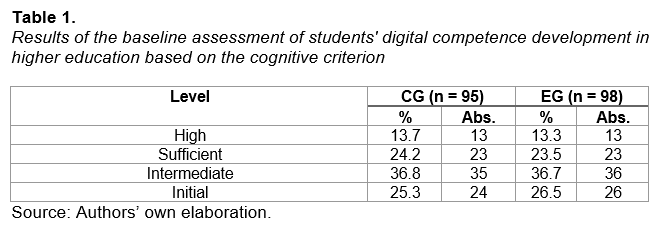
The distribution of indicators based on the cognitive criterion allows an objective analysis of the level at which students have mastered theoretical knowledge of the operating principles of mobile applications, information flows, and the use of modern digital tools. The results provided an empirical basis for adjusting the methodology for using mobile applications, fostering students' digital culture, and identifying problem areas in professional training.
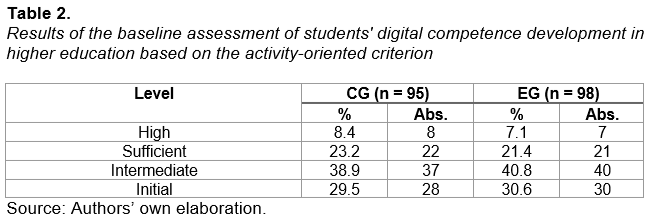
Regarding the activity-based criterion, the results of the baseline assessment of students' digital competence – specifically concerning the use of mobile applications during professional training – revealed the following: in the control group (CG), an initial level of theoretical preparation and understanding (encompassing task execution, tool effectiveness, digital environment formation, application usage speed, and online collaboration skills) was observed in 29.5% of students, an intermediate level in 38.9%, a sufficient level in 23.2%, and a high level in only 8.4%. In the experimental group (EG), 30.6% of students were at the initial level, 40.8% at the intermediate level, 21.4% at the sufficient level, and just 7.1% at the high level.
The data from the baseline experiment stage indicate relative homogeneity between the CG and the EG, thereby confirming the objectivity of the subsequent comparative analysis. At the same time, the prevalence of the initial and intermediate levels in both groups, based on the activity-oriented criterion, indicates the need to implement pedagogical conditions and a proprietary system for developing students' digital competence in higher education institutions through mobile applications in the educational process (Table 2).
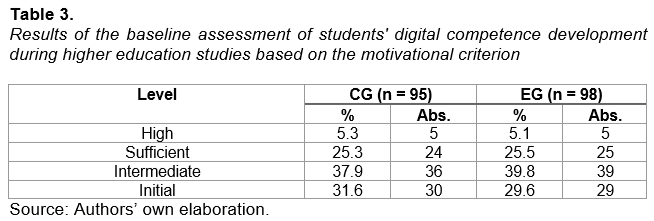
Based on the motivational criterion, the results of the baseline assessment regarding the development of students' digital competence during higher education studies were determined: in the control group (CG), an initial level of students' drive to use mobile applications, development of digital values, attitudes, and demonstration of personal qualities – such as initiative, online responsibility, and ethics – was found in 31.6% of students; anintermediate level in 37.9%; a sufficient level in 25.3%; and a high level in only 5.3%. In the experimental group (EG), 29.6% of students had an initial level, 39.8% had anintermediate level, 25.5% had a sufficient level, and only 5.1% had a high level (Table 3).
The overall level of students' digital competence development, as determined during the baseline experiment stage of higher education studies based on three criteria, was as follows: in the control group (CG), an initial level was observed in 28.4% of students, an intermediate level in 37.9%, a sufficient level in 24.2%, and a high level in only 9.5%. In the experimental group (EG), 29.6% of students had an initial level, 38.8% an intermediate level, 23.5% a sufficient level, and only 8.2% a high level (Table 4).
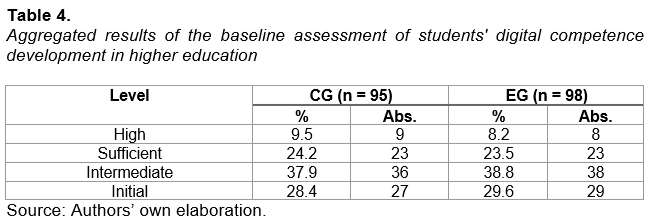
The analysis of the results of the ascertainment experiment with the students who took part in it proved the insufficient efficiency of the process of organizing the formation of digital competence of students in the higher school, the need to implement pedagogical conditions, and the developed author's system of forming the digital competence of students in institutions of higher education through the use of mobile applications in the educational process of the higher school.
Planning, organization, and results of a formative experiment.
The purpose of the formative experiment was to test the effectiveness of the developed pedagogical conditions and the author's system for forming students' digital competence through mobile applications in the higher school educational process.
The quantitative composition of the students who participated in the formative experiment, as well as the diagnostic tools we used, remained unchanged during both the ascertainment and formative stages. In CG, we did not implement the pedagogical conditions we proposed, whereas in EG we implemented the author's work we developed.
This made it possible to track dynamic changes based on three criteria for the formation of digital competence and to compare quantitative and qualitative changes before and after introducing the author's system and pedagogical conditions.
The verification of the levels of formation of digital competence of students in institutions of higher education was carried out in CG, where pedagogical conditions and the author's system were not implemented, and in EG, where pedagogical conditions were implemented and an author's system of formation of digital competence of students in institutions of higher education was developed through the use of mobile applications. During the formative evaluation, analysis of the experimental data helped identify changes in students' levels of formation of the defined competence across all criteria.
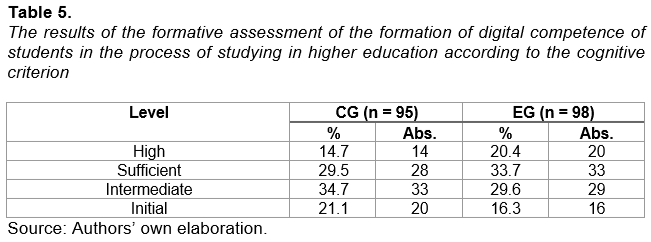
Thus, according to the cognitive criterion of the formation of digital competence of students, it was found: in CG, 21.1% of students showed an initial level of formation of the studied competence, an intermediate level – 34.7% of students, a sufficient level – 29.5% of students, and a high level – only 14.7% of students. In the EG, 16.3% of students had an initial level, 29.6% an intermediate level, 33.7% a sufficient level, and 20.4% a high level (Table 5).
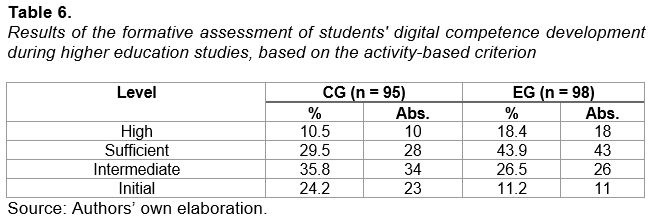
Based on the motivational criterion, the results of the formative experiment regarding the level of students' digital competence development during higher education studies were as follows: in the control group, an initial level of the phenomenon was observed in 27.4% of students, an intermediate level in 33.7%, a sufficient level in 30.5%, and a high level in only 8.4%. In the experimental groups, 14.3% of students had an initial level, 30.6% an intermediate level, 33.7% a sufficient level, and 21.4% a high level.
At the formative assessment stage, the overall generalized level of students' digital competence – developed during higher education studies – was determined based on all criteria (cognitive, activity-based, and motivational) as follows: in the control group, an initial level was observed in 25.3% of students, an intermediate level in 34.7%, a sufficient level in 29.5%, and a high level in only 10.5%. In the experimental groups, 12.2% of students had an initial level, 27.6% an intermediate level, 39.8% a sufficient level, and 20.4% a high level.
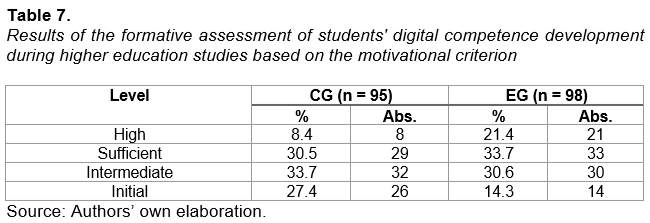
The results presented in Table 7 indicate substantial improvements in the motivational component of students' digital competence in the experimental group. The proportion of students demonstrating a high level increased to 21.4% in the experimental group compared to only 8.4% in the control group. Simultaneously, the percentage of students with an initial level decreased to 14.3% in the experimental group, whereas it remained considerably higher in the control group (27.4%). These findings suggest that the integrated use of mobile applications, artificial intelligence tools, cloud-based learning environments, and gamification strategies positively influenced students' motivation, engagement, and readiness for independent digital learning.
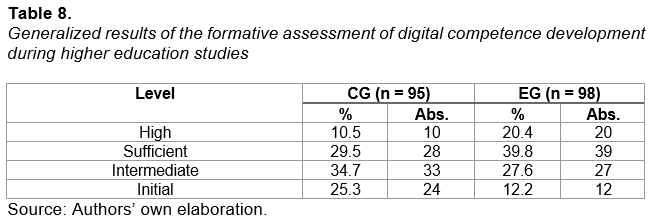
The generalized results presented in Table 8 demonstrate substantial improvements in the overall level of students’ digital competence following the implementation of the proposed pedagogical system. In the experimental group, the proportion of students achieving sufficient and high levels reached 60.2%, compared with only 40.0% in the control group. At the same time, the percentage of students with an initial level of digital competence decreased to 12.2% in the experimental group, whereas it remained considerably higher in the control group (25.3%). The proportion of students demonstrating a high level of digital competence in the experimental group (20.4%) was almost twice that observed in the control group (10.5%). These findings confirm the effectiveness of the developed pedagogical conditions and indicate that the integrated use of mobile applications, artificial intelligence tools, cloud technologies, and gamified learning activities contributes significantly to the development of students’ digital competence in higher education.
Thus, the aggregated data from the formative experiment regarding the development of digital competence among students in the experimental group (EG) indicate significant positive dynamic changes in its overall level. The most substantial changes in the EG occurred at the initial level, whereas the dynamics in the control group (CG) were negligible.
Based on the data, we conclude that the system we substantiated and the implemented pedagogical conditions were effective; students in the EG showed significantly greater quantitative changes than the CG across all criteria for the development levels of the competence under study.
We statistically analyzed the experimental results using Pearson’s chi-squared (χ²) test to support the claim that the results were not due to chance and that the difference in digital competence levels between EG and CG students following the formative training process was significant. This demonstrates a meaningful interrelationship between the implemented system and pedagogical conditions and the resulting levels of student digital competence.
We attribute the lack of significant differences in the competence levels of CG students – when compared to the results of the initial baseline (diagnostic) experiment – to the students' existing cognitive interests and general development.
The analysis of the experimental verification results and the statistical assessment of the system's implementation – along with the pedagogical conditions for developing students' digital competence – revealed positive trends within the experimental group regarding the levels of competence achieved across cognitive, activity-based, and motivational criteria.
Discussion
During the baseline stage of our research, we needed to provide a theoretical rationale for a set of pedagogical conditions designed to ensure the effectiveness of the process under study.
The first condition involved creating a stimulating digital educational environment in higher education. This entailed using collaboration platforms (such as Padlet and Google Classroom) and adopting an innovative approach to learning through gamification – specifically, utilizing the "Be Internet Awesome" program to foster high levels of student engagement and motivation.
The second condition involved integrating artificial intelligence technologies to serve as an intelligent partner, enabling students to realize their creative potential at a qualitatively new, innovative level.
The third condition focused on using mobile applications to cultivate digital values and foster personal qualities such as initiative in educational activities, online responsibility, and ethical mobile app use.
One key advantage of using mobile applications in the experimental group was the ability to individualize the learning process. These applications offered a personalized approach that adapted to each student's specific needs.
Mobile applications assessed the students' current knowledge levels and adapted content to ensure accessibility, avoiding cognitive overload from overly complex material; this fostered individual development and allowed students to work at their own pace – revisiting difficult topics as needed while accelerating through areas of strength. These applications provided a wide range of learning tools and up-to-date information, offering diverse resources such as interactive simulations, e-books, podcasts, and videos tailored to various learning preferences.
By incorporating gamification and interactive elements, mobile apps made learning more active and engaging, encouraged consistent study habits, and used visual and practical experiences to illustrate complex concepts, improving retention and comprehension. They also helped students prioritize tasks, organize study schedules, meet deadlines, become more autonomous learners, better prepare for the job market, and track their own progress. Platforms like Coursera and Khan Academy offered a wide range of courses and educational materials accessible on mobile devices. Educational apps such as Duolingo (for language learning) and Mathway (for solving math problems) also gained popularity among students. At the same time, Wilma facilitated communication by enabling students to share assignments, grades, and feedback.
Ultimately, mobile applications supported personalized learning and transformed the educational landscape for these students by providing unique access to knowledge and learning resources.
Integrating applications such as Google Classroom, Google Suite, and Quizlet into the educational process for EG students facilitated feedback, streamlined assignment management, and enabled discussions on a centralized digital platform.
Beyond classroom management and individualized learning, mobile apps provided access to educational content and high-quality online courses. Leading platforms included Coursera, AnkiDroid Flashcards, Edmodo, and Photomath, exemplifying how modern technologies integrate into education.
Thus, integrating mobile apps into higher education showed significant potential for EG students by boosting motivation, improving academic performance, and offering an individualized, flexible approach to professional training; implementing mobile technologies added value by expanding and enhancing educational capabilities.
A key feature of using AI solutions in the experimental group was their practical orientation; this allowed students to use intelligent systems to analyze production processes, hone practical skills, simulate professional scenarios, and develop solutions. Consequently, this ensured higher-quality training for future professionals and aligned the vocational training process more closely with real-world professional conditions. At the same time, integrating artificial intelligence into the educational process transformed approaches to assessing learning outcomes. It paved the way for a shift toward more objective and flexible assessment models.
The findings of the present study are generally consistent with contemporary international research on mobile learning, digital competence development, and the educational application of artificial intelligence in higher education. The generalized results obtained during the formative stage demonstrated that 60.2% of students in the experimental group achieved sufficient or high levels of digital competence, compared to 40.0% in the control group. Simultaneously, the proportion of students with an initial level of digital competence decreased to 12.2% in the experimental group, whereas it remained considerably higher in the control group (25.3%). These results indicate the effectiveness of the proposed pedagogical system in fostering students’ digital competence.
The observed improvements correspond with the findings of recent systematic reviews on mobile learning in higher education. Previous research has demonstrated that mobile learning environments enhance flexibility, learner engagement, collaboration, and self-directed learning, which positively influence the development of digital skills and competencies. Researchers emphasize that the educational benefits of mobile learning are most evident when mobile technologies are integrated into pedagogically structured learning environments rather than used as standalone technological tools.
The substantial increase in the proportion of students achieving high and sufficient competence levels in the experimental group may be explained by the comprehensive nature of the intervention. Unlike many previous studies that focused exclusively on mobile applications, the present research integrated mobile learning, cloud technologies, artificial intelligence tools, collaborative digital platforms, and gamification strategies into a unified pedagogical system. This finding supports recent frameworks suggesting that AI-powered mobile learning environments can generate stronger educational outcomes when multiple digital technologies operate synergistically.
The results obtained for the motivational criterion are also consistent with international evidence. In the experimental group, the percentage of students demonstrating a high motivational level reached 21.4%, compared with only 8.4% in the control group. Similar findings have been reported in studies showing that mobile learning environments increase student motivation through personalization, immediate feedback, flexibility, and learner autonomy. Gamification elements and adaptive AI-supported learning environments have also been identified as significant factors influencing learner engagement and persistence.
At the same time, certain differences between our findings and previous research should be critically considered. Several systematic reviews report that the effectiveness of mobile learning interventions varies substantially across educational contexts. Some studies demonstrate only moderate improvements in learning outcomes because the implementation of technology is frequently limited to content delivery rather than being embedded within a comprehensive pedagogical framework. Therefore, technology alone does not automatically improve competence development; the educational benefits depend on instructional design, learning activities, and the quality of pedagogical support.
From a theoretical perspective, the stronger results obtained in the present study may be explained by the integration of constructivist and learner-centered principles. Students actively created digital content, collaborated through cloud environments, solved practical tasks using mobile applications, and interacted with AI-supported tools. These activities promoted active engagement, self-regulation, and authentic digital practice, which are recognized as critical factors in competence development. International reviews similarly conclude that digital competence develops most effectively within comprehensive digital learning ecosystems combining technological tools, learning methodologies, and virtual environments.
From a practical perspective, the findings suggest that universities should move beyond isolated technology adoption and instead implement integrated educational ecosystems that combine mobile applications, artificial intelligence, collaborative platforms, cloud technologies, and pedagogically grounded instructional strategies. Such an approach appears to provide more substantial improvements in digital competence than interventions focused on a single technology. This conclusion is consistent with recent international reviews emphasizing the growing importance of holistic digital transformation strategies in higher education.
Limitations of the Study
Several limitations should be considered when interpreting the findings of this study. First, the research employed a quasi-experimental design and involved 193 students from higher education institutions. Although the sample size was sufficient for statistical analysis, the findings may not be fully generalizable to all higher education contexts, academic disciplines, or national educational systems.
Second, the study was conducted within the context of Ukrainian higher education, which has specific organizational, technological, and socio-cultural characteristics. Therefore, caution should be exercised when transferring the results to other educational environments.
Third, digital competence was assessed through three dimensions—cognitive, activity-based, and motivational. While these dimensions provide a comprehensive framework for evaluating students’ digital competence, other potentially relevant aspects, such as digital creativity, digital citizenship, cybersecurity behavior, and long-term technology adoption, were not examined.
Fourth, the intervention combined multiple educational components, including mobile applications, digital platforms, cloud technologies, artificial intelligence tools, collaborative environments, and gamification approaches. Consequently, it was not possible to determine the individual contribution of each component to the observed improvements in students’ digital competence.
Finally, the study evaluated the immediate effects of the implemented pedagogical conditions and the author-developed system. Further longitudinal research is needed to determine the sustainability of the obtained results and to assess the long-term impact of mobile applications on students’ digital competence development.
Conclusions
The results of the quasi-experimental study demonstrated the effectiveness of the developed pedagogical system for fostering students’ digital competence through the integrated use of mobile applications, artificial intelligence tools, cloud technologies, collaborative digital environments, and gamification strategies in higher education.
The statistical analysis revealed significant positive differences between the experimental and control groups. Following the intervention, 60.2% of students in the experimental group achieved sufficient and high levels of digital competence, compared with 40.0% in the control group. Simultaneously, the proportion of students demonstrating an initial level of digital competence decreased to 12.2% in the experimental group, whereas it remained at 25.3% in the control group. These results confirm the effectiveness of the proposed pedagogical conditions and the author-developed instructional system in improving students’ digital competence.
The theoretical contribution of the study lies in the development and experimental validation of an integrated pedagogical system that combines mobile learning technologies, artificial intelligence, cloud-based collaboration, and gamified educational approaches within a unified framework for digital competence development. Unlike many previous studies that examine these technologies separately, the present research demonstrates the educational value of their systematic integration and provides empirical evidence regarding their combined impact on cognitive, activity-based, and motivational components of digital competence.
The practical and institutional significance of the study is associated with the possibility of implementing the proposed pedagogical system in various higher education institutions seeking to strengthen students’ digital competence and support digital transformation processes. The developed pedagogical conditions may be adapted to different academic disciplines, educational programs, and institutional contexts where digital technologies constitute an essential component of professional training. However, the transferability of the findings should be considered in relation to local organizational, technological, and educational conditions.
The conclusions of this study are limited to the results obtained from the comparison of the experimental and control groups and should not be generalized beyond the investigated context without further empirical verification. Although the findings indicate the effectiveness of the proposed pedagogical system, additional studies involving different student populations, academic disciplines, and national educational systems are required to confirm its broader applicability.
Future research should focus on longitudinal investigations examining the sustainability of digital competence development over extended periods following the completion of educational interventions. Such studies would make it possible to evaluate whether the competencies acquired through mobile learning technologies and AI-supported educational environments remain stable over time and continue to influence students’ educational and professional activities. Further research should also explore the individual contribution of specific technological components, including mobile applications, artificial intelligence tools, cloud technologies, and gamification, to the development of different dimensions of digital competence.
Funding
This research did not receive external funding from any agencies.